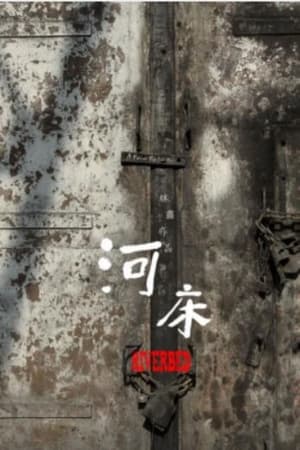
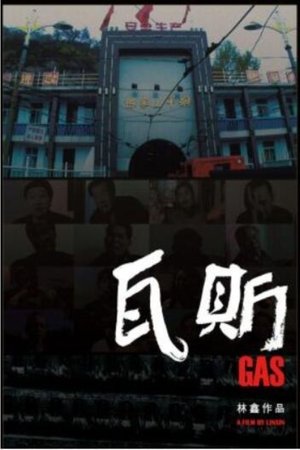
A Yangtze Landscape utilizes a non-narrative style, setting off from the Yangtze's marine port Shanghai, filming all the way to the Yangtze River's source, Qinghai/Tibet - filming a total distance of thousands of kilometers. Experimental music and noise recorded live on scene are used in post-production, painstakingly paired with relatively independent visuals, creating a magically realistic atmosphere contrasted with people seeming to be 'decorative figures' right out of traditional Chinese landscape scrolls.
New Castle is a remote rural village where houses and mountains have been distorted due to excessive mining. Under the "New Village" campaign, all the villagers will be moved into the nearly completed Luxury Buildings. The documentary depicts the life of two groups of people, miners and villagers. The miners who are from all over the country, lost their jobs because of the Olympic Games in Beijing - the mine was shut down to make the air less polluted. The villagers had no better luck. Granny Fan lost two sons and two grandsons in a mining accident. Old Han and Old Wang are still farming. Some youngsters are gambling in the house of Han Bin, who was crippled in another mining accident. In the film, you can also see the village election, the service of local Christians, and people worshipping for a better year to come.
"China Gate" tells the story of young Chinese fight to change their fate through studying. Right before dawn, students in Huining have already started their self-studying session; hard working youngsters have filled up the space of school ground. This is one of the most poverty-stricken Counties in Western China; here people's only hope is in education, as the way to change their social status. Therefore all their effort point towards the College Entrance Examination, the process is like going through a gate, those who pass can study at urban Universities, and have the chance to build a better life. During the same winter season in Beijing, a graduate student faces a big decision. Should he keep trying to survive in the big city or get back to his countryside home? The exhausted faces at the Beijing underground seem to be revealing the truth about their distance in between. The student comes to see the flag ceremony at Tiananmen Square, where the pulsing symbol of the nation lies.
Village Diary
I just watch the news of war in a distant country on my mobile. My fingers go back day by day to the day the war broke out and pose to see comments posted on the Facebook News Feed that I follow. Outside, I have friends who participated in anti-war rallies.
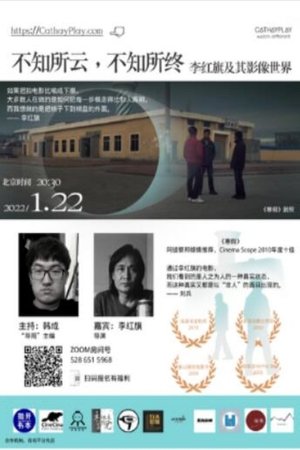
In this talk, Li Hongqi reviewed his transition from fine art to cinema, and his aesthetic and philosophical exploration from his early 'So Much Rice' to recent 'The The'. Dir. Li Hongqi also shared his strong anxiety of his existence(born with melancholia), his thought on cinema art (actually, I don't think there's any movie worth making), his epistemology, his religious view, his consideration on contemporary cinema, and what he learned about living in seclusion.
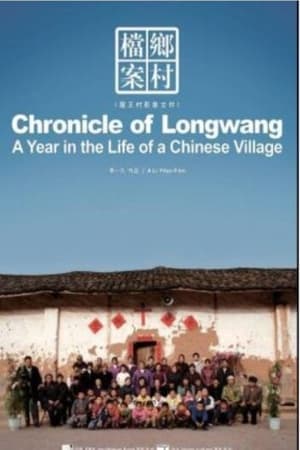
Unusually popular religions and extreme secular beliefs, unconstrained power and no authoritarian society, people work hard on the land and live thrifty but do not believe in the meaning of life at all. This is Longwang Village, an empty old farming society, the most essential reality of an ordinary western village. The film does not have a perpetual plot. The images are presented with the changing of the four seasons. There is no great joy or great sadness. Everything is recorded, and no results are produced. Strictly speaking, this is actually just a rural video file, a running account of ordinary western villages without all rhetoric.
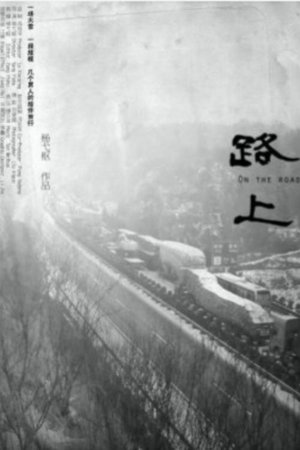
Only a few days before the Spring Festival of 2008, several truck drivers set off from Nantong, Jiangsu Province, to Guizhou province to deliver goods. But what they didn't expect was that they ran into a big snowstorm not long after their departure. What would these drivers do after they got caught up in a snowstorm and coudn't do nothing about it but wait? How would they react to this unexpected halt? And what would happen to this convoy?
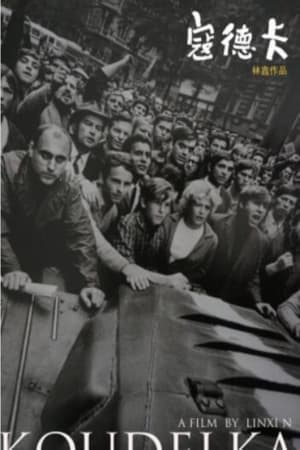
This is a documentary filmed in a subjective perspective. Without any commentary, the film records, in the switches and transitions of the faces, the gamut and track of emotions and vision of the author in enjoying the photographs by Koudelka—from the scenes of life in “Gypsies”, to the conflicts in “Invasion”, further to the still images in “Exiles”, and finally focused on desolately dignified “Chaos”. The four chapters of the film echo the four photo albums of Koudelka. With the indoor CD player playing the music by Shostakovich, the invasion of the landscape without the windows, intermingled with the background noise, complicates the ambient circumstances of the film and renders an immediate sense of urgency and relevance.
Painter Lin Xin tells the story of a thousand-year-old ceramic town in the hinterland of the Loess Plateau in this first experimental documentary "Chen Furnace". The film consists of a 360-degree panoramic prologue and three parts: "Self-Talk", "Bone Style" and "Style". "Fengqing" focuses on the unique scenery of the ancient town's folk customs, houses and famous-tank wall.The film consists of a 360-degree panoramic prologue and three parts: "Self-Talk", "Bone Style" and "Style".The charm and product production process of traditional ceramic crafts such as hand-drawn blanks and engravings are displayed; "Fengqing" focuses on the unique scenery of the ancient town's folk customs, houses and famous-tank wall. The whole film, with its gazing gaze and poetic language, tries to leave in the video the final scene of the "Furnace Never Ending" and the traditional Chen Fa gradually fading away.
“If there is any chance, I will let him live well No matter where he is.” The old lady cried and said that when I was visited her and her husband one year ago. Her heartfelt wishes are my motivation, I know that I am going to create this documentary work - the son.
Filmed over three years on China’s railways, The Iron Ministry traces the vast interiors of a country on the move: flesh and metal, clangs and squeals, light and dark, and language and gesture. Scores of rail journeys come together into one, capturing the thrills and anxieties of social and technological transformation. The Iron Ministry immerses audiences in fleeting relationships and uneasy encounters between humans and machines on what will soon be the world’s largest railway network.
This film is a realistic record of a sixty-year-old couple living in a remote village (Gurenay) in the Badain Jaran Desert of Alashan, Inner Mongolia plant thousands of mu of ammodendron and euphratica to fight against expanding deserts.
Li Shouwang is the leader of a blind storytellers team, learned storytelling at the age of 19. His childernare living hard in other cities. Li's money amost goes to his children's pocket every year. But with urbanisation, the storytellers have lost almost all their audience. As the conflict between the storytelling team and the village team intensified, his son, who was far away from home, became the only spiritual sustains... When he was excited that his son would be taking his family home for Chinese New Year, what's await is a sigh.
In Yuncheng County, Shandong, there is a girl born in the 90s named Han Wenjing who was paraplegic in a car accident in her childhood. As Han Wenjing gets older and older, she is worried about her future life. Marriage has become the biggest concern of parents. Han Wenjing got acquainted with a soldier online, but finally broke up under his father's opposition. The younger sister-in-law also had a dispute between the two over her marriage. When Han Wenjing was depressed, her father proposed to carry her to Liangshan. First, fulfilling Han Wenjing's wish was also compensation for Han Wenjing. Later, Han Wenjing met a dumb while studying e-commerce sales. The dumb liked her very much. Both parents were satisfied when they met. However, Han Wenjing felt that she still couldn't accept the disabled and wanted to try to combine healthy people, even if it failed. Under the pressure of her parents and sister-in-law on Han Wenjing, Han Wenjing still insists on her choice
Workers, peasants, soldiers, students and merchants were five groups of Chinese society in the 1950s, after the so-called elimination of the exploited class. Borrowing this concept, the umbrella is taken as the clue to rediscover changes in various social classes after the economic reform, and to analyze the social problems in China. Workers making umbrellas, merchants selling umbrellas, students looking for jobs in the rain. Umbrella is used as a metaphor that can be seen everywhere. As the raindrop, what we see is sometimes clear, sometimes untraceable.
A silent film by Vietnamese director Truong Minh Quy in collaboration with Belgian director Nicolas Graux, was shot on the set of a film by Graux. We Sit in Silence at the Memorial Table is inspired by Educational Objectives, a poem written by Aleksey Garipov and translated to English by Nicolas Graux.
The story of a girl attempted suicide for love and finally returned to religion.
This story is about the group's marvellous life without money.The film tell this story from six points of view: the screenwriter, the recording, the photography, the art, the performer and the director.
"Huangyangchuan, Gansu province, China. It's an arid mountain area with poor roads. Ma Bingcheng is well-respected local doctor, so many patients (most of them farmers) come to see him every day. In his small clinic, people chat with each other about their lives, local conditions, or the people they know. The clinic seems to open up like a microcosm, the information and experiences of different people intertwine, revealing the conditions of typical Chinese farmers, and the typical fates of both young and old--"