This is the original version of the much heralded "Raising The Bamboo Curtain" narrated and produced by legendary travel filmmaker Rick Ray. (Rick later sold partial rights to this program to another producer who hired Martin Sheen to narrate - that cut down and rewritten version is not the same). Sneaking his cameras past Burmese and Cambodian customs officials and getting around the country to produce one of the best travel docs ever made, Rick has outdone himself - again!
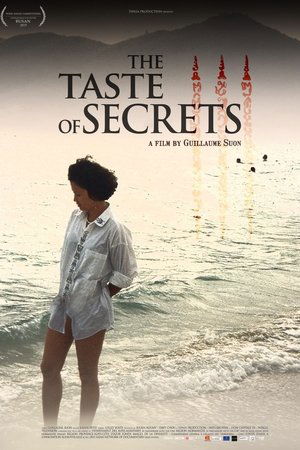
The atrocities Sok Chea witnessed as a child during the rule of Pol Pot continue to haunt to this day, nearly thirty years later. So she is shocked when she suddenly comes across the man who was in charge of her prison and whom she holds responsible for murdering most of her family. Once again he holds a prominent position, this time as Deacon of Death or leader of cremation ceremonies. She decides to collect evidence against him. He must stand trial. But can she succeed in a country still ruled by fear. Besides which, Cambodians believe in karma and forgiveness. Wrongdoers are punished after their death anyway and will suffer for many lives to come. Sok Chea'ss quest leads her to a confrontation with Karoby, in the same pagoda where the atrocities occurred.
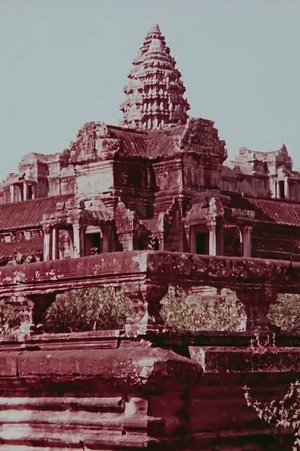
An overview of the ruins of Angkor, the former capital of the Khmer Empire.
Mirr
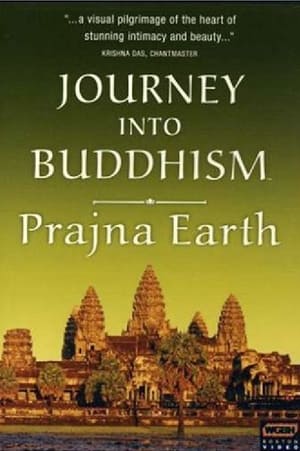
Prajna is the Sanskrit word for radiant wisdom, and yatra is the word for pilgrimage or spiritual journey. This visually stunning documentary is a cinematic pilgrimage exploring the lost civilization of Angkor in Cambodia, including the largest temple in the world, the magnificent Angkor Wat. The journey continues to sacred sites of the natural world, Hindu Bali, jungles of Java, and discovering Buddhist Borobudur. A John Bush film.
Documentary of the S-21 genocide prison in Phnom Penh with interviews of prisoners and guards. On the search for reasons why this could have happened.
Aki Ra joined Pol Pot's murderous Khmer Rouge army at the age of nine. Twenty years later he roams the minefields of Cambodia in search of redemption. Armed only with a stick and a pocketknife Aki seeks out and destroys some of the six million landmines that infect his home. Shot in minefields, this film contains footage that reveals just how dangerous Aki Ra's obsession is.
On April 17, 1975, the face of Cambodia would forever be changed. As Khmer Rouge soldiers marched into the capital city of Phnom Penh, the unsuspecting people of Cambodia had little idea they would be forced into a living nightmare that would last nearly four years. Rain Falls From Earth is a story of courage, a story of survival and a story of eventual triumph over the Communist regime that was responsible for the deaths of over two million people. The voices of many Cambodians are heard as they convey their thoughts, ideas and emotions - the very things they were forced to abandon in the "killing fields" of Cambodia. Their stories are an eyewitness account to genocide.
Documentary about Cambodia featuring a long interview with Pol Pot
Over three million Cambodians died in the genocide between 1975 and 1979. The Khmer Rouge’s reign of terror also decimated a homegrown film industry that had flourished since 1960: movie theaters were bombed, film prints were destroyed and artists were executed. In Golden Slumbers, French-Cambodian filmmaker Davy Chou mourns this loss of lives and culture, but balances the somber material with a playfulness that honors the lush melodramas and mythic adventures of the glory years.
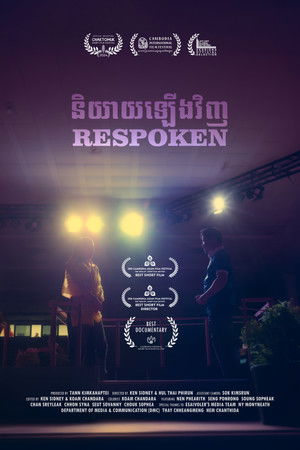
Short-documentary about a visionary actor and his team fight to revive Lakhon Niyeay (Spoken Theater) in Cambodia, facing personal and professional challenges, as he prepares for a major show after six years amidst an uncertain future.
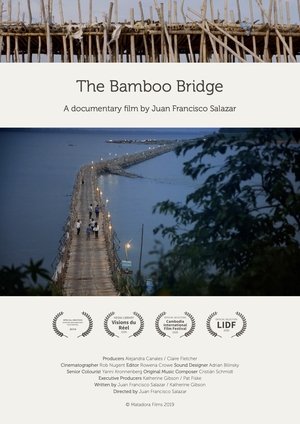
This documentary looks at the stories that take place around a unique 1.5 kilometre long bamboo bridge that for generations has been built every year following the rhythms of nature across the Mekong River to join the rural community of Koh Paen to the city of Kampong Cham in Cambodia.
Through daily routines in a rural village, an indigenous elder couple recall their strange marriage to their grand-daughter, and sometimes to each other, in the changing rhythm of nature around them.
Cambodian refugee Ted Ngoy builds a multi-million dollar empire by baking America's favourite pastry: the doughnut.
In okay bye-bye, so named for what Cambodian children shouted to the U.S. ambassador in 1975 as he took the last helicopter out of Phnom Phenh in advance of the Khmer Rouge, Rebecca Baron explores the relationship of history to memory. She questions whether, "image and memory can occupy the same space." Building on excerpts from letters, found super-8 footage of an unidentified Cambodian man, iconographic photographs from the Vietnam War and other partial images, Baron combines epistolary narrative, memoir, journalism, and official histories to question whether something as monumental as the genocidal slaughter of Cambodians during the Pol Pot regime can be examined effectively with traditional methodologies.
WHO KILLED CHEA VICHEA? is a highly charged murder mystery, a political thriller, and a documentary like no other. In 2004, Cambodian union president Chea Vichea was assassinated in broad daylight at a newsstand in Phnom Penh. As international pressure mounted, two men were swiftly arrested and convicted of the crime, each sentenced to twenty years in prison. Filmmaker Bradley Cox’s five-year investigation reveals an elaborate cover-up that reaches the highest echelons of Cambodian society. Winner of a 2011 Peabody Award among many other honors and banned by the Cambodian government, WHO KILLED CHEA VICHEA? uncovers the face of dictatorship behind the mask of democracy.
The Khmer Empire - officially 'The Angkor Empire' was a powerful 13th century Hindu-Buddhist state in Southeast Asia. Using sophisticated technologies to see inside Khmer temples, combined with statues, casts, and documents discovered by 19th century explorers, scientists today discover how they operated, the meaning of their architecture, and how the capital become the largest city in the world.
A powerful feature documentary about child sexploitation, an epidemic happening in every country around the world. Filmed over a four year period, REDLIGHT focuses on the personal stories of young Cambodian victims and two remarkable advocates for change: grass-roots activist Somaly Mam and politician Mu Sochua. Using gritty footage smuggled out of brothels and harrowing testimonials, REDLIGHT follows the plight of several current and former child sex slaves. Some are trying to regain entry into Cambodian society to find some semblance of normality after their horrific experiences. Other stories highlight the plight of victims who are attempting to bring the perpetrators to justice. Their torturous yet ultimately heroic battles to find witnesses and take brothel owners to court are dramatically brought to life in this topical and moving feature documentary.
When Dr. Haing S. Ngor was forced into labor camps by the Khmer Rouge, little did he know he would escape years of torture and recreate his experiences in a film that would win him an Academy Award®. "The Killing Fields of Dr. Haing S. Ngor" tells the dramatic story about arguably the most recognizable survivor of the Cambodian genocide, a man who became a worldwide ambassador for justice in his homeland, only to be murdered in a Los Angeles Chinatown alley - a case still muddled with conspiracy theories. Through an inspired blend of original animation and rare archival material - anchored by Ngor's richly layered autobiography - the years encapsulating the Khmer Rouge's tyrannical rule over Cambodia are experienced though a politically charged transnational journey of loss and reconciliation.
The film directed by V. Starošas tells about Angkor, a huge complex of temples, palaces, water reservoirs and canals in Cambodia, built in the jungle in the 9th-13th centuries.