Known for his bold, abstract and stark white buildings, American architect Richard Meier now takes on the challenge of building the Jubilee Church in Rome. Holding the location in high regard, Meier praises the vibrant visual layout of the city and tells us, "Rome is a city of architecture; it's a city of walls and columns and spaces and places and defined places and wherever you look there's architecture" (Richard Meier). Staying true to his signature design style, Meier has created a structure resembling grand soaring sails which appear steady and peaceful as they stand in striking opposition to the city's landscape. Three curved walls separate three distinct spaces: the main sanctuary, the weekday chapel and the baptistry, each with its own entrance. As a contrast he shows us his favorite churches in Rome by his famous colleagues from earlier times.
Shot over the course of 18 months in New York City's Lower East Side, METHADONIA sheds light on the inherent flaws of legal methadone treatments for heroin addiction by profiling eight addicts, in various stages of recovery and relapse, who attend the New York Center for Addiction Treatment Services (NYCATS).
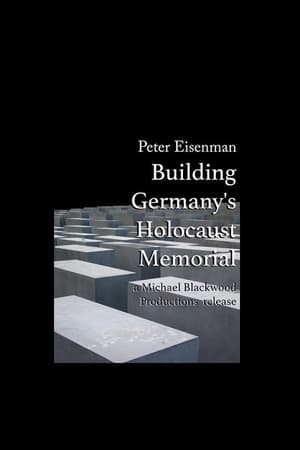
This documentary explores the creation of the Holocaust Memorial in Berlin as designed by architect Peter Eisenman. Reaction of the German public to the completed memorial is also shown.
Tadao Ando, a self-taught architect, proposes an international architecture that he believes can only be conceived by someone Japanese. His architecture mixes Piranesian drama with contemplative spaces in urban complexes, residences and chapels. This film presents the formative years of his impressive career before he embarked on projects in Europe and the United States.
The story of Manhattan Plaza, the renowned experiment in subsidized housing catering to people in the arts. Numerous celebrities pay homage to the impact the building had on their lives and careers.
Behind the iconic Eiffel Tower lies the story of an incredible challenge to erect a thousand-foot tower that went far beyond a design competition, and marked a major turning point in engineering history. It was the beginning of radical transformation where iron was pitted against stone, engineering against architecture, and modern design against ancients. Press campaigns, lobbying, public conferences, denigration of opposing projects, bragging about big names - all participants engaged in a fierce battle without concession. Using 3D recreations, official sources (reports, letters, drawings...) and intimate archives obtained from their descendants, this film will bring to life this vertical race through a fresh and visual way to mark the centenary of Eiffel death.
No understanding of the modern movement in architecture is possible without knowledge of its master builder, Mies van der Rohe. Together with documentation of his life, this film shows all his major buildings, as well as rare film footage of Mies explaining his philosophy. Phyllis Lambert relates her choice of Mies as the architect for the Seagram building. Mies's achievements and continuing influence are debated by architects Robert A.M. Stern, Robert Venturi, and Philip Johnson, by former students and by architectural historians. Mies is seen in rare documentary footage.
World-famous architect Louis Kahn (Exeter Library, Salk Institute, Bangladeshi Capitol Building) had two illegitimate children with two different women outside of his marriage. Son Nathaniel always hoped that someday his father would come and live with him and his mother, but Kahn never left his wife. Instead, Kahn was found dead in a men's room in Penn Station when Nathaniel was only 11.
Notre-Dame Résurrection
This documentary about the culture of intense cinephilia in New York City reveals the impassioned world of five obsessed movie buffs. These human encyclopedias of cinema see two to five films a day, and from 600 to 2,000 films per year. This is the story of their lives, their memories, their unbending habits and the films they love.
Doubling as a cartography of the ever-changing city, Bill Cunningham New York portrays the secluded pioneer of street fashion with grace and heart.
A portrait of the brilliant American writer Truman Capote (1924-84) and the New York high society of his time.
In this somewhat whitewashed documentary on Manhattan's Bowery a newcomer to the area takes his first step toward redemption after a meal, bed, and inspiring talk.
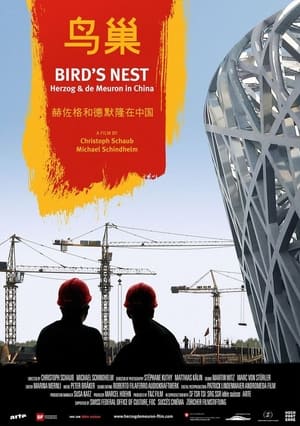
Schaub and Schindelm’s documentary follows two Swiss star architects, Jacques Herzog and Pierre de Meuron, on two very different projects: the national stadium for the Olympic summer games in Peking 2008 and a city area in the provincial town of Jinhua, China.
Sex, Hood, Skate, and Videotape shot, edited, and released by Ian Reid in 2006 is a legendary and infamous video that has been unavailable in it's entirety for 10+ years.
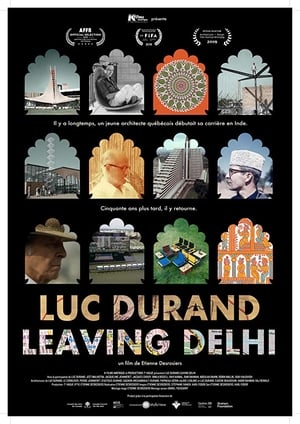
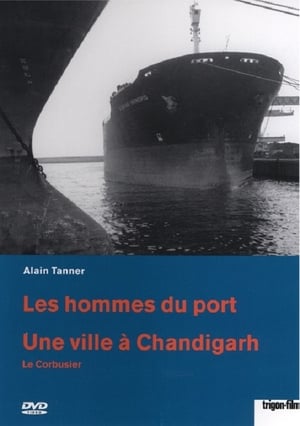
A portrait of the Canadian architect Luc Durand (1929 – 2018), who, after studying with Eugène Beaudoin in Switzerland, began his career in India. This period would be decisive for his career and would influence many of the projects he designed in Quebec, including the Quebec Pavilion at Expo 67, Place Dupuis, and the Olympic Village for the 1976 Olympic Games. Durand then decided to return to his roots in 2012, traveling from Montreal to Geneva, from New Delhi to Chandigarh. A portrait of an eminent figure in Quebec architecture.
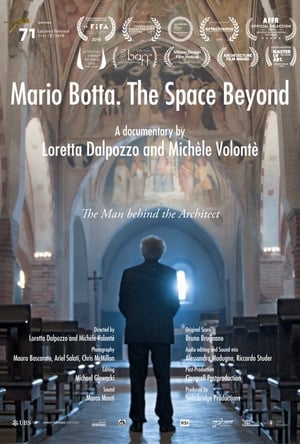
The film arose from an encounter with Mario Botta during the 2013 Architecture and Memory exhibit held at the Charlotte, North Carolina Bechtler Museum of Modern Art which was designed by the architect. The exhibit gathered and then proposed to the public the Swiss architect’s most significant projects spanning the gamut from his first single-family homes, original expressions of the School of Ticino, to his large public buildings, libraries, theatres, museums, churches and synagogues which have been built across the globe and features more than 90 works. The film is a dialogue on the themes which characterize Mario Botta’s vision and practice: his relationship with history and the territory, the designing of collective spaces, encounters with the leading protagonists of the 20th century. The interview, conducted in Mario Botta’s studio in Mendrisio, is replete with photographic materials, designs and sketches which document his “spaces of memory”.
This film visits many of the neighborhoods and landmarks on Manhattan Island and occasionally includes a history lesson. The neighborhoods include the Bowery, Chinatown, Herald Square, and Times Square. Some of the architectural highlights are the Empire State Building, the New York Public Library, Temple Emanuel, the Central Park Zoo, and the Rockefeller Center complex. The film ends with a visit to a dining room in the Waldorf Astoria Hotel, where the Xavier Cugat Orchestra entertains.
Locked away from society in an apartment on the Lower East Side of Manhattan, the Angulo brothers learn about the outside world through the films that they watch. Nicknamed ‘The Wolfpack’, the brothers spend their childhood reenacting their favorite films using elaborate home-made props and costumes. Their world is shaken up when one of the brothers escapes and everything changes.
Since 1987, and for almost three decades, New York cinephiles had access to a vast treasure trove of rare films thanks to Kim's Video, a small empire run by Yongman Kim, an enigmatic character who amassed more than fifty thousand VHS tapes.