In 1953 Dylan Thomas went to New York for the last time, his marriage a wreck, his drinking out of control. He was on his way to meet Stravinsky and to wallow in New York acclaim - but what was he escaping? How did such a triumph become a requiem? The last days of a great poet.
Two first-year students at Oxford University join a secret society and learn that their reputations can be made or destroyed over the course of one evening.
Pride is the first of the seven deadly sins. The introduction is made through early allegorical forms and figures (triumphal procession, dance of death, Baroque tragedy etc.) The triumphal procession of the giant haystack as a symbol of human vanities becomes a military parade of abrupt, functional and arrogant gestures. The most diverse musical fragments and rhythms intone the montage of details in the staged triumphal procession, juxtaposed with documentary images, including marches, ticker-tape parades and military review.
Aurelio Saravia is a powerful politician who holds office in Uruguay in the mid-1960's. When Aurelio's mistress kills herself, he adopts their illegitimate daughter Masangeles despite the stern objections of his wife Aurora. Masangeles finds herself growing up in a home ruled by a corrupt and self-centered tyrant and his manic colleagues while Uruguay teeters on the brink of civil war as bands of revolutionaries battle government militias. When she turns fourteen, Masangeles discovers a secret passageway in their home that leads to sanctuary in a nearby church which also serves as a storehouse for guns and ill-gotten cash. Teenage Masangeles falls in love with Santiago, her stepbrother who has joined the rebels fighting against the state, and she persuades him to take her virginity.
Vadim, a part-time dump truck driver in Leningrad, picks up an extremely young woman, along with a newborn baby. Vadim is forced to spend the rest of his day with Anna, helping her untangle herself from unpleasant, dramatic, and even tragic situations – and she and she alone is to blame for all of them. The baby, which Anna stole in order to make an impression on an estranged lover, is finally returned to its parents, but the problems that the theft caused remain.
The 24-year-old Ekkehard is shocked by the suicide of Hans Georg, a young man under his care, and moves into his room because he initially believes that the causes of the suicide can be found in this environment. In his search for the reasons, his perception of his own reality changes.
Scénarios sur la drogue
Mary and Joseph make the hard journey to Bethlehem for a blessed event in this retelling of the Nativity story. This meticulously researched and visually lush adaptation of the biblical tale follows the pair on their arduous path to their arrival in a small village, where they find shelter in a quiet manger and Jesus is born.
The sexual misunderstandings caused by the real identity of a rich woman serve Hermosillo to satirize the moral and social hypocrisy of the provincial that every Mexican carries inside.
Victor turns 21 in a month. Before he turns 21, he has set two goals: to lose his virginity and to weigh less than 50 kilos.
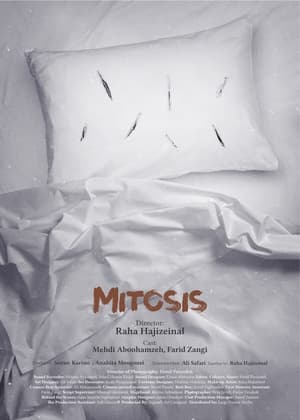
In June 1945, during the final days of WWII, former university professor Gohar meets a young prostitute in a brothel and kills her in a moment of frenzy. Police Detective Noureddine takes on the murder case and tracks down Gohar, hoping to confront him and get a confession to the murder from him. However, both the detective and the killer face startling facts that change the way they think.
Six young filmmakers from Central and East Europe developed shorts about the theme of 'generation'.
The story of an emotionally detached backup dancer named Athena, who must return home to Florida to help care for her estranged father, Jack, after he gets diagnosed with cancer. There, she must contend with Jack’s irresponsible lifestyle, while looking after six year old Honey Bunny, who is only beginning to grasp the err in Jack’s ways.
Two girls, Olive and Clementine, go through their day. They follow their normal routines, similar yet different in many ways. Olive is an easygoing and less driven girl who hides her personality insecurities with her clothing. At the same time, Clementine is an ambitious and anxious girl who takes a lot of medication and stays busy to distract herself from all her anxieties. The two oddly find each other and can't shake the feeling from when they first spotted one another. When they continue to see each other, they realize there must be something between them.
Finding love in city can be hard, keeping it can be harder. Look at Me revolves around the lives of seven twenty-somethings and their complications with dating and surviving in New York City.
After cancer claims Matt Kell's life on Christmas Day 2005, his widow, Gina and two young boys are left to cope with the pain of his loss while their close church community gathers around them for support.
A married man calls the wrong number for phone-sex and winds up being stalked by a psychotic man.
Harold, a middle-aged Mexican theatre acting coach, travels to New York and finds himself obsessing over a precocious teenage boy named Felix, who he believes is the reincarnation of his first childhood love.
A group of young people residing in Alexandria suffers from the governor’s tyranny. As they try to get rid of him, they launch a campaign to ridicule him by drawing caricatures and distributing them everywhere, until someone proposes an idea that changes the course of events.
“La Zerda and the songs of oblivion” (1982) is one of only two films made by the Algerian novelist Assia Djebar, with “La Nouba des femmes du mont Chenoua” (1977). Powerful poetic essay based on archives, in which Assia Djebar – in collaboration with the poet Malek Alloula and the composer Ahmed Essyad – deconstructs the French colonial propaganda of the Pathé-Gaumont newsreels from 1912 to 1942, to reveal the signs of revolt among the subjugated North African population. Through the reassembly of these propaganda images, Djebar recovers the history of the Zerda ceremonies, suggesting that the power and mysticism of this tradition were obliterated and erased by the predatory voyeurism of the colonial gaze. This very gaze is thus subverted and a hidden tradition of resistance and struggle is revealed, against any exoticizing and orientalist temptation.