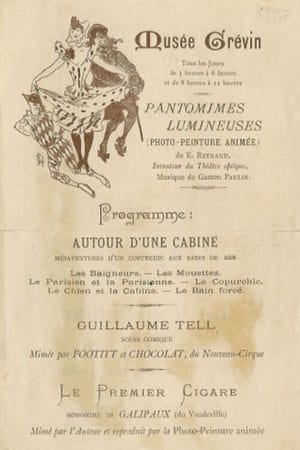
Since this is lost the content of the film can only be presumed but it was supposedly depicted a schoolboy smoking his first cigar.
The movie takes place between Seasons 1 and 2. The Green Forest Village hosts a festival in celebration of the 1000th anniversary of the large tree growing in the middle of the village. While Curucuru and his friends are helping in the festival, they learned that tree's vitality is due to a legendary item call the Pingya, which gives it Eternal Love and Life. But in the midst of the festival, a bunch of Pirate Hyenas came to the village and stole the legendary item, causing the tree to wilt. Now it's up to Curucuru and his pals to get it back from the pirates, before things can go worse. But amid-st the actual troubles they face, the kids also encounter a strange Tiger child, who is connected to the incident.
A slick movie director tricks a hayseed horse into becoming a stunt double.
Kaiser is a short animated film, directed by the cartoonist Álvaro Marins, the Seth, in 1917. It is considered the first cartoon produced in Brazil.
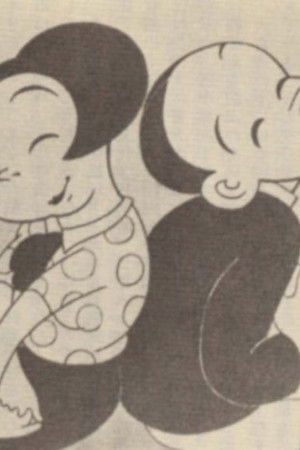
A lost Japanese animated film noted for being one of the earliest to feature voice acting. The story is about a working family man who has an affair with a coworker. She finds out about the affair through him talking in his sleep.
An adaptation of the original five volume arc of the popular JoJo's Bizarre Adventure manga, covering the Phantom Blood chapters. Jonathan Joestar is an aristocratic boy whose life is suddenly turned upside down by a mysterious new boy who arrives, Dio Brando. Dio has a connection to his father, and over time, a rivalry forms as Dio becomes obsessed with a mysterious, ancient, and mystical stone mask that Jonathan's father keeps. This film has not been publicly released outside of its original limited run in Japanese theaters and is considered virtually lost.
Roy Del Espacio (aka Roy From Space) was a Mexican animated movie directed by Hector Lopez Carmona, Rafael Angel Gil and Ulises P. Aguirre that was in production from 1979 to 1982, being released in theaters in Mexico City in 1983. However, the end result was apparently of really poor quality, so much that the movie was pulled from theaters only two days after its premiere. The movie was never broadcast on TV nor released on home video, and information about it or its creators is almost nonexistent. The only surviving visual information is a promotional poster containing both original art and a black and white still from the movie.
Nobita and friends engage in an all out robot war in this unofficial installment of the Doraemon series.
The story of Argentine President Hipolito Yrigoyen's corrupt government and its overthrow by a military coup. Yrigoyen floats around in his boat Peludo City (which represented Argentina) while constantly being harassed by hungry sharks (the Radicals). The film was released with a Vitaphone sound-on-disc synchronization system soundtrack, making the film generally credited as the first animated feature film with sound. It is now considered a lost film, along with several of Cristiani's films which were destroyed in fires in 1957 and 1961.
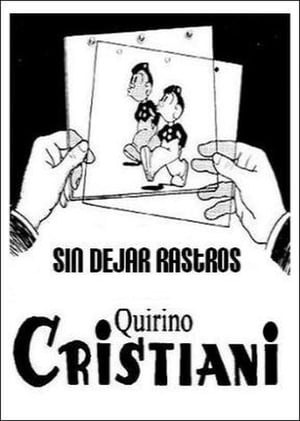
The true incident of the German U-Boat which torpedoed an Argentine ship to make Argentina declare war on the Allies. The film was not as successful as Cristiani's previous film, The Apostle from 1917, since Without a Trace was confiscated by the Ministry of Foreign Affairs by order of President Hipólito Yrigoyen and purportedly destroyed. It is unknown if any copies of the film exist, and it is currently considered a lost film.
A fly, taken with humanity, decides that it would be best if all flies were wiped out.
St. Francis (also known as Nightmare and Dreams and Saint Francis: Dreams and Nightmares) is a French 25 minute anti-war film directed by Berthold Bartosch. Partially financed by Thorold Dickinson, Bartosch worked on it from 1933 to 1938. Very little is known about it, to the point where there are conflicting reports on whether it was in color or in black and white. When the Nazis invaded Paris, the film was still in the editing stages. Bartosch deposited the film at the Cinémathèque Française, where it was destroyed during the Nazi occupation. Reportedly, a few still images have survived, but they are incredibly rare and aren't available online.
Tony and Freddie, who have been rivals all their lives, vie for the hand in marriage of their childhood sweetheart. Big Freddie has the upper hand when Tony gets himself kidnapped by a ring of muggers whose M.O. is to have one of their members dress up as a woman to lure men into the back seat of their limousine, where they are beaten up and robbed.
When her cotton crop is burned, Barbara Pelham, a beautiful southern girl, comes to New York to find work as a fashion designer, staying with Mrs. Kemp, a woman she meets on the northbound train. In Mrs. Kemp's house, Barbara encounters Peter Heffner, a wealthy stockbroker, and discovers from him that she has taken up residence in a whorehouse. There is a police raid, but Barbara escapes arrest and returns home. Heffner's son, Neil, goes south to inspect some family property and there meets Barbara, with whom he falls in love. They decide to be married, and she accompanies him to New York, where she meets the elder Heffner for a second time. He denounces her as a whore, but Barbara goes to Mrs. Kemp, who explains the misunderstanding to everyone's satisfaction.
Rena is a young woman of mixed race. Although she is romantically pursued by an upwardly mobile African American named Frank, Rena does not decide in his favor. Her appearance allows her to pass for white, as she is of majority European ancestry, although she has grown up in the black community. She meets and falls in love with George Tryon, a young white aristocrat. But as their relationship deepens, Rena believes she has to acknowledge her African ancestry. Considered a lost film.
A propagandistic view of the First World War, showing the political greed of the German Kaiser Wilhelm, the resistance of some of his own soldiers, and fanciful prediction of the nature of the war's end.
A period fantasy that told of the ageing king of Kamarpur, and his two rival queens, Navbahar and Dilbahar, and their rivalry when a fakir predicts that Navbahar will bear the king's heir. Dilbahar unsuccessfully tries to seduce the army chief Adil (Vithal) and vengefully destroys his family, leaving his daughter Alam Ara (Zubeida) to be raised by nomads. Eventually, Alam Ara's nomad friends invade the palace, expose Dilbahar's schemes, release Adil from the dungeon and she marries the prince of the realm.
Cult director Charles Band brings you this "Last Tango in Paris" spoof with editing by acclaimed filmmaker John Carpenter.
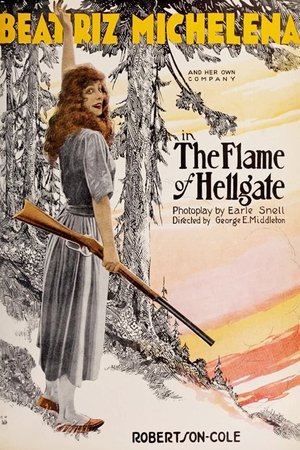
A lost film. As described in a film magazine Exhibitors Herald on March 16, 1918: "a forest ranger known only as Headin' South (Fairbanks) goes forth in search of Spanish Joe (Campeau), a Mexican responsible for most of the treachery and outlawry along the U.S.-Mexican boarder. Headin' South gains quite a reputation as he goes along and finally believes himself worthy of joining Joe's band. in a whirlwind finish in which Joe is captured, Headin' South meets one of Joe's near victims (MacDonald) and falls in love with her."
Based on a the horror novella of the same name. First Russian horror film.