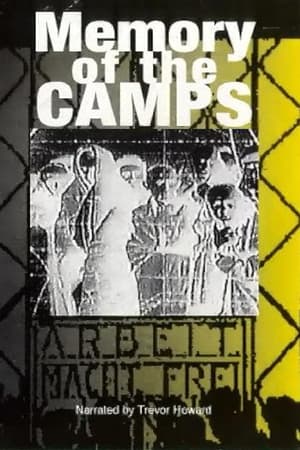
Filmmaker Alain Resnais documents the atrocities behind the walls of Hitler's concentration camps.
Le Baron et l'Empereur : Japon, la voie de la guerre
This chilling, vitally important documentary was produced to mark the 40th anniversary of the liberation of Auschwitz Concentration Camp. The film contains unedited, previously unavailable film footage of Auschwitz shot by the Soviet military forces between January 27 and February 28, 1945 and includes an interview with Alexander Voronsov, the cameraman who shot the footage. The horrifying images include: survivors; camp visit by Soviet investigation commission; criminal experiments; forced laborers; evacuation of ill and weak prisoners with the aid of Russian and Polish volunteers; aerial photos of the IG Farben Works in Monowitz; and pictures of local people cleaning up the camp under Soviet supervision. - Written by National Center for Jewish Film
Insein Rhythm portrays the sights, sounds and rhythms of Yangon’s Insein train station which is also a stone’s throw away from the country’s infamous Insein prison.
Parole tremanti
From the fragile democracy of the Weimar Republic to the brutal tyranny of the Nazi regime, this in-depth series explores how Germany's descent into chaos paved the way for Adolf Hitler's rise to power. After World War I, Germany faced economic collapse, political instability, and widespread social unrest, creating the perfect storm for radical ideologies to flourish. Tracing the Nazis' emergence from the fringes of politics to their consolidation of power, the series reveals the pivotal events, propaganda, and policies that reshaped Germany into a totalitarian state.
Filmmaker Rosanne Ehrlich unearths hundreds of letters her father wrote her mother while he was away from home, fighting in WWII, and shares them in this documentary that blends narration with, archival footage.
De Bevrijding van Den Haag
A pig farm in Lety, South Bohemia would make an ideal monument to collaboration and indifference, says writer and journalist Markus Pape. Most of those appearing in this documentary filmed in Slovakia, the Czech Republic, Poland, France, Germany and Croatia have personal experience of the indifference to the genocide of the Roma. Many of them experienced the Holocaust as children, and their distorted memories have earned them distrust and ridicule. Continuing racism and anti-Roma sentiment is illustrated among other matters by how contemporary society looks after the locations where the murders occurred. However, this documentary film essay focuses mainly on the survivors, who share with viewers their indelible traumas, their "hole in the head".
Germany, 1929. Helmut Machemer and Erna Schwalbe fall madly in love and marry in 1932. Everything indicates that a bright future awaits them; but then, in 1933, Adolf Hitler and the Nazi Party rise to power and their lives are suddenly put in danger because of Erna's Jewish ancestry.
Produced by the Army Pictorial Service, Signal Corps, with the cooperation of the Army Air Forces and the United States Navy, and released by Warner Bros. for the War Activities Committee shortly after the surrender of Japan. Follow General Douglas MacArthur and his men from their exile from the Philippines in early 1942, through the signing of the instrument of surrender on the USS Missouri on September 1, 1945. Preserved by the Academy Film Archive in 2013.
Libere
Brigadistas
The German railroad has been in operation since 1835, but the darkest chapter in German railroad history is often forgotten. Extensive original film material from the Nazi era shows the dubious role played by the Deutsche Reichsbahn during the Second World War and how little resistance there was among the railroad workers.
Engineer Dr Hugh Hunt revisits the little-known story of the First World War's Blitz, when the Zeppelin waged an 18-month terror campaign on the people of London.
The 'mighty' Hood was the pride of the British Navy for more than 20 years, revered around the world as the largest and most powerful warship afloat. But when it was sunk by the German battleship Bismarck off the coast of Greenland on 24 May 1941, its end was shockingly swift.
On June 10, 1944, the SS murdered nearly the entire population of the French village of Oradour. The ruins still stand, the population is buried in the cemetery. Only one person has ever been convicted of this crime: the former SS-Obersturmführer Heinz Barth.
British intelligence undertook an audacious operation to listen in on the private conversations of 10,000 German prisoners of war without their ever knowing they were being overheard. The prisoners' unguarded reminiscences and unintentional confessions have only just come to light, and prove how closely the German army were involved in the atrocities of the Holocaust. British intelligence requisitioned three stately homes for this epic task, and converted each into an elaborate trap. The 100,000 hours of conversation they captured provided crucial intelligence that changed the course of the war, and revealed some of its worst horrors, from rape to mass executions to one of the earliest bulletins from the concentration camps. But when the fighting ended, the recordings were destroyed and the transcripts locked away for half a century. Only now have they been declassified, researched and cross-referenced.
Here is the hair raising, seat-of-the-pants tale of men who dared to fly their planes, unescorted, to the heart of enemy held Romania to blast the source of German oil. It's also the story of long, low level flights over water, searching for the tell tale sliver of a U-boat periscope. It's a tribute to an underdog that became the most versatile, widely used bomber of World War II. This is THE B-24 LIBERATOR! Aviation A.V. Library brings you this battling classic in a hell-raising video adventure that we call "THE FIGHTING LIBERATOR." From the Bismark Sea to dirt airstrips in China to the exhilaration of the great push on D-Day the Liberator was there, fighting her way over, around and through the Axis ranks.
On the 1st of February, 2021, Myanmar’s Military launched air strikes against the Karen minority group. The news reminds K of his time in Karyn State 4 years back. K thinks of General Neda who wanted to build a community for Karen refugees, Khun from Thailand and the village children who helped him. He promised to fight for peace when General Neda sang “Wonderful Tonight” for him. Reminded of his forgotten promise, K roams the street aimlessly. Still, time eats away at his memories.