The camera floats quietly to capture the beauty that emerges from the mundane. Accompanied by Ryuichi Sakamoto's composition, Arseny Tarkovsky's poem celebrates life.
Journey with the musicians of the Berlin Philharmonic and their conductor Sir Simon Rattle on a breakneck concert tour of six metropolises across Asia: Beijing, Seoul, Shanghai, Hong Kong, Taipei and Tokyo. Their artistic triumph onstage belies a dynamic and dramatic life backstage. The orchestra is a closed society that observes its own laws and traditions, and in the words of one of its musicians is, “an island, a democratic microcosm – almost without precedent in the music world - whose social structure and cohesion is not only founded on a common love for music but also informed by competition, compulsion and the pressure to perform to a high pitch of excellence... .” Never before has the Berlin Philharmonic allowed such intimate and exclusive access into its private world.
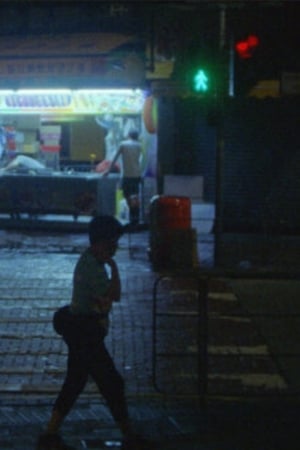
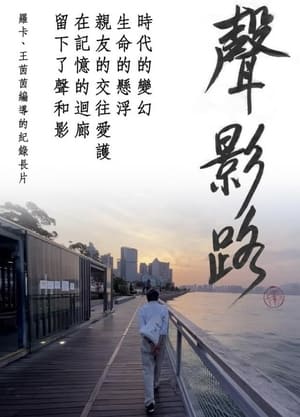
In Hong Kong, echoes of resistance and turmoil are sensitively captured on 16mm in this poetic rumination of public spaces and everyday life in a metropolis in upheaval.
Documentary about two boys and a girl who travel to surfing spots around the world.
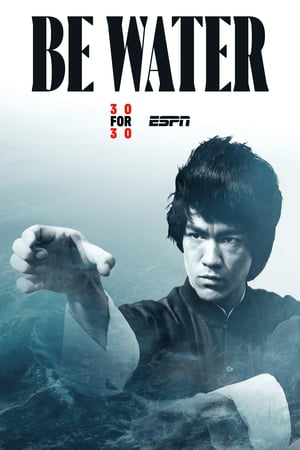
In 1971, after being rejected by Hollywood, Bruce Lee returned to his parents’ homeland of Hong Kong to complete four iconic films. Charting his struggles between two worlds, this portrait explores questions of identity and representation through the use of rare archival footage, interviews with loved ones and Bruce’s own writings.
Tells the story of how Edward Snowden managed to evade capture by the US. For the first time Snowden tells the story of how he managed to escape so that not to have to spend the rest of his life in an American prison.
Rising beyond K-pop to become Asia's ultimate diva, TAEYEON explores the World of Frozen at Hong Kong Disneyland. Step into the enchanting world and engage in the stories with TAEYEON, who has drawn endless inspiration from Disney since childhood and now captivates audiences as a dream-weaving singer. From lovable characters to scenic winter landscapes, every aspect feels like a fairy tale come to life. Get immersed in the captivating World of Frozen and hear TAEYEON's behind-the-scenes tales of this beloved story.
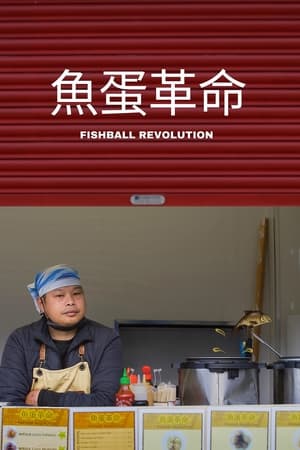
An asylum seeker from Hong Kong builds a new life for himself in Glasgow, using his passion for street food to maintain his cultural identity.
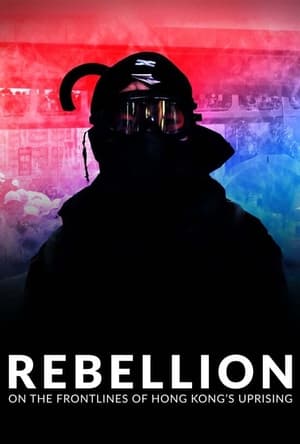
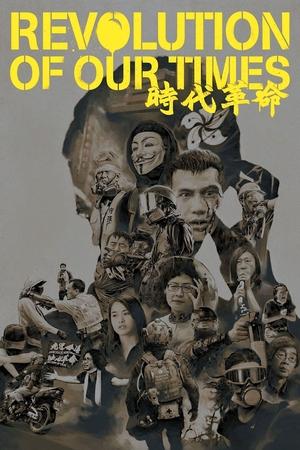
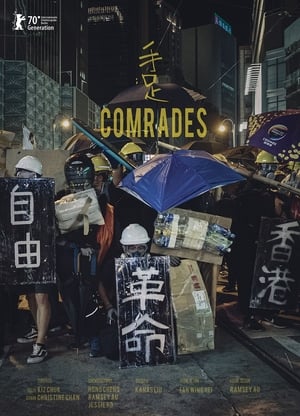
The story of the 2019 Hong Kong protests, told through a series of demonstrations by local protestors that escalate into conflict when highly armed police appear on the scene.
Everyone has their secrets. Everyone has the past no one’s heard about. But what makes an entire generation sit in stunned silence with unmentionable hesitation to talk about their past? Even the past was 50 years ago. Five decades after the Hong Kong leftist riots, six ex-young prisoners speak out for the first time about their personal and unmentionable experience. Documentary film YP1967 is about their love and hate towards their country, their honour and dishonour as a convicted criminal, their condonation and condemnation of the parties involved, and their truth-seeking and reconciliation with the past.
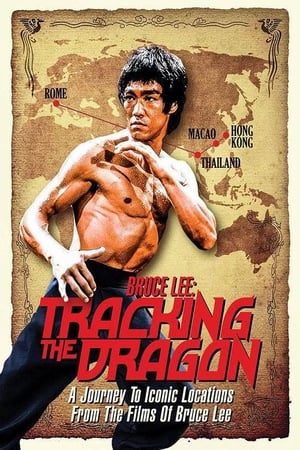
Bruce Lee expert John Little tracks down the actual locations of some of Bruce Lee's most iconic action scenes. Many of these sites remain largely unchanged nearly half a century later. At monasteries, ice factories, and on urban streets, Little explores the real life settings of Lee's legendary career. This film builds on Little's earlier film, Pursuit of the Dragon, to present a comprehensive view of Lee's work that will change the way you see the films.
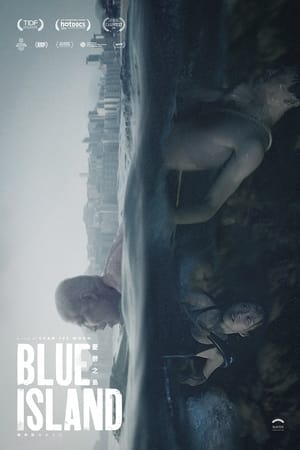
Although the Chinese government promised that Hong Kong would retain separate status until 2047, in recent years the Chinese state has consolidated its power over the metropolis. Large-scale protests by the populace have been brutally suppressed. This mix of documentary, fiction, and visions of the future reveals the current state of desolate depression among the people of Hong Kong. “A desperate attempt to capture the final moments of a sinking island”, as maker Chan Tze-woon himself puts it.
In the life of Mr. Lai Man-wai, he had seen the most turbulent times of recent Chinese history. From the fall of the Qing Dynasty to the founding of the Republic, from the Sino-Japanese War to the founding of the People’s Republic. With a patriotic spirit, he joined the revolution and used the theatre to promote the revolutionary course. For a ‘stronger China’, and ‘education for all’, he chose film as his life long goal and career. Lai was more than the father of Hong Kong cinema was; he was also one of the pioneers of the Chinese cinema. He made Hong Kong’s first short fiction film ‘Zhuangzi Tests His Wife’. He opened the first Chinese owned cinema, the New World Cinema, in Hong Kong…. In the several decades, Lai had devoted his life and fortune in writing this glorious inaugural chapter in early Chinese film history. The technical enhancement, the introduction of foreign techniques and equipment were all part of his contribution to the Chinese cinema.
Hong Kong's high-speed rail link, the demolition of Choi Yuen Village, the impending budget and the influence of the global Occupy movement are at the centre of independent filmmaker Lo's timely measure of the city's pulse. Ostensibly the third entry in a trilogy that began with 21 years after. (2010) and to be continued (2010), which also captured public reaction to watershed moments in Hong Kong's political life since 2009. The documentary was built upon the material used in its previous installment (to be continued, 46 minutes). It disproves the notion of a passive Hong Kong in a chronicle of a generation poised for massive social change.
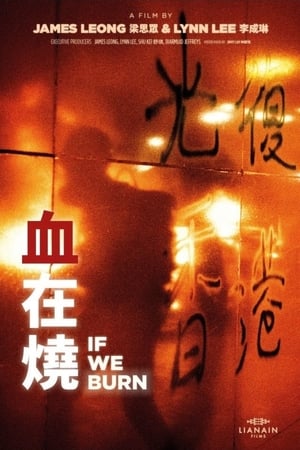
Memories of his four-year journey focused on the Hong Kong protests. Narrated in the first person, is rich with reflections and contemplations, most intertwined with feelings of guilt.
Hong Kong, 1978. South Korean actress Choi Eun-hee is kidnapped by North Korean operatives following orders from dictator Kim Jong-il.
Filmmaker Ian Taylor examines the impressive legacy of Hong Kong cinema -- specifically, how martial arts crossed borders and become an international phenomenon -- with the help of footage and interviews with the stars who made the genre what it is today. Director Lau Ka Leung (who helmed The 36th Chamber of Shaolin) joins in, sharing his thoughts on how certain cinematic technologies have improved martial arts films and expanded their appeal, on the set of Drunken Monkey (2003).
A look at the man behind the legend, capturing the real Andy Warhol, as an artist and as a person, as he travels through China, from Hong Kong's glitter to the mystique of Peking's Forbidden City. Set in the Far East, the story begins with the opening of the most elegant jet set watering hole in Asia, Hong Kong's “I Club,” whose owner, a young Chinese millionaire, decided to try an experiment: to transplant the most advanced, far-out Western culture to the Far East in a multimillion-dollar club that offers everything from restaurants and bars, to a health club and even an art gallery. Warhol is invited to attend the opening as a guest of honor showing his “Celebrity Portraits.” The result of this cultural experiment was varied. Emotions from the “I Club” and Warhol's work ranged from outrage to indifference to wonder.
Poet and author Xi Xi is one of Hong Kong's most treasured writers. Though also acclaimed in Taiwan and mainland China for seminal works like the essay Shops, her writings are firmly rooted in the spirit of Hong Kong. Leave it to Fruit Chan, another staunchly grassroots auteur, to make a documentary on Xi Xi's career. Chan sought out renowned critics and writers to discuss Xi Xi's works, starting with 1979's My City. He also juxtaposes photos of a changing Hong Kong with readings of her writings, and even playfully inserts characters from her stories into the film.
The documentary, using the dramatization of fact, makes the case that the Canadian government knowingly sent two unprepared infantry battalions to help defend Hong Kong in late 1941, fully aware that they may have been on a doomed mission. The C Force, consisting of about 2000 soldiers from the Winnipeg Grenadiers and the Royal Rifles of Canada (from Quebec City) were, with the other British, Indian and Hong Kong troops, attacked on December 8, 1941 and overwhelmed by Japanese troops, leading to numerous casualties and the surrender on Christmas day. The Canadians would spend more than 3 and half years as prisoners of war, in horrible conditions. Part of "The Valour and the Horror" mini series.