President Trump, the 45th President of the United States, the most polarizing figure to ever hold the office. Some have called him the worst thing to happen to America. A racist, sexist, crazy, and unhinged. Others call him a man of integrity, a true patriot, appointed by God to lead the United States. Love him or hate him this film answers the question; What will the world look like in 2024 after Trump as he battles to maintain the foundational values and the independence of the United States against a global community.
They were called ‘the golden generation’, the young Yugoslavian soccer players who won the Junior World Soccer Championships in 1987 in Chile. They became world-famous and today play in Rome, Milan and Madrid. But the country they represented in Chile no longer exists. Director Vuk Janic talks with soccer heroes like Zvonimir Boban and Sinisa Mihajlovic and visits the neighbourhoods they grew up in. Via the soccer, he tells the story of the disintegration of his country. The supporter riots in 1990 during the match between Red Star Belgrade and Dinamo Zagreb heralded the imminent war. Shortly after, the team fell apart. Seven years later, as national players of Croatia and little Yugoslavia, they compete in two charged qualification matches for the 2000 European Championships. Soccer is not war, but the war is never far away. The first match in Belgrade has to be cancelled due to NATO bombings, and the two national hymns are drowned in deafening whistles from the audience.
Behind the scenes of news coverage during the pandemic. Follow the work of the professional press in a fight against denialism.
Revisiting the achievements of Sacheen Littlefeather, the first woman of color to utilize the Academy Awards to make a political statement.
After her gender identity was denied in her homeland, Lee Li, a transgender asylum seeker, was forced to leave her country, family, and language to embark on a journey toward belonging, freedom, and self-empowerment.
The true history of the anti-government extremist terrorist group's century of violence. Focusing on the group which has caused nationwide rioting and violence, The film – which undermines the mainstream media’s depiction of the group as “just an idea” – has already been censored by YouTube and Vimeo.
The engrossing one-hour special uses evocative archive and a cast of charismatic political experts and former members of Trump's administration, to unpick how, in just 140 characters, Twitter has changed the way political communication takes place in the US. It is the story of a social medium platform and the first social media president, which reveals how both Twitter and Trump have grown their brands at the same speed over the course of the last decade. Each tweet is a window into the context of our times, and the mind of Donald J. Trump. In chronological order, they take us on a journey into some of the most important stories, events and issues of the modern world - an election result that polarized a country, the first ever meeting of a US president with a North Korean leader, immigration, pandemics, race relations, impeachment, and the 2020 presidential race.
The personal stories lived by the Uncle, the Father and the Son, respectively, form a tragic experience that is drawn along a line in time. This line is comparable to a crease in the pages of the family album, but also to a crack in the walls of the paternal house. It resembles the open wound created when drilling into a mountain, but also a scar in the collective imaginary of a society, where the idea of salvation finds its tragic destiny in the political struggle. What is at the end of that line? Will old war songs be enough to circumvent that destiny?
Born into poverty in Panama, Cirilo McSween’s journey is one of defiance, resilience, and triumph over systemic barriers. Against the backdrop of Jim Crow America, he confronts racism while pursuing the American Dream. From his arrival in the U.S. as an ambitious immigrant to his rise as a trailblazing entrepreneur and civil rights activist, McSween’s life stands as a testament to determination and community. Through tireless advocacy for equality and opportunity, he helped shape both Panama’s identity and Chicago’s civil rights movement. A confidant of Dr. Martin Luther King Jr., a pioneering insurance executive, and a philanthropist empowering underserved communities, McSween’s story bridges nations and generations. CIRILO, A Legacy Untold illuminates a transformative figure whose legacy continues to inspire across the Americas.
We form our perceptions of the world based from sound bites on small screens - Including our opinions of the President. This narrow viewpoint opens up for one film producer when he befriends Lara Trump. Lara introduces him and us to several women in the Trump family, administration, campaign, and business. Through these women's firsthand experiences with the President, we gain a broad understanding of the Trump they know.
A man that is a stranger, is an incredibly easy man to hate. However, walking in a stranger’s shoes, even for a short while, can transform a perceived adversary into an ally. Power is found in coming to know our neighbor’s hearts. For in the darkness of ignorance, enemies are made and wars are waged, but in the light of understanding, family extends beyond blood lines and legacies of hatred crumble.
Based on Lee Smith's book of the same name, this documentary follows the story of the biggest political scandal in U.S. history.
Ernst Busch, singer and actor, was a political artist. For the 20th anniversary of his death on June 8, 2000, Peter Voigt embarked on an unusual search for clues. The focus of his film about the idiosyncratic artist is not biographical details, but the central conflicts in the field of tension between politics and culture that determined Busch's life.
In the run-up to parliamentary elections in mid-October, Polish filmmaker Marcin Wierzchowski travelled across his country to gauge the atmosphere in a society that is more divided than ever.
We follow the story of The Thinker bombing at the Cleveland Museum of Art, trying to solve the mystery behind it because no one was ever caught. By following this case, we unravel the whole landscape of Cleveland and the USA in the 60s/70s - student protests, social justice movements, anti-war movements, and radical militant groups. We give a context to the bombing, which is symbolic on so many levels - it's an art piece that randomly became a target for political violence that, by being left unrepaired, became a reminder of the complicated history of the 60s/70s. The Thinker is a silent witness to this fascinating decade, looking down from his pedestal, still thinking about our place in the world as humans.
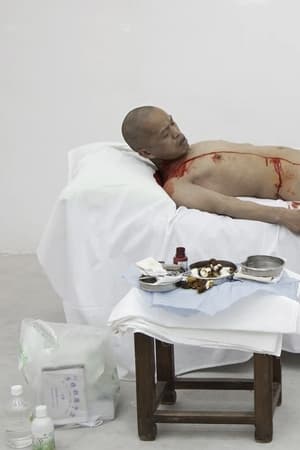
One Meter of Democracy (2010) challenged the endurance of viewers, as well as the courage of the artist. In a quasi-democratic process, He Yunchang invited approximately 20 friends to vote in a secret ballot on whether he should have a surgeon cut a one metre incision the length of his body, from collar bone to knee, without anaesthesia. The vote was carried by a narrow majority, with several abstaining. The performance was documented in video and photographs that reveal the emotional cost of witnessing this gruelling event. This work, sometimes also known as ‘Asking the Tiger for its Skin’ was also staged on a symbolic date: 10 October 2010 was the 99th anniversary of the Wuchang uprising and the Xinhai Revolution which led to the fall of the Qing Dynasty and the establishment of the Republic of China. The final image shows the group with sombre, shocked faces.
Throughout Hong Kong’s history, Hongkongers have fought for freedom and democracy but have yet to succeed. In 2019, a controversial extradition bill was introduced that would allow Hongkongers to be tried in mainland China. This decision spurred massive protests, riots, and resistance against heavy-handed Chinese rule over the City-State. Award-winning director Kiwi Chow documents the events to tell the story of the movement, with both a macro view of its historical context and footage and interviews from protestors on the front lines.
In the fall of 1962, a dramatic series of events made Civil Rights history and changed a way of life. On the eve of James Meredith becoming the first African-American to attend class at the University of Mississippi, the campus erupted into a night of rioting between those opposed to the integration of the school and those trying to enforce it. Before the rioting ended, the National Guard and Federal troops were called in to put an end to the violence and enforce Meredith's rights as an American citizen.
The first major uprising against police brutality, harassment, and societal oppression was not at Stonewall in 1969, but at Compton's Cafeteria in San Francisco three years earlier. Those who stood up were trans women and gay men. Now, nearly 40 years on, Susan Stryker and Victor Silverman tell the story of this oft-overlooked event in the history of American civil rights.
Meduza follows Ukrainian artist-turned-sniper Pavlo Aldoshyn from the first days of the war in 2022. Throughout the film, Pavlo's inner life connects to a range of stories around the globe, including a Japanese widower searching the ocean for his wife, and an Amazonian tribesman describing the loss of a mythical ladder uniting earth and sky.