David Attenborough and scientist Johan Rockström examine Earth's biodiversity collapse and how this crisis can still be averted.
In the middle of the Indian Ocean, more than 1.500 km from the nearest continent, lies an untouched, mysterious archipelago – the Chagos Islands. This group of 60 islands is one of the last pristine wildernesses on Earth. The Chagos Archipelago is one of the world’s largest marine national parks, and is strictly protected. A scientific expedition has been granted access to this politically disputed territory for the first time. In times of climate change, as global reef communities face a growing crisis, the researchers seek to show how coral reefs fare in places with minimal human interference. During a journey into the unknown, we follow in the footsteps of internationally renowned scientists, who aim to unlock the secrets of a lost world and gain astonishing insights into one of the last true wildernesses on Earth.
A look at the state of the global environment including visionary and practical solutions for restoring the planet's ecosystems. Featuring ongoing dialogues of experts from all over the world, including former Soviet Prime Minister Mikhail Gorbachev, renowned scientist Stephen Hawking, former head of the CIA R. James Woolse
Iceland is one of the wildest places on earth. You could be caught up in the midst of snowstorms and blizzards, but you are never alone... Although tourists from all over the world have started a silent invasion, nature keeps on winning.
“Let nature be nature” is the philosophy of the Bavarian Forest National Park. Despite massive resistance, this vision has become a groundbreaking showcase project. Because humans do not interfere with nature, the former commercial forests grow into a primeval forest, a unique ecosystem and a refuge for biodiversity. People from all over the world come here. They are looking for answers to the question of why we need more wild nature and what we can learn from it to preserve forests for future generations in times of climate change.
Packed with a potent neurotoxic venom, one family of snakes kill more people than any other on earth. Scientists around the world race to uncover how.
Journey to far-flung islands off Africa, South America, Australia and Oceania for a look at the bird species that lived alongside our ancestors.
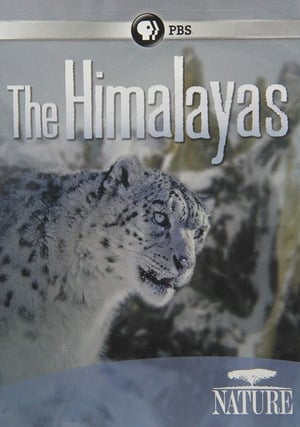
The highest mountain range in the world, the Himalayan range is far reaching, spanning thousands of miles, and holds within it an exceptionally diverse ecology. Coniferous and subtropical forests, wetlands, and montane grasslands are as much a part of this world as the inhospitable, frozen mountaintops that tower above. The word Himalaya is Sanskrit for abode of snow, fitting for a stretch of land that houses the world’s largest non polar ice masses. Extensive glacial networks feed Asia's major rivers including the Ganges, Indus, and Brahmaputra. More than a billion people rely on these glacier-fed water sources for drinking water and agriculture. The Himalayas are not only a remarkable expanse of natural beauty. They're also crucial for our survival.
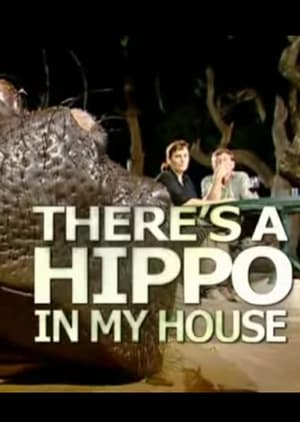
A tv documentary about a domestic hippo named Jessica and her love for sweet potatoes. Narrated by filmmaker John Waters.
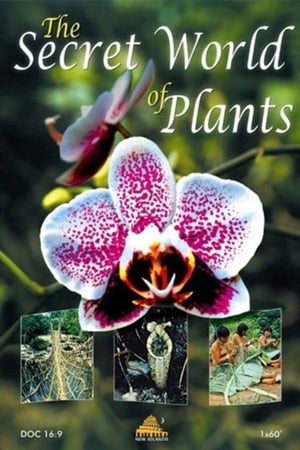
The secret world of plants gets us closer to these motionless and quiet creatures, so attractive and surprising as the rest of the living creatures. The documentary reveals the most unknown aspects of the vegetable kingdom. We learn about the secret of the eternal youth of a 3500 years old sequoia and be charmed by the 'rafflesia arnoldi' flowers, able to reach up to one meter of diameter.
Le Monde secret des libellules
In a wild and windswept corner of Australia, acclaimed film-maker Simon Plowright spends a year living with the iconic but endangered marsupial, the Tasmanian Devil.
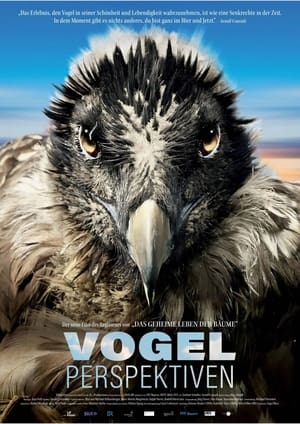
Director Jörg Adolph accompanies ornithologist Dr. Norbert Schäffer, chairman of the Bavarian Society for the Protection of Birds (LBV), on his mission to save bird life. We embark on an emotional and diverse journey of discovery into the fascinating world of birds and experience species and nature conservation in action.
A beautiful filmed short documentary about the life cycle of the arctic fox. A treat for nature and animal lovers alike.
A British artist misses his parents' wedding anniversary for a last-minute sketching commission in Cornwall, but memories of them affect his work along the way.
Ocean Voyagers explores the familiar themes of motherhood and parenting in a world as unfamiliar as it is breathtaking. Featuring a precocious newborn humpback calf and his enormous 40 ton mother, we are taken on a journey of discovery into their world.
A clash of true oceanic titans sees fights in the remote battlefields of Ascension Island. Tuna are often faster, fitter and bigger than the sharks.
A routine drone survey turns deadly when Ryan Johnson, a marine biologist based in South Africa, films a humpback whale being attacked and strategically drowned by a Great white shark. This is a total perspective shift for the creature.
The sequel to the hugely successful documentary about the beauty of Slovak nature, featuring Nigel Marven, British wildlife filmmaker, screenwriter, presenter, and adventurer, known worldwide for his distinctive style, innovative programs, and enthusiasm. The sequel to the documentary Wild Nature of Slovakia with Nigel Marven 2 will show Slovak and international viewers that Slovakia is a "hidden gem of Europe" whose biodiversity rivals that of exotic countries around the world, with populations of bears, wolves, lynxes, and many species of birds, reptiles, and amphibians.
Deep in Papua's tropical forests, the Northern Cassowary (New Guinea's largest native animal) remains an enigma—a creature rarely seen, yet vital to the ecosystem. Often regarded as dangerous, this large, flightless bird is crucial for forest regeneration through seed dispersal. With habitat loss and hunting threatening their survival, efforts to protect cassowaries are more urgent than ever.