30 years after the Chernobyl catastrophe and 5 years after Fukushima it is time to see what has been happening in the “exclusion zones” where the radioactivity rate is far above normal.
At a critical moment in the history of the written word, as humanity’s archives migrate to the cloud, one filmmaker goes on a journey around the globe to better understand how she can preserve her own Romanian and Armenian heritage, as well as our collective memory. Blending the intellectual with the poetic, she embarks on a personal quest with universal resonance, navigating the continuum between paper and digital—and reminding us that human knowledge is above all an affair of the soul and the spirit.
Deep sea: 1000m below the surface no light, immense pressure and icy temperatures. The deep sea encompasses more than 90% of the planets habitat. Yet we know less about these depths than about the moon. This film documents the technical, scientific, and ecological challenges of deep sea researchers. Scientists work worldwide together to collect data on the physical state of the upper ocean. With more than 3000 autonomous floats they monitor the oceans for influences on weather systems like El Nino or the monsoon. Does it affect global climate change? Does the deep sea offer solutions for the CO2 issue? Researchers in the Okinawa Trough are trying to find out. The sea floor harbors enormous amounts of resources: oil, natural gas, methane. Scientists work hard to try and locate these materials. Millions of deep sea dwellers are waiting for their discovery. The Census of Marine Life is trying to catalogue these bizarre ocean creatures before they disappear.
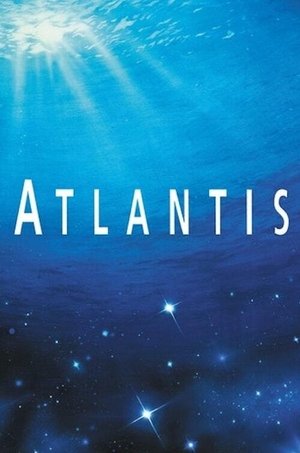
Atlantis is filmmaker Luc Besson's celebration of the beauty and wonder of the world beneath the sea, expanding upon themes touched on in his film The Big Blue. Combining stunning underwater cinematography and a hypnotic score by Eric Serra, Besson's singular vision defies dialogue or narrative structure to explore ocean life as you've never seen it before. Following the colossal success of The Big Blue, Luc Besson crisscrossed the world's seas and oceans to film the beauty and diversity of marine life: from the giant octopuses of Vancouver to the manta rays of the Pacific (New Caledonia), and the grey sharks of Tahiti. A film with no actors or sets other than the underwater world. A breathtaking view of marine species: sharks, dolphins, manatees, octopuses. An exploration of the seabed in the Bahamas, the Galapagos, Vancouver, and Tahiti.
Mirazur, Argentine-born chef Mauro Colagreco's 3 Michelin starred restaurant on France's Mediterranean coast, was awarded Best Restaurant in the World on the eve of the pandemic. Not content to rest on their laurels, Colagreco and his diverse team soldiered on through the global tragedy of the lockdown, boldly reimagining the restaurant's concept and menu to reflect their dedication to biodynamic principles. Mirazur re-emerged with a new and enthusiastic approach: the Moon Menu.
The short documentary visits the groundhog research center in the Rocky Mountains of Colorado. It was made for Sony Home Entertainment's 15th anniversary edition DVD release of the 1993 film, "Groundhog Day." It was filmed on location at the silver mining ghost town of Gothic, Colorado, near Crested Butte. The Rocky Mountain Biological Laboratory has been located there since its founding in 1928.
Bobbing around on Mediterranean waters aboard the Ocean Viking, aid workers from the French relief service SOS Méditerranée gaze at the horizon. Is that a rubber dinghy in the distance, or is it garbage? The organization sails up and down the Libyan coast looking to pick up refugees in boats. On board is a 30-strong team ready to offer help and support refugees with their asylum applications.
The thousand-year-old tradition of pottery in the Indian subcontinent is now under threat. With the market being flooded with plastic in the evolution of civilization, today this Pal community is becoming displaced.
Mollusks deserve a second chance to better their first impression since the world is truly one of a kind. Enter the secret world of mollusks!
Fall in love with our Avon and the people fighting to protect it, the Bristol way! Rave On For The Avon is a feature-length documentary film that follows campaigners and river lovers through six seasons: their highs and lows, love and loss.
The film traces two families, one of which is Jewish, who preserved the images for decades but hadn’t brought them to light. 80 years after their creation, the son of the photographer finds the forgotten negatives and launches an investigation. With a team of researchers, archivists, and animators who use near-forensic precision to reconstruct locations and contexts, they trace the circumstances of those tragic days and the lives captured in each frame.
Hosted by Val Kilmer, the documentary follows playwright Nicholas Ellenbogen as he travels to remote communities in six different African countries. In each community, the residents have taken an holistic and somewhat controversial approach to managed wildlife care.
This film presents aspects of day-to-day life in Venice, a city that is most renowned for its historic sites and large tourist trade. It tells a story about a boy who loses a prized model ship on the waterways of his city.
Documentary about Japanese pearl fishers.
10 May 1943. Something is spotted drifting ashore off the coast of Northwest Donegal, Ireland. Something that would change the lives of the local people forever.
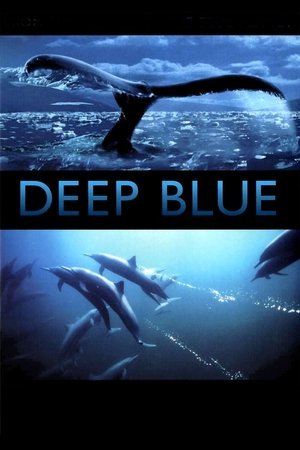
Deep Blue is a major documentary feature film shot by the BBC Natural History Unit. An epic cinematic rollercoaster ride for all ages, Deep Blue uses amazing footage to tell us the story of our oceans and the life they support.
Marko Röhr's film crew takes the viewer to Europe's last unexplored area: Iceland's unique underwater world. We explore the geysers of boiling waters and the crystal clear lakes off the coast of Iceland. We dive under the icebergs, into the tears between the continental plates and into the deep caves.
“Beneath the Concrete, The Forest” is a short experimental documentary that takes us inside an ongoing struggle inside the city of Atlanta, GA between two sides to determine the future of Weelaunee, the biggest contiguous urban forest in the country.
L'appel du glacier
The Indonesian archipelago in the Indo-Pacific Ocean comprises thousands of islands, atolls and the largest concentration of coral reefs in the world. This rich and varied environment is a product of a unique set of natural circumstances. The equatorial sun powers ocean currents among the tiny dots of land. Where the archipelago meets the western tip of New Guinea an intersection of ocean currects creates perhaps the world's richest reefs - in the region of the Rajah Ampat Islands. A coral reef houses a myriad of colors, shapes and patterns: from the bulb tentacle anemone which protects, and in turn is protected by, the brightly coloured clownfish; to the multi-branched gorgonian, home of the tiny pygmy seahorses.