The life and work of stage designer ADOLPHE APPIA, originator of the most profound agitations in contemporary theatre. Through the dynamic alternation of animated drawings and choreographies specially conceived for the film, we discover the steps of his artistic evolution.
In February 1972, the American president Richard Nixon went to China to meet Mao Zedong. In the context of the war in Vietnam and the cold war, this encounter marked a turning point in Chinese‑American relations. John Adams, a major musical figure of the last forty years, made this event of contemporary history the subject of his first opera. Nixon in China tackles the political thaw instigated by ping-pong diplomacy, begun by the invitation of the American table tennis players by their Chinese counterparts, one year before the presidential visit. A mesmerising work in which the pulsations and repetitions typical of minimalism are combined with melodic lines of great lyricism. For its entry into the Paris Opera repertoire, this work has been entrusted to the director Valentina Carrasco, who underlines the importance and the mediating power of Chinese national sport in history.
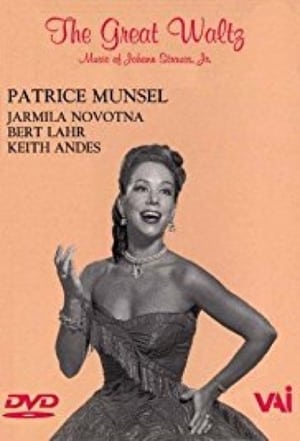
Simultaneously filmed English language version of a period operetta, in which a Polish noblewoman is romantically linked with a revolutionary student activist.
The deformed Phantom who haunts the Paris Opera House causes murder and mayhem in an attempt to make the woman he loves a star.
A man who accused a catholic bishop of abusing him when he was a child dies in the Austrian city Salzburg. Everyone except his widow and the eccentrical detective Simon Brenner keeps silent and believes that the man killed himself.
Although he is unanimously credited with having democratised opera, making it accessible to the greatest number, focus is rarely put on the strategy he devised and implemented in order to carry out his actions, nor what his actions reveal of the man and artist, and of the resulting metamorphosis from opera singer to pop artist. Through this angle, this film sets out to pay tribute to the man who summed up his credo, obsession and life’s work, in the following way: “They led the public to believe that classical music belonged to a restricted elite. I was the way to prove to the world that was wrong.
The World Orchestra for Peace, conducted by Sir Georg Solti, performs pieces by Rossini, Bartók, and Beethoven in Victoria Hall, Geneva in July 1995 in celebration of the fiftieth anniversary of United Nations.
American composer Jake Heggie’s compelling masterpiece, the most widely performed new opera of the last 20 years, arrives in cinemas in a haunting new production by Ivo van Hove. Based on Sister Helen Prejean’s memoir about her fight for the soul of a condemned murderer, Dead Man Walking matches the high drama of its subject with Heggie’s beautiful and poignant music and a brilliant libretto by Tony and Emmy Award–winner Terrence McNally. Met Music Director Yannick Nézet-Séguin takes the podium, with mezzo-soprano Joyce DiDonato starring as Sister Helen. The outstanding cast also features bass-baritone Ryan McKinny as the death-row inmate Joseph De Rocher, soprano Latonia Moore as Sister Rose, and legendary mezzo-soprano Susan Graham—who sang Helen Prejean in the opera’s 2000 premiere—as De Rocher’s mother.
The success of Verdi’s third opera, a stirring drama about the fall of ancient Jerusalem at the hands of Nebuchadnezzar (Nabucco), catapulted the 28-year-old composer to international fame. The music and Verdi himself were subsumed into a surge of patriotic fervor culminating in the foundation of the modern nation of Italy. Specifically, the Chorus of the Hebrew Slaves ('Va, pensiero'), in which the Israelites express their longing for their homeland, came to stand for the country’s aspirations for unity and that exciting era in Italian history, the Risorgimento, or 'Resurgence'.
Director Carrie Cracknell makes her Met debut, reinvigorating the classic story with a staging that moves the action to the modern day, in a contemporary American industrial town.
Extraordinary soprano Asmik Grigorian tackles the demanding role of Cio-Cio-San, the loyal geisha at the heart of Puccini’s devastating tragedy. Tenor Jonathan Tetelman stars as the callous American naval officer Pinkerton, whose betrayal destroys her. Mezzo-soprano Elizabeth DeShong reprises the role of the steadfast maid Suzuki, and baritone Lucas Meachem is the American consul Sharpless. Acclaimed maestro Xian Zhang takes the podium to conduct Anthony Minghella’s vivid production.
Two singers at the height of their powers—radiant soprano Nadine Sierra and tenor sensation Benjamin Bernheim—come together as the star-crossed lovers in Gounod’s sumptuous Shakespeare adaptation, with Met Music Director Yannick Nézet-Séguin on the podium to conduct one of the repertoire’s most romantic scores. Bartlett Sher’s elegant staging also features baritone Will Liverman and tenor Frederick Ballentine as the archrivals Mercutio and Tybalt, mezzo-soprano Samantha Hankey as the mischievous pageboy Stéphano, and bass-baritone Alfred Walker as Frère Laurent.
From pioneering radio broadcasts to high-definition transmissions in cinemas in more than 70 countries, the Met has always strived to use state-of-the-art technology to share extraordinary performances with as large an audience as possible. Therefore, when the COVID-19 pandemic forced the opera house into darkness for more than a year, the company once again found innovative ways to present the world’s greatest artists to music lovers around the globe. Jonas Kaufmann, one of opera’s most in-demand tenors, kicked off the series at Bavaria’s magnificent Polling Abbey with a program of heroic arias, accompanied by pianist Helmut Deutsch. Including classic selections from the Italian and French repertoires—as well as a few lesser-known gems—the concert provided a rousing start to this groundbreaking new initiative.
A collaboration between award-winning American filmmaker Sofia Coppola and Italia haute couture king Valentino comes in the form of a revival of Giuseppe Verdi's classic opera, La Traviata. Captured live from the Teatro dell'Opera di Roma.
Originally set in the 15th century, Tchaikovsky's "The Enchantress" is updated to the present day in this innovative production. The charismatic, emancipated Nastasya, who rejects the advances of the devious Mamïrov, duly faces the implacable forces of traditional values in a society riven by divisions between liberal freedoms and religious orthodoxies. The tragic outcome engulfs everyone...
Disciplined Italian composer Antonio Salieri becomes consumed by jealousy and resentment towards the hedonistic and remarkably talented young Salzburger composer Wolfgang Amadeus Mozart.
With their “musical comedy” in the spirit of Mozart, Richard Strauss and his brilliant librettist Hugo von Hofmannsthal created the most popular of all their works and one of the most frequently performed operas of all time. Disguised as a refined comedy, light as a feather and extremely entertaining, “Der Rosenkavalier” tackles universal themes such as love, sexuality, marital fidelity, and the changes that human relationships undergo over time. All set to music of the most sumptuous kind. With its prestigious cast under the inspired direction of Harry Kupfer, the 2014 Salzburg Festival production of *Der Rosenkavalier* was one of the most internationally acclaimed interpretations of the work since the start of the new millennium.
Claude D'Anna's film of Verdi's Macbeth is a gloomy affair, stressing the descent into madness of the principal villains. It's acted by the singers of the Decca recording of the opera (with two substitutions of actors standing in for singers) and the lip-synching is generally unobtrusive. The musical performance is superb, conducted by Riccardo Chailly with admirable fire, and sung by some of the leading lights of the opera stages of the 1980s. Shirley Verrett virtually owned the role of Lady Macbeth at the time, and she delivers a terrific performance, the voice equal to the role's wide register leaps and it's suffused with emotion, whether urging her husband on to murder or maddened by guilt in the Sleepwalking Scene. Leo Nucci's resonant Macbeth may lack the ultimate in vocal color and steadiness (his last notes of the great aria Pietà, rispetto, amore are wobbly) but he compensates with intensity in both singing and acting.
When Barbe-bleue loses his fifth wife, the turbulent Boulotte is selected at random to be the next one. But Barbe-Bleue falls in love with Hermia – who loves the shepherd Saphir – and soon wearies of Boulotte. So, he asks his alchemist to concoct for him an “anti-wife” philtre. But, as on the previous occasions, it is merely a sleeping potion and Boulotte wakes up the other five “dead” wives. They reappear, dressed up as gypsies and bring the truth to light.
John Adams’s mesmerizing score, in the powerful production of Penny Woolcock, tells the story of one of the pivotal moments in human history—the creation of the atomic bomb. Conducted by Alan Gilbert in his Met debut, this gripping opera presents the human face of the scientists, military men, and others who were involved in the project, as they wrestled with the implications of their work. Baritone Gerald Finley gives a powerful star turn in the title role as the brilliant J. Robert Oppenheimer.