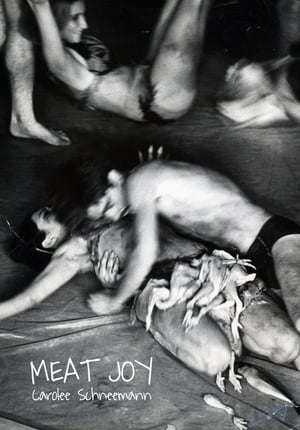
"Meat Joy is an erotic rite — excessive, indulgent, a celebration of flesh as material: raw fish, chicken, sausages, wet paint, transparent plastic, ropes, brushes, paper scrap. Its propulsion is towards the ecstatic — shifting and turning among tenderness, wildness, precision, abandon; qualities that could at any moment be sensual, comic, joyous, repellent. Physical equivalences are enacted as a psychic imagistic stream, in which the layered elements mesh and gain intensity by the energy complement of the audience. The original performances became notorious and introduced a vision of the 'sacred erotic.' This video was converted from original film footage of three 1964 performances of Meat Joy at its first staged performance at the Festival de la Libre Expression, Paris, Dennison Hall, London, and Judson Church, New York City."
Luis Bunuel, the father of cinematic Surrealism, made his film debut with 'Un Chien Andalou' in 1929 working closely with Salvador Dali. Considered one of the finest and controversial filmmakers with, 'L’Age d’Or' (1930), attacking the church and the middle classes. He won many awards including Best Director at Cannes for 'Los Olvidados' (1950), and the coveted Palme d’Or for 'Viridiana' (1961), which had been banned in his native Spain. His career moved to France with 'The Diary of a Chambermaid' with major stars such as Jeanne Moreau and Catherine Deneuve.
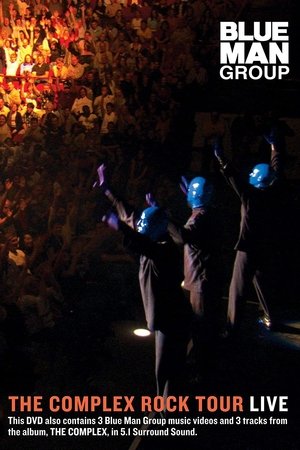
Offbeat performance artists The Blue Man Group have finally been captured live on this disc that features concert footage, three full-length music videos and three songs from Blue Man Group's album, "The Complex." The live footage was filmed during Blue Man Group's successful and widely acclaimed August 2003 rock tour, where they wowed 9,000 fans in two sold-out concerts.
A collaboration between filmmaker Ayoka Chenzira and performance artist Thomas Pinnock, who performs his "immigrant folktales" using traditional lore of his native Jamaica to dramatize his migration to New York in the 60's.
Kirby Dick's provocative documentary investigates the secretive and inconsistent process by which the Motion Picture Association of America rates films, revealing the organization's underhanded efforts to control culture. Dick questions whether certain studios get preferential treatment and exposes the discrepancies in how the MPAA views sex and violence.
In this animated documentary, Los Angeles filmmaker Dion Labriola recounts his all-consuming childhood quest to contact his teen idol, Ike Eisenmann - and the magical turn of events that led him toward his goal (some 40 years later).
A documentary directed by Winding Refn's wife, Liv Corfixen, and it follows the Danish-born filmmaker during the making of his 2013 film Only God Forgives.
Alternately hilarious and horrifying, Overnight chronicles one man's misadventures of making a Hollywood movie. It starts out as a rags to riches story as Troy Duffy, a Boston-bred bartender, sells his first screenplay for The Boondock Saints.
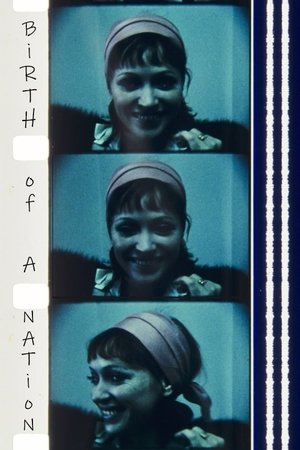
Jonas Mekas assembles 160 portraits, appearances, and fleeting sketches of underground and independent filmmakers captured between 1955 and 1996. Fast-paced and archival in spirit, the film celebrates the avant-garde as its own “nation of cinema,” a vital community existing outside the dominance of commercial film.
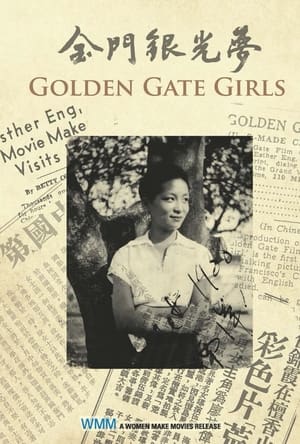
The film traces the life and times of Esther Eng, a San Francisco native known as Hong Kong’s first “directress.” She directed 10 Cantonese talkies.
A hybrid feature film that investigates contemporaneity through the body and its countless possibilities of expression and meanings. The film puts the body and the idea of the body in evidence, through metalanguage, articulation and confrontation of documentary, fictional and performative languages. The film follows the trajectory of the main character who uses her own body to formulate universes and investigate the meanings that are drawn in it. In a kind of subjective diary written on her skin, she records sensations and reflections, building relationships with thinkers, performances and archival materials, which lead her to other bodies and other stories.
Filmed at New York’s Carnegie Hall, Cut Piece documents one of Yoko Ono’s most powerful conceptual pieces. Performed by the artist herself, Ono sits motionless on the stage after inviting the audience to come up and cut away her clothing in a denouement of the reciprocity between victim and assailant.
Pistolteatern in Stockholm, Sweden, was a leading experimental scene in the mid 1960s, comparable to the Living Theater in New York. In the years 1964-67. Pistolteatern produced theatre plays, exhibitions and happenings at a very high pace. The name, Pistolteatern, comes from two of creators, PI Lind and STaffan OLzon.
A young drag queen from Andalusia exposes the difficulties of adding aspects of her homeland culture to her artistic expression.
A documentary about the production of From Dusk Till Dawn (1996) and the people who made it.
An in-depth look at artist/filmmaker David Lynch's movies, paintings, drawings, photographs, and various other works of art. Features interview footage and commentary by family members, friends, fans, and people he's worked with, as well as behind-the-scenes antics of some of his most critically praised efforts.
With humor, prolific director Víctor Matellano tells the story of one of the most iconic and problematic cult films of Spain's "fantaterror": Los resucitados by Arturo de Bobadilla. A story of ambition, frustration and the everlasting will of the most passionate cinephiles.
A young woman wanders around New York City and stumbles across a number of strange characters and settings that represent the "underground" areas of the city. She sees stand up comedy in Central Park, a prostitution auction, a voodoo ceremony, an S&M club, and a number of very interesting performance artists. These are just a few of the sights and sounds of New York that she encounters.
During the 1980 exhibition of Burden's monumental kinetic sculpture The Big Wheel at Ronald Feldman Fine Arts, New York, Burden and Feldman were interviewed by art critic Willoughby Sharp. Burden articulates the process of creating The Big Wheel, a 6,000-pound, spinning cast-iron flywheel that is initially powered by a motorcycle, and discusses its relation to his earlier performance pieces and sculptural works. Addressing his motivations and the meaning of this potentially dangerous mechanical art object, Burden discusses such topics as the role of the artist in the industrial world, "personal insanity and mass insanity," and "man's propensity towards violence."
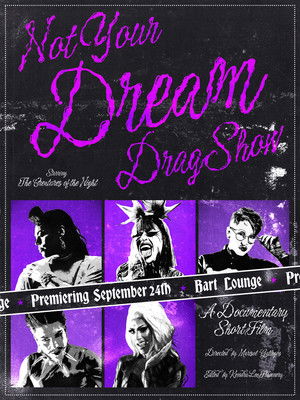
Dragphoria is a short film about drag and identity, finding yourself in a noisy crowd, and slowly accepting yourself after a long-awaited denial.