Shut Up and Sing is a documentary about the country band from Texas called the Dixie Chicks and how one tiny comment against President Bush dropped their number one hit off the charts and caused fans to hate them, destroy their CD’s, and protest at their concerts. A film about freedom of speech gone out of control and the three girls lives that were forever changed by a small anti-Bush comment
Ré-inventer l'enfance
Could an algorithm be able to authenticate masterpieces more reliably than human experts? And is it possible to create new painting from a long-dead master? This documentary explores the upheavals caused by the arrival of artificial intelligence in the art world.
A portrait of sculptor Barbara Hepworth revisiting the Yorkshire landscapes that inspired her and her home studio in St Ives, Cornwall.
Stuart Cooper's short about the work of Spanish artist Juan Genovés is an inspired introduction to the works of this extraordinary artist, exploring its minimalist aesthetic and storytelling qualities through a variety of cinematic techniques, including rostrum, animation, news footage and live action recreations.
One year after the death of Simone de Beauvoir (14 april 1986) Delphine Seyrig pays homage by visiting her grave. which she finds still covered with flowers and letters from all over the world.
Leonardo da Vinci is acclaimed as the world’s favourite artist. Many TV shows and feature films have showcased this extraordinary genius but often not examined closely enough is the most crucial element of all: his art. Leonardo’s peerless paintings and drawings will be the focus of Leonardo: The Works, as EXHIBITION ON SCREEN presents every single attributed painting, in Ultra HD quality, never seen before on the big screen. Key works include The Mona Lisa, The Last Supper, Lady with an Ermine, Ginevra de’ Benci, Madonna Litta, Virgin of the Rocks, and more than a dozen others.
She was a prolific self-portraitist, using the canvas as a mirror through all stages of her turbulent and, at times, tragic life. This highly engaging film takes us on a journey through the life of one of the most prevalent female icons: Frida Kahlo. Displaying a treasure trove of colour and a feast of vibrancy on screen, this personal and intimate film offers privileged access to her works and highlights the source of her feverish creativity, her resilience and her unmatched lust for life, men, women, politics and her cultural heritage.
Actor Rawiri Paratene was 16 years old when he joined Māori activist group Ngā Tamatoa (Young Warriors) in the early 1970s. "Those years helped shape the rest of my life," says Paratene in this 2012 Māori TV documentary, directed by Kim Webby. The programme is richly woven with news archive from the 1970s, showing protests about land rights and the Treaty of Waitangi, and a campaign for te reo to be taught in schools. Several ex Ngā Tamatoa members — including Hone Harawira, Tame Iti and Larry Parr— are interviewed by Paratene, who also presents the documentary.
The voices of five gay men who cruised for sex at the World Trade Center in the 1980s and 1990s haunt the sanitized, commerce-driven landscape that is the newly rebuilt Freedom Tower campus.
The first feature-length documentary that fully explores how the toxic social and political Canadian context after 1968 created some of the most nihilistic and imaginative Canadian cult films of the 1970s and 80s and beyond.
Anton Spielmann (18) and his two younger friends Basti Muxfeldt and Jonas Hinnerkort are living in their family homes with their parents in an idyllic village close to Hamburg. The three of them founded the band 1000 Robota. The band has an ambitious aim: „We want to cause creation not to remind of it”, and they want to live up to their ideals. In a society affected by economic pressure 1000 Robota are questioning themselves and others and they don‘t want to meet other people‘s expectations. In a world of excessive supply they are looking for significance and want to unite with others to create a new way of youth culture. But soon they have to face some serious difficulties.
Belgian art historian and filmmaker Paul Haesaerts (1901–1974) made a significant contribution to the promotion of modern Flemish art. In the late 1940s, he started experimenting with the medium of film to practice a new form of lens-based art criticism. The understudied documentary "Quatre peintres belges au travail" (1952) presents Belgian artists Edgar Tytgat, Albert Dasnoy, Jean Brusselmans and Paul Delvaux at work in their studio. On a large sheet of glass placed in front of the camera, they each paint one of the seasons that also represent a stage in a person’s life. A close reading of this Kodachrome color film sheds light on the context of mid-century art reproductions, mass media and post-war Flemish culture. It also examines in what way this film operates as Haesaerts’s concept of cinéma critique, while raising questions as to the way Haesaerts attempted to reconcile the spatial art of painting with the temporal medium of film.
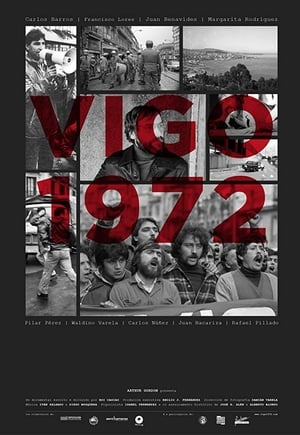
In 1977, the workers of the INAVE vehicle assembly company went on strike. This strike was declared legal, one of the few registered in the country. This strike was also a strike that demanded great sacrifice from the workers. It lasted more than three months, more than three months without pay and in constant struggle, until the strikers finally achieved their victory.
Five years in production, this is the most extensive film ever made about one of the greatest artists of all time – Caravaggio. Featuring masterpiece after masterpiece and with first-hand testimony from the artist himself on the eve of his mysterious disappearance, this beautiful new film reveals Caravaggio as never before. Multi-award-winning filmmakers David Bickerstaff and Phil Grabsky delve into the hidden narratives of Caravaggio’s life, piecing together clues embedded within his incredible art. The intriguing self-depictions within his works — sometimes disguised, sometimes in plain sight — offer a rare window into his psyche and personal struggles. Join us as we unravel the story of one of history’s most brilliant, complex and controversial figures.
A short animated documentary featuring archival recordings of the filmmaker's Volga-German Great-Great-Grandmother, Mary Frank Lind, in which she recalls key memories of childhood—her father's windmill, warm rains, wolf sightings, bone trading, and her passion for carpentry, which broke gender norms but was supported by her father.
This 135-minute documentary offers to reopen this magical parenthesis which has seen the birth of a whirlwind of artists with very different styles. From Chantal Goya to Annie Cordy, from Pierre Perret to Carlos. They knew how to bring each in their own way generations of children into their poetic universe.
A roller-coaster ride through the history of American exploitation films, ranging from Roger Corman's sci-fi and horror monster movies, 1960s beach movies, H.G. Lewis' gore-fests, William Castle's schlocky theatrical gimmicks, to 1970s blaxploitation, pre-"Deep Throat" sex tease films, Russ Meyer's bosom-heavy masterpieces, etc, etc. Over 25 interviews of the greatest purveyors of weird films of all kind from 1940 to 1975. Illustrated with dozens of films clips, trailers, extra footage, etc. This documentary as a shorter companion piece focusing on exploitation king David F. Friedman.
An unconventional portrait of painter Frida Kahlo and photographer Tina Modotti. Simple in style but complex in its analysis, it explores the divergent themes and styles of two contemporary and radical women artists working in the upheaval of the aftermath of the Mexican Revolution.
This is Poe and Král's first effort, shot on small-gauge stock, before their more well-known endeavor The Blank Generation (1976) came to be. A "DIY" portrait of the New York music scene, the film is a patchwork of footage of numerous rock acts performing live, at venues like Madison Square Garden, Radio City Music Hall, the dive bars of Greenwich Village and, of course, CBGB.