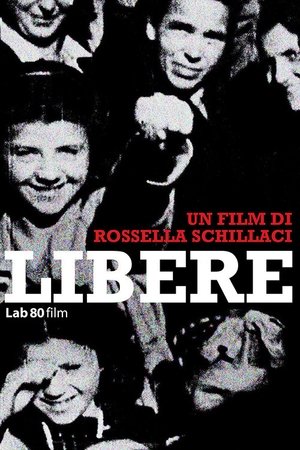
1943. They have never stepped foot on French soil but because France was at war, Said, Abdelkader, Messaoud and Yassir enlist in the French Army, along with 130,000 other “indigenous” soldiers, to liberate the “fatherland” from the Nazi enemy. Heroes that history has forgotten…
In the years before World War II, a penniless Japanese child is torn from her family to work as a maid in a geisha house.
He was one of the most notorious Nazi war criminals, infamous for his assassination attempts on twins. But at the end of World War II, he simply disappeared...
Part of the Canada Carries On series, this short film portrays the First Division of the Canadian Active Service Force in Aldershot, England. Using an intimate letter home as a narrative device, this film reveals how the troops were received, what their living conditions were like, how they would get along with their English allies and how they spent their leisure time.
1981: for the first time, contemporary witnesses of the Holocaust speak on German television in the two-part documentary "Witnesses - Testimonies to the Murder of a People" - at prime time on the first channel. Only 36 years after the Second World War, Bremen filmmaker Karl Fruchtmann has created a counter-design to the US drama series "Holocaust". While there are hardly any people left today who can personally recount their experiences of the Holocaust, there were still many contemporary witnesses in the early 1980s for whom the murder of the European Jews was still very present. Karl Fruchtmann interviewed 60 survivors of the Nazi concentration camps in Israel and Poland, the tapes are in the archives of Radio Bremen, almost 80 hours of interviews, a historical legacy! Only a small part of them has been published so far.
Documentary about WWII propaganda cartoons.
Churchill, a name typically associated with braveness and altruism. Recently found evidence from Soviet and British sources however brings up questions about Churchill's doings in the conferences of Tehran, Yalta and Potsdam. Why did he agree to give Stalin large parts of Poland? The story of two world leaders in times of war - it is also the story of Poland.
Different factions in WWII-era Holland race to find a stash of Nazi gold.
One day, in Savigny, an 18-year-old boy left his house in the middle of the war, saying: "I'm leaving, I'm going to kill Hitler." His name was Joseph, he was Jewish, he was my great-uncle. He disappeared during the night of the Occupation, and his existence became a family secret. He disappeared from history, the small as well as the big: he is not on any deportation list, and the only archive where he appears is a family photo of him as a child. It disappeared like a stone at the bottom of the water, instead of going up in smoke in the sky of Poland. What did he become? And why didn't anyone mention his name anymore?
There were five Marines and one Navy Corpsman photographed raising the U.S. flag on Mt. Suribachi by Joe Rosenthal on February 23, 1945. This is the story of three of the six surviving servicemen - John 'Doc' Bradley, Pvt. Rene Gagnon and Pvt. Ira Hayes - who fought in the battle to take Iwo Jima from the Japanese.
The epic tale of a class struggle in twentieth century Italy, as seen through the eyes of two childhood friends on opposing sides.
Two people, a Frenchman and a Jewish German woman, meet on a train while escaping the German army entering France.
In Montauban in 1944, Julien Dandieu is a surgeon in the local hospital. Frightened by the German army entering Montauban, he asks his friend Francois to drive his wife and his daughter in the back country village where Julien has an old castle. One week later, Julien decides to meet them for the week end, but the Germans are already occupying the village.
A young Catholic priest from Boston confronts bigotry, Nazism, and his own personal conflicts as he rises to the office of cardinal.
A couple sets up an African game preserve, only to have British and Italian armies fight over the waterholes.
In the summer of 1941, the United States and Japan seem on the brink of war after constant embargos and failed diplomacy come to no end. "Tora! Tora! Tora!", named after the code words used by the lead Japanese pilot to indicate they had surprised the Americans, covers the days leading up to the attack on Pearl Harbor, which plunged America into the Second World War.
"Patton" tells the tale of General George S. Patton, famous tank commander of World War II. The film begins with Patton's career in North Africa and progresses through the invasion of Germany and the fall of the Third Reich. Side plots also speak of Patton's numerous faults such his temper and habit towards insubordination.
April, 1940. The eyes of the world are on Narvik, a small town in northern Norway, a source of the iron ore needed for Hitler's war machine. Through two months of fierce winter warfare, the German leader is dealt with his first defeat.
The story of black and mixed race people in Nazi Germany who were sterilised, experimented upon, tortured and exterminated in the Nazi concentration camps. It also explores the history of German racism and examines the treatment of Black prisoners-of-war. The film uses interviews with survivors and their families as well as archival material to document the Black German Holocaust experience.
This war drama depicts the U.S. and Japanese forces in the naval Battle of Midway, which became a turning point for Americans during World War II.