A lost film. As described in a film magazine Exhibitors Herald on March 16, 1918: "a forest ranger known only as Headin' South (Fairbanks) goes forth in search of Spanish Joe (Campeau), a Mexican responsible for most of the treachery and outlawry along the U.S.-Mexican boarder. Headin' South gains quite a reputation as he goes along and finally believes himself worthy of joining Joe's band. in a whirlwind finish in which Joe is captured, Headin' South meets one of Joe's near victims (MacDonald) and falls in love with her."
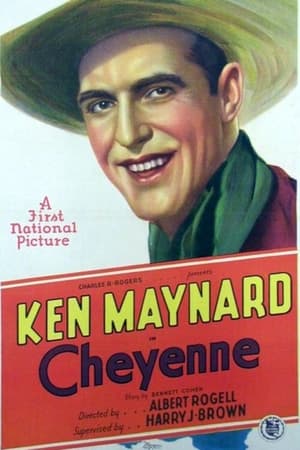
Cal Stanley goes undercover as a beef buyer in order to catch the gang responsible for stealing the area's cattle.
Cal Roberts can ride anything with four legs. He enters the contests held at big rodeo. He wins all honors and meets a girl who races horses to help her father clear pressing debts. Complications follow, but Cal wins the girl.
Captain George Curtis is sent from Washington, D.C. to improve conditions on an Indian reservation. After ousting a prejudiced government agent, George earns both the allegiance of the Indians and the hostility of neighboring cattlemen, who hope to appropriate the reservation through political corruption.
The film focused on a young black man who joins the Royal Canadian Mounted Police and becomes a hero by rescuing a captive mixed-race woman from a hostile American Indian tribe. The young man later purchases a ranch that becomes the foundation for great financial wealth.
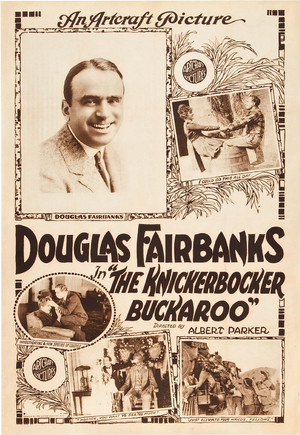
A lost film. Teddy Drake is a pleasure-seeking aristocrat who ends up expelled from his exclusive Fifth Avenue club for playing practical jokes and other rambunctious antics. He decides to reform his selfish ways and boards a train heading heading for the Southwest.
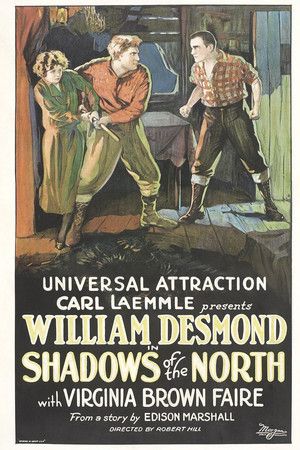
Gold miner Edd Denmeade loves Lucy Watson, the sister of the official mining claim recorder. Denmeade suspects Watson of killing his father, who after a poker game was shot by a gambler "who shuffles with one hand." The real murderer, Sam Spralls, has convinced Watson that he killed Denmeade and threatens to expose him unless Watson assigns him all the gold claims. Spralls assembles a band of killers to jump the claims when Watson complies. Eventually, Denmeade learns the identity of the killer when he sees Spralls shuffle a deck of cards. He forms a vigilante party and rids the community of Spralls and his gang.
Carleton and Genevieve are actors who become stranded in a western town. Carleton finds work at a ranch, where he helps the owner and his granddaughter defend their enterprise against cattle rustlers.
Mounted Fury is a 1931 American drama film directed by Stuart Paton and written by Betty Burbridge.
Ben Darby and Pancake, his father, are owners of a mining claim in Northwest Canada. Ben goes to war, leaving Pancake to run the mine. During Ben's absence three claim jumpers take possession of the mine: one of the men is the father of Beatrice, Ben's sweetheart; another, a rival suitor. Pancake is murdered when he and Ben plot to regain the claim. Ben kidnaps Beatrice, resolving to obtain revenge through her. Ben finds that she knew nothing of the stolen claim and that her father was innocent of Pancake's murder. Ben then resolves to find the culprit and bring them to justice.
The famous black cowboy Bill Pickett shows his prowess in rodeos. Only small parts of the film survive.
A hunted bandit cleverly outwits the sheriff after a thrilling chase over rocks and sandhills. Reaching the Point Loma Lighthouse, he introduces himself as a revenue man to the lighthouse keeper and his daughter.
In the mountain wilds of Tennessee there is no end to the manufacture of moonshine whiskey. Whole families live on this nefarious trade and many of them die by it. The men who work at this business are constantly hunted by United States revenue officers as violators of the law for manufacturing of liquor without a special license. The "Mountain wife" loves her husband and stands by and shields him from his enemies, the officers; when they are on his track she hides him, then throws them off his trail, giving him time to escape in the mountain fastnesses, as we are shown in this interesting and thrilling picture.
Nora, who is the president of the Bachelor's Club, receives a letter announcing the death of her uncle in the west and that he has made her heir to his immense fortune. Including a ranch at Grey Oaks. Nora decides to go west and take charge of the ranch and run it herself a la suffragette fashion. She invites all the girls to go with her and they start for their new home. Arriving at Grey Oaks they pay no attention to the cowboys who greet them at the station but go at once in the old stage-coach to the ranch. The cowboys follow, approach the ranch, offer their services and are rewarded by being driven from the premises. The boys make up their minds to "get next" to the girls and devise a scheme.
A short silent film produced by Gaston Mèliès in San Antonio.
Lorna is a woman and she is all business when it comes to running the "L.L." Ranch and she has no trouble in handling it and the "boys" who work for her, especially "Jeff," her foreman, who gives her a hand. She evidently appreciates his services and thinks him a handy and pleasant fellow to have around, her "Runs" are the best in Texas. There is a question of title to her land. Finally the Supreme Court decides against her and she is obliged to turn the "L.L." Ranch over to Sir Reginald Coutts-Harcourt, in whose favor the decision has been made.
Margie, of the "Flying B" ranch, knew it was to run across a snake in the tall Texas grass, but she did not realize that there are people who, like snakes, conceal themselves until they are ready to sting. Consequently, when a sleek looking tenderfoot asked to become a boarder at the "Flying B" Margie favored him, though her father was suspicious. Margie is soon smitten with the stranger, much to the chagrin of Jack, the foreman, with whom Margie had previously been very friendly. Jack does not get ugly over the matter, but keeps his eyes open.
"I do hate learnin', but oh! you schoolmarm!" is what the boys at the gulch said when Mary came to town; and, from "Big Bill" down to Hop Lee, the Chink, they all took to study, and to courtship. The rivalry is friendly until the new foreman blows in and takes the inside track, then "Big Bill" gets jealous. At the swell (?) reception the foreman cuts Bill out and Bill decides to "lay for him." The foreman soon discharged a greaser who later robs the paymaster and contrives to fix the blame on the foreman.
Bill Sanders, sheriff of Alkali County, gets a warrant for Red Rube, the tough. He gives it to his deputies to serve, but Rube gets busy with the strong arm and makes them look like monkeys. When several installments of deputies have failed, Bill Sanders gets on the job himself. Bill not only knows how to juggle the 44 Colts, but he keeps gray matter in his skull. In going after Red Rube, he decides to rely on his brains instead of his hardware. He disguises himself as a tenderfoot, arms himself with a camera, and gets on Rube's trail. Things are warm and lively thereafter, but Sanders gets his man, and the honor of Alkali County is preserved.
Mary is only the assistant housekeeper of the ranch, but she has a heart as big and faithful as a queen's. Bob, who has been turned from home by his uncle because he has his own notions of marriage, comes to the ranch and Mary falls in love with him. Bill Rank, the foreman, contrives to ruin Bob's good name and make him "do time." Mary is faithful to Bob and makes a big sacrifice to help him in his trouble. Times are dark for a while, but Fate works things out at last. Bill Rank is hurt in a runaway, and, looking death to the face, he confesses the truth. Bob's good name is restored, he marries Mary, and, to cap the climax, he falls heir to a fortune.