Die Affäre Meili
A house. A shelter. A man the last one left in the homeland. A woman returns to her community every year. The daughters and husband who have lost all traditions. A rapper who raps in the old language. In 1990 Susanna marries Udo. Their wedding is the last one celebrated between two Saxons in their village. After that the couple emigrated like half a million of Transylvanian Saxons. After 30 years in Germany the relationship between Susi and Udo has gone stale and they haven't taught their native language to their daughters that feel just German. Georg on the other hand is proud of his identity. He hopes with his rap to spread the young generations about the heritage to make them proud of being a Saxon. This is the choral story of a family who is learning to change in order not to disappear.
At 88 years old, Ofelia reflects on her life under the attentive gaze of her grandchildren. Family, love, disputes, adventures, and tragedies. A story brimming with characters that, as a result of the passing of time, leaves Ofelia as the sole witness to recount it
The first of a documentary serie about rural France.
A short documentary about the rapidly disappearing era of heritage movie palaces and the film going experience once offered within those hallowed walls.
In the Sardinian town of Tonara, where the ancient art of crafting cowbells teeters on the edge of extinction, a family battles to preserve their heritage, passing down skills to a new generation while grappling with personal struggles and the pull of modernity. English subtitles.
What does blood have to do with identity? Kendra Mylnechuk, an adult Native adoptee, born in 1980 at the cusp of the enactment of the Indian Child Welfare Act, is on a journey to reconnect with her birth family and discover her Lummi heritage.
The film is about inspiration, reminding the power of collective action, the importance of preserving the heritage of Santa Ana, and the boundless potential that lies within the community. It is a story that deserves to be told, a story that will resonate with audiences of all ages and backgrounds.
In early 2023 Historic England commissioned MSDS Marine and Michael Pitts to produce a film to celebrate fifty years of Protected Wreck sites and the role volunteers have played in their management. The film draws on Michael’s extensive film archive as well as new footage to really showcase protected wreck sites through stunning imagery and explores the role volunteers have had on working on them through a series of interviews.
Motivated by family memories, a filmmaker returns to the land of his mother to reflect on his identity and deep cultural heritage.
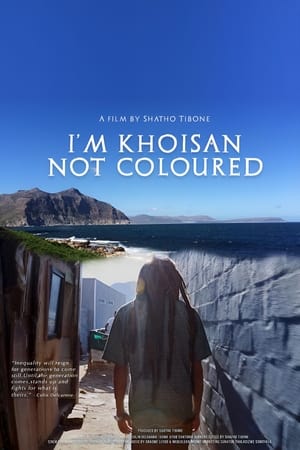
In the wake of one of the worst social experiments in the history of mankind, 'I'm not Black, I'm Coloured' is one of the first documentary films to look at the legacy of Apartheid from the viewpoint of the Cape Coloured. A people who in 1994, embraced the concept of Desmond Tutu's all encompassing 'rainbow nation', but soon thereafter realized that freedom, privilege, economic growth and equality would not include them. A people who for more than 350 years has been disregarded, ignored, belittled, and stripped of anything they can call their own enduring a complex psychological oppression and identity crisis unparalleled in South African history.
As historic ships vanish from British waters, a group of passionate volunteers fights to save the Balmoral—a 1949 passenger vessel moored in Bristol’s iconic harbour—battling time, bureaucracy, and financial struggles to preserve a piece of maritime history before it’s lost forever.
From Belgium, Jialai Wang maintains contact via smartphone and camera with her mother and grandmother in China. When her grandmother’s health deteriorates, Jialai returns to Shanghai, but when she arrives, her grandmother has already died, and she is left alone with her mother. A devout Buddhist, her mother seems to pay more attention to her daily prayers, Maoist past and dog Dongdong than she does to her daughter. She herself had been abandoned as a child by her own mother, when she divorced Jialai’s grandfather and moved to the city.
A docu-film about the city Lucknow where the creators ask their family members important questions they have always wanted answers to, while indulging in tomfoolery around town. The film showcases the differences in the way three different generations perceive Lucknow. An ode to the city, and an attempt to provide solace to the social misfits of the creators' hometown.
A powerful cultural documentary about a Caribbean father and son who return to Grenada to reclaim ancestral stories. Blending folklore, myth, and underwater visuals, the film preserves Black heritage and reframes the feared Jab Jab as a symbol of resistance and identity.
Batbileg lives in a ger district of Ulaanbaatar with his wife and two children, making a living by training falcons for hunting and showing them to tourists. Every year, at the beginning of summer, he captures and trains the hawks, and at the start of winter, he releases them back into the wild. One of his recurring endeavors begins with training a hawk named “Andgai.”(Oath). However, laws and regulations on bird training are lacking, and the densely populated urban environment, crowded with people and buildings, is far from suitable. Batbileg aims to revive Mongolia’s ancient falconry culture, raise public awareness of the value of falcons, and pass on conservation ideals to the younger generation. Yet, in the face of the many challenges before him, he is forced to confront a dilemma: should he comply with the law, or remain faithful to his ancestral tradition?
"The palm trees on the reverse are a delusion; so is the pink sand". This line, taken from a poem by Margaret Atwood, lights the path traced in "Postcard". As the years go by, landscapes transform, take on new meanings, and hold onto joys that will never be regained. The sea and the beach, once stages of happy summers, romances, and encounters, will turn into concentration camps or centers of detention and torture. This occurs across different times and places. In this piece, I embark on a journey through some of my works that explore the relationship between testimony, spaces, and time, engaging in dialogue with the beautiful film directed by Alejandro Segovia in 1972.
Negotiating Amnesia is an essay film based on research conducted at the Alinari Archive and the National Library in Florence. It focuses on the Ethiopian War of 1935-36 and the legacy of the fascist, imperial drive in Italy. Through interviews, archival images and the analysis of high-school textbooks employed in Italy since 1946, the film shifts through different historical and personal anecdotes, modes and technologies of representation.
For some time now, The State Commission of the Lithuanian Language is at the center of tough discussions. For some, it’s an institution which safeguards the most important principles of the language, but for others, it’s an anachronism of the Soviet regime. This film offers a first-time glimpse into the commission’s work
Oldemors reise