In this animated short, a terrible curse deprives Balthasar's kingdom of its stories. Taking the unicorn's horn back into The Belly of the Earth is the solution. Poppety will lead an expedition, by chance uncovering a hitherto closely guarded family secret.
A solitary man works in a tall office building. The only moment in his drab life that's out of the ordinary each year seems to be opening the birthday card and gift from his mother. Usually it's a tie, but one year it's an accordion. It goes into the closet with his many ties. A year or two later, he discovers what happens to the papers he processes every day. His discovery sends him first to the building's top floor, then to his closet.
"All sounds travel in waves much the same as ripples in water." Educational film produced by Bray Studios New York, which was the dominant animation studio based in the United States in the years surrounding World War I.
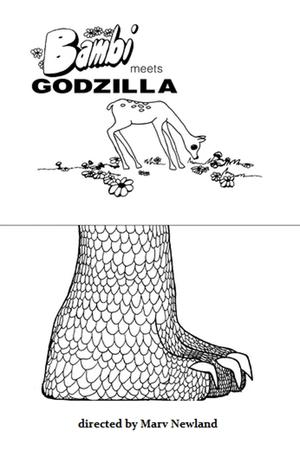
A deer, disillusioned by the consumerism that defines his life. A lizard, ostracized from society, forever wandering. A chance meeting in the middle of a field. Who will survive? And who will transcend existence? Preserved by the Academy Film Archive in 2009.
This film is the pearl of his pioneer work in Madeira Island and captures the most of his methodology: good stories taking the most of Madeira's natural scenery, and provoking the audience with some ironic and "double-sense" scenes. The film tells the story of an English girl travelling with her father, a botanic, and a guide from madeira in the deep mountains of the island. The girl has some mental disturbs and is always scaring about an attack from the native man, appearing as a half-man/half-monster.
A trippy pop-art collage of phallic objects, naked women and American icons, most notably Elvis Presley.
This is a film about a man without a face. His arms and legs, bound with ropes, the disabled man is still without even a shudder in a white room. A series of unusual scenes in this room expresses what lies between memories, nightmares, and violent images.
A homeless bum, bored of eating the same food every night, promises his girlfriend a special dinner. He plans to take her out with money robbed from a passing stranger. But the bum’s in for a surprise when the man he targets for his mugging turns out to have special – and hilarious – powers.
Elephants Dream is the story of two strange characters exploring a capricious and seemingly infinite machine. The elder, Proog, acts as a tour-guide and protector, happily showing off the sights and dangers of the machine to his initially curious but increasingly skeptical protege Emo. As their journey unfolds we discover signs that the machine is not all Proog thinks it is, and his guiding takes on a more desperate aspect. Elephants Dream is a story about communication and fiction, made purposefully open-ended as the world’s first 3D animated “Open movie”. The film itself is released under the Creative Commons license, along with the entirety of the production files used to make it (roughly 7 Gigabytes of data). The software used to make the movie is the free/open source animation suite Blender along with other open source software, thus allowing the movie to be remade, remixed and re-purposed with only a computer and the data on the DVD or download.
In the year 2150, Johnny, a lazy Space Delivery Man, must deliver a package on a planet he does not fully understand.
It's a bird, it's a plane, it's-- Super Christian? Clark Kant is a mild-mannered Christian teenager with a super secret. Through light-hearted humor, the Super Christian series sets out to teach us something about Christian growth. In the first installment of Super Christian, we find that Clark Kant lives in two different worlds. During the week, Clark follows the standards of the world. "Why not?" he asks himself. "Isn't everybody doing it?" But on Sunday, in his Super Christian Best, Clark presents quite a different image. Then Clark learns through a friend that the Christian faith is for every day of the week, not just for Sundays.
When all the voices have been silenced, only one will remain. And when this last voice is no longer heard...
Kindergebaren met Lotte & Max - Praten met je handen
Tom subjects Jerry to his usual harassment; but the cat finds a new enemy, and the mouse finds a new friend, in the canary of the house.
Mammy Two-Shoes replaces Tom with a younger cat who is a lightning-quick mouser. Tom and Jerry form an alliance in order to get rid of this dangerous newcomer.
Tom is given the task of guarding the fridge during the night by Mammy-Two-Shoes, but as soon as he has started he is tricked by Jerry into falling into the basement, where he lands in a barrel of cider. Now drunk, Tom staggers around in the house getting up to no good with Jerry.
Jasper is given an ultimatum by his master: break one more thing and you're out. Rodent Jerry does his best to make sure that his tormentor "gets the boot".
Mammy Two-Shoes tells Tom and Butch that the cat who gets rid of the icebox-raiding, breadbox-invading mouse (Jerry) is the one who can stay.
The seven short films making up GENIUS PARTY couldn’t be more diverse, linked only by a high standard of quality and inspiration. Atsuko Fukushima’s intro piece is a fantastic abstraction to soak up with the eyes. Masaaki Yuasa, of MIND GAME and CAT SOUP fame, brings his distinctive and deceptively simple graphic style and dream-state logic to the table with “Happy Machine,” his spin on a child’s earliest year. Shinji Kimura’s spookier “Deathtic 4,” meanwhile, seems to tap into the creepier corners of a child’s imagination and open up a toybox full of dark delights. Hideki Futamura’s “Limit Cycle” conjures up a vision of virtual reality, while Yuji Fukuyama’s "Doorbell" and "Baby Blue" by Shinichiro Watanabe use understated realism for very surreal purposes. And Shoji Kawamori, with “Shanghai Dragon,” takes the tropes and conventions of traditional anime out for very fun joyride.
Tom's new book on "how to catch a mouse" doesn't prove too helpful against Jerry; actually, Jerry seems to make better use of it than Tom.