Armed with laser guns, three-fingered virtually invincible Martians collude with gangsters to invade Earth.
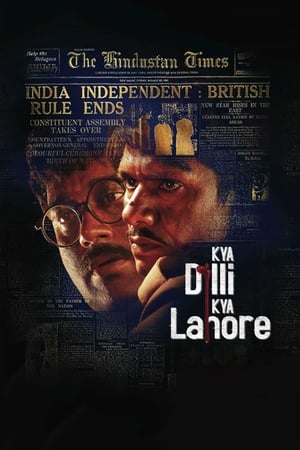
In 1948, a cross-fire erupts at an isolated stretch of Indo-Pak border, leaving only two soldiers alive. One is an Indian soldier of Pakistani origin while the other happens to be a Pakistani soldier of Indian origin. An ironic story of pride and survival begins when - in an attempt to evade danger, they bump into each other. And amidst continuous exchange of bullets, altercations and murkier situations, it evolves into a journey of human connection with an unforeseeable end.
A prismatic meditation on pollution in the capital of the World’s biggest free-market democracy and the most polluted and populated city, Delhi – a film about the pollution inside of the human mind.
Googly, a carefree young woman and her lover, Shorya, take a romantic trip to Dharamshala. At the airport they are received by their tour-guide, Ranga, who appears to be somewhat disturbed upon hearing Googly’s name. An incomprehensible sadness betrays Ranga’s cool demeanor. Googly is awestruck by the beauty of sunset amidst the snow-capped mountains and is inspired to go hiking. Shorya, though initially reluctant, finally yields. They set out on their trek and the appalling beauty of the mountains overwhelms them. In a moment of romantic fervour, Shorya slips and falls off the cliff and gets stuck on a crest at the edge of a steep fall. Hereafter, the movie follows Googly and Ranga on their individual rescue missions-- Googly’s to save Shorya and Ranga’s to find Googly. And amidst all this, flitting on and off the screen, is a ghastly figure in the cave whom Shorya dismisses as a figment of his own imagination
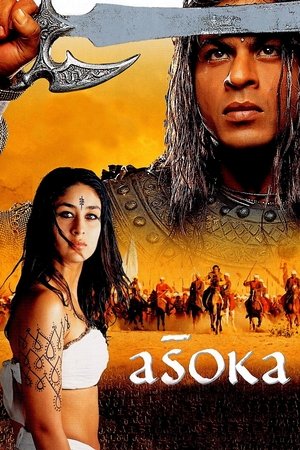
A young Prince Asoka works to perfect his skills in battle and also deals with family conflict. During a struggle with one of his step-brothers, his mother urges Asoka to escape to stay alive. While away, Asoka meets Kaurwaki and falls in love, but must use his skills as a warrior to protect her. A dangerous and heartbreaking web of conspiracy follows, which leads Asoka to embrace a Buddhist path.
This is the gritty and sensational true story of Arun Gulab Gawli, a mill worker’s son who grew up in Mumbai’s impoverished Dagdi Chawl, to become an infamous don, politician and chief rival of the most powerful crime boss of the day, Dawood Ibrahim. Daddy realistically charts Mumbai’s true crime history from the 1970s and 1980s until 2012, when Gawli was finally sentenced to life imprisonment.
Arun Khanna is a spy for the Indian government whose aid is enlisted to stop ISI Chief Ishak Khan. Khan is trying to build a nuclear bomb with which he can liberate Kashmir from the Indians. A battle of wits ensues. When Khan detonates a bomb at Khanna's engagement party to a fellow spy, Khanna's resolve is only strengthened. Now not only does he have to fight Khan, but he also has to track down his missing fiancee.
In a city plagued by a strange rise in fires, fireman Vithal and his policeman brother-in-law Samit reluctantly team up to solve the escalating crisis. Battling personal conflicts, they race against time to crack the case and save Mumbai.
Based on the memoir by Indian policy analyst Sanjaya Baru, The Accidental Prime Minister explores Manmohan Singh's tenure as the Prime Minister of India, and the kind of control he had over his cabinet and the country.
Children of War is a movie based on the true events of the 1971 Genocide. Can we, in search of power, become animals? A genocide; neglected! The first use of rape as a weapon of war; undocumented! The lives of millions; unaccounted! The culprits; unpunished!
Set in 1961 Goa, this is a story of a rich and influential Goan family and what happens to them over a period of time. The movie is narrated in past-tense by one of the friends of the family.
Natasha and her fiance, Sunny visit her ancestral property where she meets Devdhar, a man who she forms a passionate connection with.
Based on the poetry of R. Raj Rao, Bomgay is a collection of six vignettes that depict the underground and complex nature of the gay identity in urban India. Part Genet, part Bollywood, this film combines acidic verse and insightful imagery to reveal the emerging gay community in the post-liberalized India of the 1990s.
Indu’s husband, a government employee, believes in using the state of Emergency to advance his career, but a moral and ideological discrepancy sets her on a own path.
The film chronicles the ascent of Shivaji, the great Maratha warrior who fought for liberty from the erstwhile Muslim rulers in order to establish a secular Hindu kingdom.
From the vast coastlines of Tamil Nadu, to the arid lands of Rajasthan and the lush greenery of Sikkim, the camera joins local children on the journeys of their daily lives: to and from school, in their classes and after-school play, and doing chores. The children are shy but face the camera directly to talk about their families, their teachers, and their own feelings. Their gazes imply straightforward doubts about the adult world, which the director captures, in taking a sincere look at the meaning of education.
The story of two families — one Muslim and one Hindu — living together in India under British rule.
The year is 1893 and India is under British occupation. In a small village, the tyrannical Captain Russell has imposed an unprecedented land tax on its citizens. Outraged, Bhuvan, a rebellious farmer, rallies the villagers to publicly oppose the tax. Russell offers a novel way to settle the dispute: he challenges Bhuvan and his men to a game of cricket, a sport completely foreign to India. If Bhuvan and his men can defeat Russell's team, the tax will be repealed.
Bangkok-based con-man, Jai, steals cars, and cons residents. While flirting with a girl in a bar, faces-off with her brother and his friends, and a male, Veeru, comes to his assistance. Both become close and eventually inseparable friends. Their friendship ends abruptly after Veeru reveals his true identity and arrests Jai. Neither are aware that they have a common enemy in Tejpal - who is determined to do away with both of them once and for all.
After giving birth to Bhagwan Shri Kartiyeke, Devi Maa Parvati forms a child-human image from clay, adopts him, and asks him to guard the house and not let anyone in while she bathes. The child refuses to let anyone in, including Bhagwan Shivji himself, who beheads him. When a tearful Parvatiji pleads, Shivji brings the child back to life with the head of an elephant, and names him Gajanand, and assures him that no one will make fun of him.