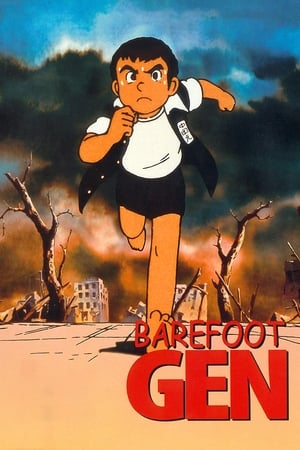
War exploitation low budget flick about JAP atrocities on captured women.
1944, Japan. One of the kamikazes, by misfortune, survives. When he jumps with a parachute, he lands in Nardaran — right in the house of Gulbala, who is nicknamed “the Japanese.” When the representative of the State Security Committee learns of this unusual incident, he intervenes, saying: “This matter is under Stalin’s control; we must keep the Japanese alive,” and begins the operation. From then on, the funny stories continue.
A young Czech boy is freed from a concentration camp and now is working for the army against the Germans.
During the Second World War, an old fortress is transformed into a detention camp for arrested allied generals who the Germans provide with every possible comfort. In the nearby garrison camp, however, hundreds of captured private soldiers try to survive hunger and cold.
British stockbroker Nicholas Winton visits Czechoslovakia in the 1930s and forms plans to assist in the rescue of Jewish children before the onset of World War II, in an operation that came to be known as the Kindertransport.
Ralph Rush, a Scout in General George S. Patton's World War II Intelligence & Reconnaisance Platoons went from digging up German mines to being the first American to enter the Ohrdruf Concentration Camp; the first concentration camp liberated by the Allies.
Would it be correct to suggest that none of it happened?
When our elders pass away, they live on through the stories of them that we share, keeping us warm when we feel cold, and cheering us up in our darkest times. “A Collection of My Father” tells the story of Vincent Faulls, a WWII soldier, devoted husband, and loving father.
Within hours of the Japanese attack on Pearl Harbor, bombs rained down on U.S. and Filipino forces in the Philippines. After months of vicious fighting, Allied forces surrendered on the island only to be met with a brutal march to P.O.W. camps dotted across the islands. Thousands died on the marches, before reaching the P.O.W. camps where countless more died. The surrender of the Philippines, now almost forgotten in U.S. history, is commemorated in the Philippines every year.
Near the end of WWII, a prisoner named Angelo is framed for murder.
Even though bringing in cameras to the internment camps was prohibited, one man managed to smuggle in his own camera lens and build a camera to document life behind barbed wires, with the help of other craftsmen in the camp. That man was Toyo Miyatake, a successful issei (first generation immigrant) photographer and owner of a photo-shop in the Los Angeles Little Tokyo district, and of one of the many Americans who was interned with his family against his will. With his makeshift camera, Miyatake captured the dire conditions of life in the camps during World War II as well as the resilient spirit of his companions, many of whom were American citizens who went on to fight for their country overseas. Miyatake said, "It is my duty to record the facts, as a photographer, so that this kind of thing should never happen again."
In a village on the Hungarian border, two young brothers grow up during war time with their cruel grandmother and must learn every trick of evil to survive in the absurd world of adults.
The drama from the time of the Nazi occupation begins at the train station, where a transport with German soldiers is passing. The train is stopped due to improvised sabotage by one of the railway workers. Resistance liaison Růžena Kubínová is arrested in a random raid. The cynical councilor Dönnert discovers her false documents and has her brutally interrogated. He suspects that she could contribute to exposing the entire group. He puts a informant, Herta, in her cell.
We've all heard of the atomic bomb, but in the late 1950s, an idea was conceived of a bomb which would maximize damage to people, but minimize damage to buildings and vital infrastructure: perfect for an occupying army. This is the story of a man and his bomb: a melding of world events and scientific discovery inspire the neutron bomb, one of the most hated nuclear weapons ever invented.
This Danish movie "Out of The Darkness" ( in Danish 'De Forbandede år 2' ) is a continuation of the popular WW II drama "Into The Darkness" ( in Danish 'De forbandede år' ) and it portraits the Danish Resistance movements fight. This movie takes place after 1943 where the official politic of 'corporation' comes to an end, and the Danish Resistance movement is gaining traction. The movie follows the Skov family from 1943 to the end of WWII. The growing opposition to the occupation and the increased brutality of the Germans have fatal consequences for the family.
Ajay Dixit, an ordinary history teacher in a high school, enjoys mini celebrityhood in his town courtesy of the fake image he has built. He shares a strained relationship with his newly-wed wife. Circumstances force him to take a trip to Europe for the World War II trail accompanied by his wife. Will his relationship with his wife survive this trip? Will he manage to win the war within?
The story of a young woman takes place at the end of the war in an apartment belonging to a Jewish owner who was forced to leave for a concentration camp. The young woman is waiting for her lover, a tall German officer who promised to take care of her and take her with him. An offer of rescue arrives, but it is only an attempt to lure her into handing over the jewelry that the Jewish owner of the apartment had entrusted to her for safekeeping. The woman finally understands the moral abyss and the hopelessness of the situation in which she finds herself...
A young man accompanies his mother to a nursing home where he meets don Manuel, a World War II veteran.
During World War II, a hand-picked group of American GI's undertook a bizarre mission: create a traveling road show of deception on the battlefields of Europe, with the German Army as their audience. The 23rd Headquarters Special Troops used inflatable rubber tanks, sound trucks, and dazzling performance art to bluff the enemy again and again, often right along the front lines. Many of the men picked to carry out these dangerous deception missions were artists. Some went on to become famous, including fashion designer Bill Blass. In their spare time, they painted and sketched their way across Europe, creating a unique and moving visual record of their war. Their secret mission was kept hushed up for nearly 50 years after the war's end.
It is 1945 in Zagreb, and everyone is settling into the new regime following the disturbances of the war. Matilda is a wealthy widow of a war hero and has an apartment so spacious that she is required to take a boarder. Fortunately for her, the handsome young Lt. Horvat, the communist housing officer, has taken a fancy to her and has assigned his fiancee to be Matilda's new roommate. Where Matilda is soft and rounded, Lilijana is hard, skinny, and given to revolutionary pronouncements rather than tender endearments. The lieutenant loves them both, though he naturally finds Matilda more attractive. His situation is simplified when Lilijana, though pregnant, is transferred to another post. However, his commander is horrified that he has a lover in addition to his fiancee and demands that he choose whether to continue his career or continue his affair.