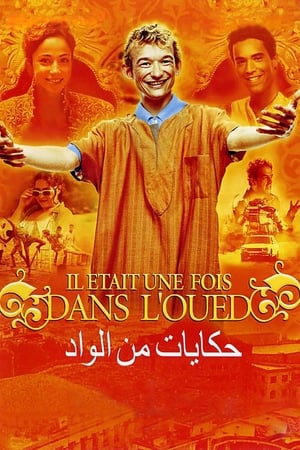
Bill is an ailing larger-than-life father being taken care of by his son Sam, who has returned home to care for him. While home, Sam falls for a local woman, Kate. At the same time, Bill starts to fall for her mom, Tina.
Originally commissioned by the city of Algiers to promote tourism, Mohamed Zinet’s Tahia ya Didou blends documentary with fiction to create a poetic, acerbic and rapturous portrait of the director’s native city. The camera travels freely, through the port, market, streets and cafés, capturing everyday people, some of whom recur frequently enough to seem like protagonists. The nominal plotline follows a French tourist couple’s leisurely visit to the city, the man having previously served in the army during the Algerian war. As they walk around, his comments betray his mindset’s racist colonial prejudices, while his wife reiterates asinine clichés. Their unhurried wandering is interrupted when he comes across a blind man and realises that he tortured him during his army service. The film is punctuated with punchy sequences that show a poet named Momo delivering verse as an elegy for Algiers.
Inspector Tahar and his apprentice are invited by Mama Traki, a popular Tunisian heroine, to spend their vacation in Tunis. Before leaving Algiers, they stop at a tourist complex where a murder has just been committed. The investigation full of surprises and twists and turns will take them to Tunis where they will find Ommi Traki and his family...
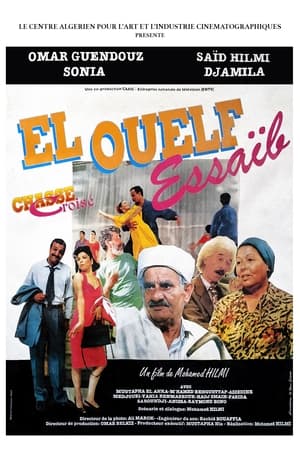
Ommi Traki is an elderly woman who is active and involved in everything, organizing everything in her family and neighborhood. Surrounding her are her husband Salah, who contentedly observes the results of his wife's interventions with a mocking air; her spoiled son Ali, a young man she still considers a child; the maid Zouzou; and others. The film is inspired by the famous Tunisian television series of the same name from the 1970s.
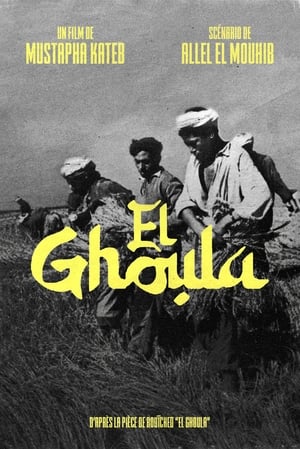
An adaptation of the satirical play of the same name by comedian Rouïched (Ahmed Ayad). "El-Ghoula" (The Vampire) tells the story of a corrupt official who lives off the peasants of an agricultural cooperative. Instead of solving problems, this official manipulates empty rhetoric and "revolutionary" slogans to galvanize them and encourage them to continue working. Opportunistic, he will transform the fellahs' work into chaotic bureaucratic procedures for his own personal gain.
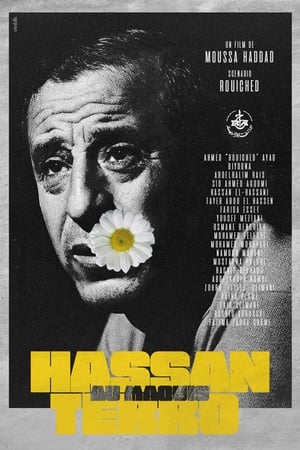
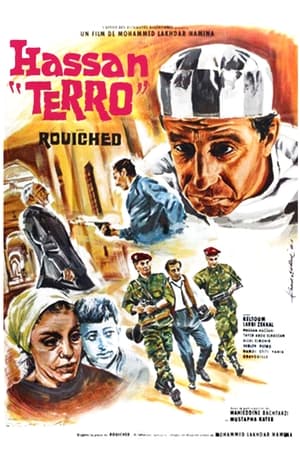
While he tries by all means to stay out of the bloody upheavals caused by the battle of Algiers, Hassan, an honest and naive father, unknowingly offers hospitality to a mujahid actively sought by the army. French. A series of events and misunderstandings quickly catapult him to the forefront, presenting him under the pseudonym “Hassan Terro”, a great fictitious terrorist who would have sworn the doom of the French army...
The story of Hassan, the handyman in the inn of his sister Aïcha, widowed and childless. A whole series of incidents, misunderstandings, will punctuate his daily routine in which we find him in turn driver, waiter, welder, etc. But, he refuses to submit to anything that does not conform to the idea he has of society and things...
Ali, a thirty-something from the suburbs, still lives with his mother and his 8-year-old daughter. Lazy and without any particular ambition, he scrapes by doing odd jobs as a fast-food delivery driver. Following a delivery, he finds himself, by a twist of fate, propelled into space aboard the ISS space station. The conquest of space is about to write a surprising and unprecedented chapter in its history...
In 1957, the Battle of Algiers intensifies. Hassan, a peaceful resident of the Casbah, is mistakenly identified as a dangerous "terrorist leader," earning him the nickname "Hassan Terro." He is arrested, but the French occupation army secretly organizes his escape in the hope of tracking down the leaders of the resistance. In turn, the Algerian liberation army exploits Hassan's naivety to thwart the French military command and disperse its forces.
Rags follows the story of Charlie Prince, an orphan living with his acerbic and unloving stepfather and spoiled, simple-minded stepbrothers. Charlie's dream is to be a singer, and while he is vocally talented and can write music, he can't seem to catch a break. Kadee Worth, on the other hand, is the daughter of music mogul Reginald Worth and is an international pop phenomenon. While the world knows her as a glamorous superstar, she is secretly frustrated with singing other people's songs and wearing clothes other people choose for her. Kadee wants the world to hear and see her true talent. Despite every obstacle that gets thrown in their way, once Charlie and Kadee find one another, they each finally get what they have been looking for – a voice, a stage, an audience and each other.
In order to learn how to be responsible, two wealthy teen sisters are forced to work in the family business by their exasperated father. When company funds goes missing, it's up to the girls to save the day.
The charming small port of Port-Vendres, with its 280 municipal employees, is shaken by a rumour: the Mayor, assisted by his department head, a Parisian who has studied at an elite business school, have the dark intention of reducing the staff of communal employees. Revolt rumbles, the majority and almost single union of the municipal employees organizes a response. The national secretary himself comes to consult. Upon his proposition, an historic decision is made: the municipal employees will strike.
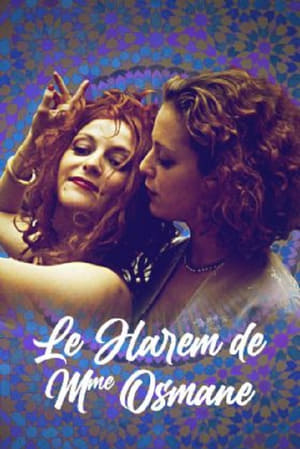
In Algiers in 1993, while the civil war is starting, Mrs Osmane's tenants have to endure her bad temper. Her husband left her and the fear to lose her respectability haunt her. The former member of the Resistance during the Independence War persists in controlling the slightest moves of the households rather than struggle against her own frustrations. Learning her daughter is in love, the possibility of finding herself alone will push her to the limit: The symbolical Mrs Osmane "harem" is about to collapse.
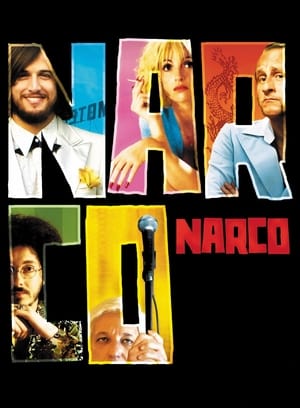
Mounir Mekbek lives with his family in a small village in the heart of the Algerian countryside. Very proud and sure of himself, he has only one dream- to finally be appreciated by his fellow villagers. Screwing up his carefully maintained image is his headstrong, narcoleptic sister Rym who falls asleep anywhere and whom the village is convinced will end up a spinster. One evening, Mounir returns from town drunk and announces that he's found a suitor for his sister. The fake story snowballs and snowballs until the suitor morphs into a rich, blonde Australian. The village begins preparing for the wedding in earnest - but without a bridegroom in sight.
This musical comedy produced in 1953 for the General Government of Algeria, features the comic trio composed of Rouiched, Mohamed Touri and Sid Ali Fernandel, accompanied by the orchestra of the master of the Algiers Chaâbi El Hadj M'hamed El Anka, the singer Fadhéla Dziria, Mustapha Skandrani on the piano. Some scenes were filmed at the Summer Palace (the current Palace of the Algerian Presidency, called the People's Palace). André Zwobada, the director, will play an important role after the independence of Algeria in 1962, in the production and preservation of the first Algerian newsreels.
On his return to Algeria, Belkacem Hadjadj, a young graduate of INSAS in Brussels, joined Algerian television and signed "Le Bouchon", his first feature in the register of an Italian comedy, around the misadventures of a tenant experiencing a water leak.
A young band from Norway set out on a journey across the country to attend the National Championship of Rock in a race against time, the police and their parents.
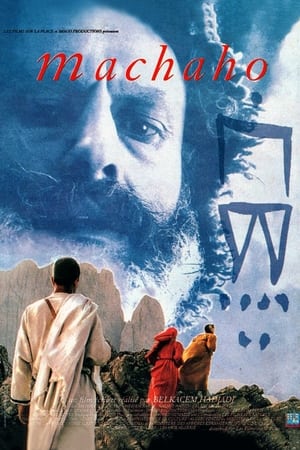
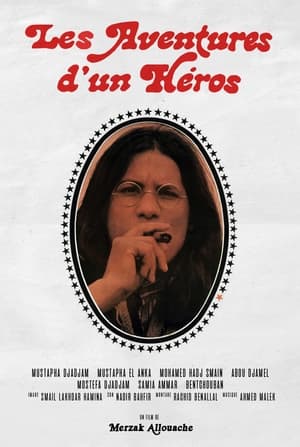
In one of the tribes of the Algerian Sahara, everyone awaits the arrival of the hero who will defend the rights of the poor. A man decides one day to put the mark of the "hero" on his newborn son and the whole tribe celebrates the arrival of this eagerly awaited messiah who came to save them. This false hero then grows up by assuming his role of savior. Filled with cynicism, he crosses the countryside and has a number of adventures.
Two young Algerians born in France leave the Paris region to return with their parents to the village of their origins. They speak neither Arabic nor Berber. First barrier which isolates them from their new environment and which is further accentuated by the problem of generations, present here as in France. The social position of Algerian women posed to young emigrants is more immediately felt and proves to be a generator of conflict. Thanks to the plot, it is the whole problem of the reintegration of emigrants in their land of origin that the film poses and illustrates.
Like every year in Zitouna, a bear handler passes by. With his creature, he comes to challenge the small community. And like every year, it is Slimane El Mabrouk who defends the honor of the tribe. But this time, he dies, leaving two orphans, Omar and Ourida. Robbed of their inheritance, the children will grow up alone. The years pass, the French army settles in, and with it, the war. Mysteriously, one day, after the murder of a French legionnaire, Omar disappears into the bush, while his sister dies in childbirth. Omar will return to the village, much later, once independence has been acquired, as a representative of power and with this enigmatic formula: "You must know that the Revolution has not forgotten you". Personal revenge? Sincere desire to bring progress and modernity? ... The inhabitants of Zitouna, upset in their ancestral way of life, will not be long in having an answer to their questions.