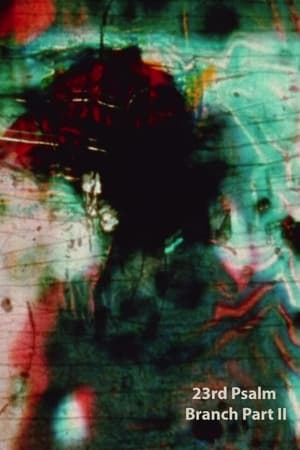
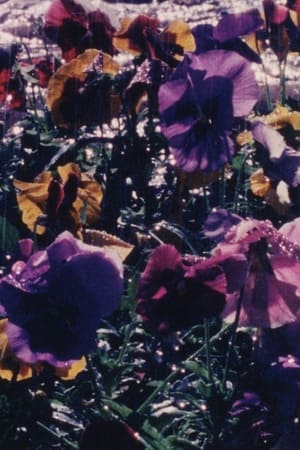
A ritual of grids, reflections and chasms; a complete state of entropy; a space that devours itself; a vertigo that destroys the gravity of the Earth; a trap that captures us inside the voids of the screen of light: «That blank arena wherein converge at once the hundred spaces» (Hollis Frampton).
A thirteen-year-old French girl deals with moving to a new city and school in Paris, while at the same time her parents are getting a divorce.
A cinematic meeting point between nature and technology, Doug Aitken’s unearthly short is enfolded in evocative hymns whose voices are eerily AI-generated. Glimmering phone screens might have replaced the starry Milky Way, yet the famous Venice Beach still hums with the vibrancy of human activities.
Endless Sea is a textural, oneiric exploration of the inability to escape captured within the confines of Grand Theft Auto: Andreas.
Avant-garde composer John Cage is famous for his experimental pieces and "chance music" but temporarily branched into video in 1992 with this art film about meaningless activity. The work is composed of two segments that are supposed to be played simultaneously: "One 11" contains the artistic statement, and "103" is a 17-part orchestral piece. Also included is a revealing documentary about Cage and director Henning Lohner.
A day in the city of Berlin, which experienced an industrial boom in the 1920s, and still provides an insight into the living and working conditions at that time. Germany had just recovered a little from the worst consequences of the First World War, the great economic crisis was still a few years away and Hitler was not yet an issue at the time.
"[Hutton’s] latest urban film, New York Portrait, Chapter III, takes on a unique tone in relation to Hutton’s ongoing exploration of rural landscape. The very fact that Hutton is dealing with older footage, with archives of memory more than immediacy, gives it a different texture than his earlier New York films. Hutton always found the presence of nature in the city, not only in his many shots of sky and vegetation, but also in the geometry and texture of the city itself, which seemed to project an independence from the human." (Tom Gunning)
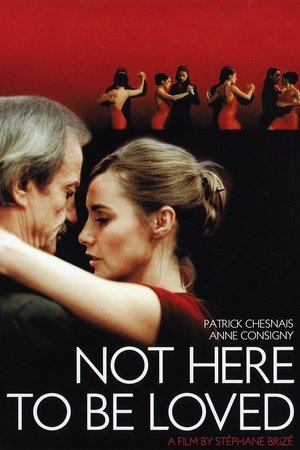
Jean-Claude Delsart, a 50 years-old bailiff, with his worn-out smile and heart, abandoned a long time ago the idea that life could give him pleasures. Until the day, he dares to push the doors of a tango lesson...
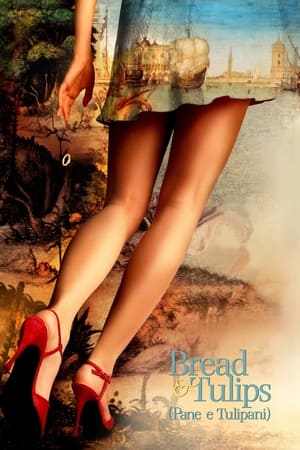
An endearing light comedy about a woman who spontaneously becomes a resident of Venice after her family left her behind. While enjoying the wonderful people she meets she achieves a new life and the first time independent of her family.
This documentary aims to register this unknown side of James Joyce: His Greek Notebooks. Trieste. Bloomsday, 2013. Dance in slow motion, accompanied by text. By deconstructing the body, we turn it into a memory: of the body, of life, of texts. The biographical references to Joyce and Mando Aravantinou, combined with the diagonal slicing of the image, cancel the realism of the landscape, including that of the Narrator’s space/study. As a culmination, Joyce’s letter “A request for a loan in Greek” functions as a timely denunciation. Various routes through cities, such as Trieste, London, New York, and Athens; languages such as Greek and English. In addition to the primal myth of Ulysses, there is another issue: Greek is “the language of the subject of Ulysses”
Federico Altarini is a Dancer of Southern Italy that teaches the smooth in Emilia Romagna countries. Celeste Cucustella will ask for private dance lessons to conquer a man in a dance competition. But someone tries to enrapture two issues of patrimony.
An experiment with three dimensions in a moment of clarity: the focus of the camera's lens towards the present, the speed of the train and the material world distorted by the movements of the train.
After kidnapping a father and his two kids, the Gecko brothers head south to a seedy Mexican bar to hide out in safety, unaware of its notorious clientele.
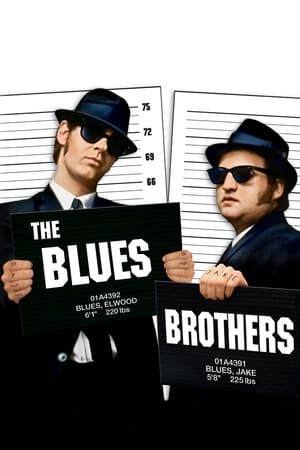
Jake Blues, just released from prison, puts his old band back together to save the Catholic home where he and his brother Elwood were raised.
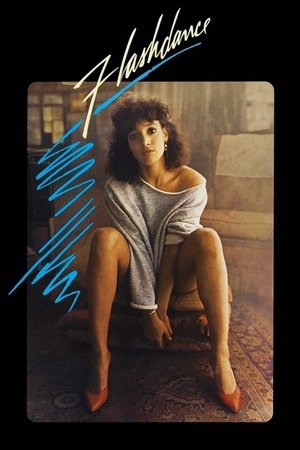
Alex Owens, a young woman juggling between two odd jobs, aspires to become a successful ballet dancer. Nick, who is her boss and lover, supports and encourages her to fulfil her dream.
County Durham, England, 1984. The miners' strike has started and the police have started coming up from Bethnal Green, starting a class war with the lower classes suffering. Caught in the middle of the conflict is 11-year old Billy Elliot, who, after leaving his boxing club for the day, stumbles upon a ballet class and finds out that he's naturally talented. He practices with his teacher Mrs. Wilkinson for an upcoming audition in Newcastle-upon Tyne for the royal Ballet school in London.
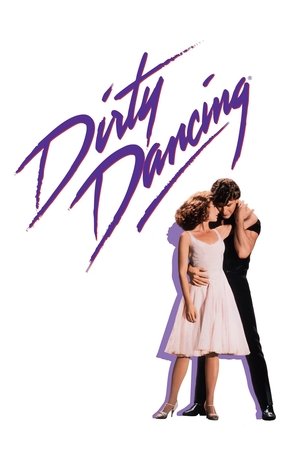
Expecting the usual tedium that accompanies a summer in the Catskills with her family, 17-year-old Frances 'Baby' Houseman is surprised to find herself stepping into the shoes of a professional hoofer—and unexpectedly falling in love.
Three dancers receive a new flatmate, unaware of what shadowy evil they have welcomed into their home.
Rephotographed pornographic playing cards rhythmically intrude upon a piercing 5-beat score of different-sized black parallel lines, creating an almost indiscernible complexity, until the lined background ruptures and the sounds and visuals become scattered and disordered. The "girlie" cards break out onto saturated color fields and eventually find their way into the real world, aggressively flickering by against backgrounds of earth, concrete and other surfaces. Preserved by the Academy Film Archive in 2016.
This film is a succession of visual and aural "notes" generated by the patterns in animals' hides, which are arranged and re-edited into a complex musical architecture, developing intricate rhythms not unlike the complex syncopations found in traditional African music. Elements of sand, dirt, light and shadow cross-reference the film's emulsion with evolutionary history and provide a second level of musical structuring through which the first layer is filtered. The animals' fur patterns, which evolved naturally as camouflage to hide them from predators, ironically now make the animals more visible to human predators who are attracted by their exotic uniqueness. This cinematic analogy underscores modern humanity's relationship to the natural world.