"MacMillan's vision has been vital in shaping The Royal Ballet's style and repertory, and what better way to appreciate his art than with this rare chance to experience three contrasting works in a single performance. Abstract, dramatic, humorous - this programme gives a wonderfully varied introduction not just to MacMillan's work but to the beauty and dramatic power of ballet itself. Concerto, to Shostakovich's Second Piano Concerto, contrasts moments of exuberance and elegiac reflection. The Judas Tree places a single woman among 13 men to enact a harrowing event that is recognizably contemporary but with biblical overtones. Elite Syncopations completes the programme with a sparkling evocation of a dance hall that brings ragtime rhythms to the dance, and a ragtime band to the stage.
County Durham, England, 1984. The miners' strike has started and the police have started coming up from Bethnal Green, starting a class war with the lower classes suffering. Caught in the middle of the conflict is 11-year old Billy Elliot, who, after leaving his boxing club for the day, stumbles upon a ballet class and finds out that he's naturally talented. He practices with his teacher Mrs. Wilkinson for an upcoming audition in Newcastle-upon Tyne for the royal Ballet school in London.
Two playwrights and a former burlesque queen travel to Louisiana to research a musical they're planning on a local Southern hero.
A magical blend of choreography, stop-motion and live action, Stories from a Flying Trunk captures the enchantment of three classic stories from Hans Christian Andersen. Conceived, written and directed by Oscar nominated Christine Edzard and featuring the dancers of the Royal Ballet, choreographed by Frederick Ashton. The Kitchen contains household objects which come to life and hold an animated conversation. The Little Match Girl updates Andersen's heart-rending tale to London's East End in the late seventies. Little Ida is an inspired celebration of dance featuring members of the Royal Ballet.
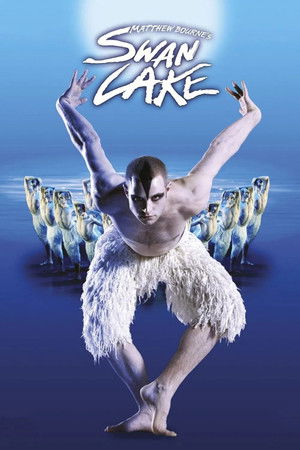
During his birthday’s celebration, Prince Siegfried must choose a bride. Trying to escape reality, he dreams of a perfect love. His tutor tries to bring him down to Earth and reminds him of his duties. On a dreamlike getaway, the prince meets Odette, a princess who has been transformed into a swan by the powerful sorcerer Rothbart. Only true love can break the spell. Captivated, Siegfried promises Odette to save her and invites her to his party. To trap the prince, the sorcerer sends his daughter Odile, disguised as Odette, to seduce him.
In his 45th year as artistic director of Hamburg Ballet, John Numeier directs a modern adaptation of Tolstoy's masterpiece "Anna Karenina" in co-production with the Bolshoi Theatre and the National Ballet of Canada.
Tchaikovsky's Swan Lake, a ballet in three acts, is present by the Ballet Company of the National Opera of Ukraine, with music provided by the Orchestra of the National Opera of Ukraine, conducted by Mykola Dyadura
After the death of her mother, Sara moves to the South Side of Chicago to live with her father and gets transferred to a majority-black school. Her life takes a turn for the better when befriends Chenille and her brother Derek, who helps her with her dancing skills.
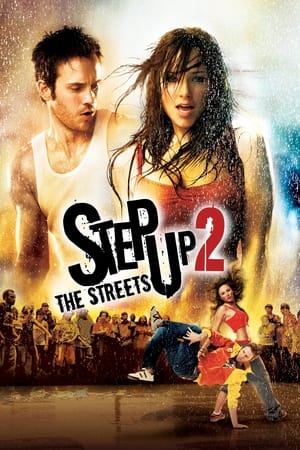
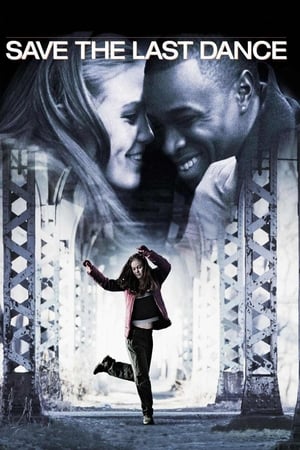
When rebellious street dancer Andie West lands at the elite Maryland School of the Arts, she finds herself fighting to fit in while also trying to hold onto her old life. When she joins forces with the school's hottest dancer, Chase Collins, to form a crew of fellow outcasts to compete in Baltimore's underground dance battle The Streets.
Sergei Prokofiev's setting of the fairy tale "Cinderella" premiered at Moscow's Bolshoi Theater in 1945. In 1986, Rudolf Nureyev, then ballet director of the Paris Opera, choreographed the ballet anew and transposed the story into a private cinema, with sets reminiscent of Fritz Lang's "Metropolis." ARTE shows the Paris Opera performance from December 31, 2018.
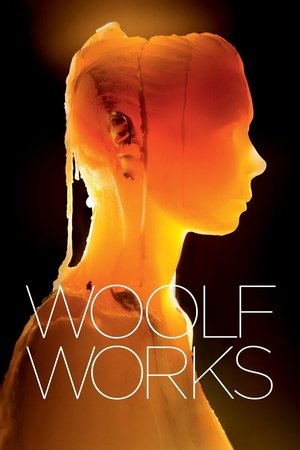
The first revival of Wayne McGregor’s critically acclaimed ballet triptych to music by Max Richter, inspired by the works of Virginia Woolf.
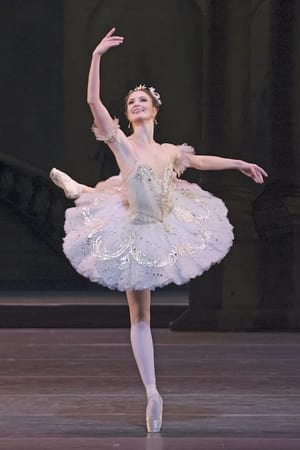
The Sleeping Beauty holds a special place in The Royal Ballet’s repertory. It was the ballet with which the Company reopened the Royal Opera House in 1946 after World War II, its first production at its new home in Covent Garden. Margot Fonteyn danced the role of the beautiful Princess Aurora in the first performance, with Robert Helpmann as Prince Florimund. Sixty years later, in 2006, the original 1946 staging was revived by then Director of The Royal Ballet Monica Mason and Christopher Newton, returning Oliver Messel’s wonderful designs and glittering costumes to the stage.
Now celebrating its 50th year, George Balanchine’s sparkling ballet still shines with all the brilliance of the gemstones that inspired it.
The ultimate romantic ballet, performed by former Bolshoi Ballet principals Olga Smirnova and Jacopo Tissi, who fled Russia and joined the Dutch National Ballet, where this production is filmed. The young peasant girl Giselle falls in love with Albrecht, a nobleman already betrothed who hides his true identity from her. When she learns the truth, she becomes mad and dies. Against her own will, Giselle joins the Wilis: vengeful spirits of jilted brides who condemn Albrecht to dance until he dies of exhaustion.
In 1920s Vienna, a young girl receives a magical doll on Christmas Eve.
To speak of that ballet is very difficult because the theme is so popular as a fairy tale, adapted by Perrault from German folklore and then recuperated from the same folklore by the Grimm brothers, and what's more turned into an unforgettable film by Walt Disney. Angelin Preljocaj was thus trying to break a mould in which that character and her story had been cast seemingly for ever. And it is a success. Because first the setting, the stage direction are very interesting and rich. Rich are the costumes. Rich are the main ideas of the setting like the enormous magic mirror coming down from the sky, or like the deep underground mine turned into a vertical surface on which the seven dwarfs are dancing like dragon-flies on their strings.
Tita, who lives on a ranch in Mexico, falls in love with a boy, Pedro, who lives nearby; but when they want to get married, Tita's family prevents it, because she must remain single to take care of her mother.
A pair of short ballets, written for the screen, filmed and performed by artists of the Georgian SSR. In color, with narration.
The Bolshoi Ballet performs the Russian fairy tale of a Queen Maiden (Maya Plisetskaya), a stableboy (Vladimir Vasiliev) and a lucky horse (Alla Shcherbinina).
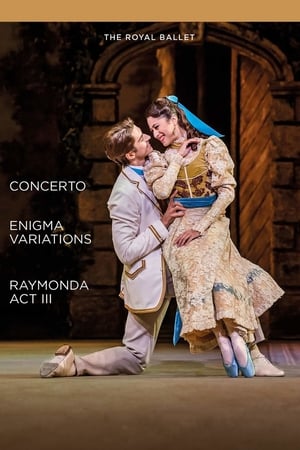
From The Royal Ballet’s classical origins in the works of Petipa, to the home-grown choreographers who put British ballet on the world stage, this mixed programme highlights the versatility of the Company. Petipa’s Raymonda Act III is Russian classical ballet summarized in one act, full of sparkle and precise technique, while Ashton’s Enigma Variations is quintessentially British in every way – from its score by Elgar and period designs by Julia Trevelyan Oman, to Ashton’s signature style, the essence of British ballet. Concerto, MacMillan’s fusion of classical technique with a contemporary mind, completes a programme that shows the breadth of the Company’s heritage.