Britain is in crisis. An ineffectual Queen Cymbeline rules over a divided dystopian Britain. Consumed with grief at the death of two of her children, Cymbeline's judgment is clouded. When Innogen, the only living heir, marries her sweetheart Posthumus in secret, an enraged Cymbeline banishes him. Behind the throne, a power-hungry figure plots to seize power by murdering them both. In exile Innogen's husband is tricked into believing she has been unfaithful to him and in an act of impulsive jealousy begins a scheme to have her murdered. Warned of the danger, Innogen runs away from court in disguise and begins a journey fraught with danger that will eventually reunite Cymbeline with a long-lost heir and reconcile the young lovers.
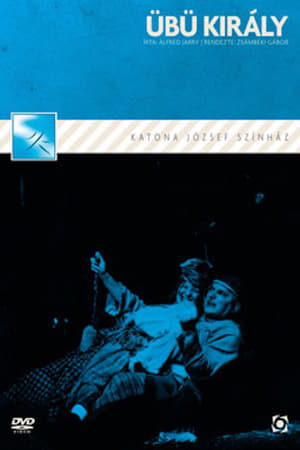
The Empty King created a mythical figure and a whole world from grotesque, archetypal images. The drama was originally conceived as a student tirade against a teacher at Jarry's school, the Lyceum of Rennes. This teacher, Hébert, was the target of public ridicule. In 1888, at the age of 15, Jarry wrote a puppet play about the exploits of the Woolly Tartar and staged it to the amusement of his friends. The figure of Übü is a crude, cruel caricature of the foolish, selfish bourgeoisie as seen through the unrelenting gaze of a schoolboy; but this Rabelaisian figure, in all his falstaffian greed and cowardice, is more than a mere social satire. It is a terrifying picture of man's animal nature, his evil and cruelty. The Katona József Theatre in Budapest premiered Jarry's play in 1984, and it ran continuously for more than 10 years.
Le Jeu de la vérité 2
After being dumped by her live-in boyfriend, an unemployed dancer and her 10-year-old daughter are reluctantly forced to live with a struggling off-Broadway actor.
Kristian Smeds's sensational debut at the National Theater. Smeds's adaptation of Väinö Linna's The Unknown Soldier had a powerful impact even on those who had not seen the play. In the National Theater's interpretation, modernity and intensity are strongly present throughout the play. The cast includes Antti Luusuaniemi, Kristo Salminen, and Jaakko Kytömaa.
Les Filles Aux Mains Jaunes
Gabriela Preissová wrote her two most famous dramas, Gazdina roba and Její pastorkyňa, when she was not yet thirty. Both were set to music and became famous. The first opera, entitled Eva, was written by J. B. Foerster, and the second by Leoš Janáček. The fame of Janáček's work greatly overshadowed the original. On the other hand, "Gazdina roba," the author's debut work, is still performed on Czech stages, regardless of the era. That is how powerful and impressive this drama is. The production by director Zdeněk Kaloč premiered at the Vinohrady Theater in May 1992. Dagmar Veškrnová endowed the title role of Eva the seamstress with warmth, temperament, pride, and tragic shadows.
Witty, playful and utterly magical, the story is a compelling romantic adventure in which Rosalind and Orlando's celebrated courtship is played out against a backdrop of political rivalry, banishment and exile in the Forest of Arden - set in 19th-century Japan.
The life story of Marta Kubišová as a musical, broadcast live from the Summer Stage of the Kampa Museum in Prague, based on real events in the life of Marta Kubišová. On stage, we meet not only the two remaining Golden Kids, but also Jan Němec, Jan Moravec, Alexander Dubček, and Václav Havel.
Orgon and his mother swear by Tartuffe, the self-styled devout who lives off them. The other members of the family, scandalized by the clergyman's hold over them, will do anything to expose his hypocrisy. Michel Bouquet plays an almost monstrous Tartuffe, whose only weakness lies in his feelings for Elmire.
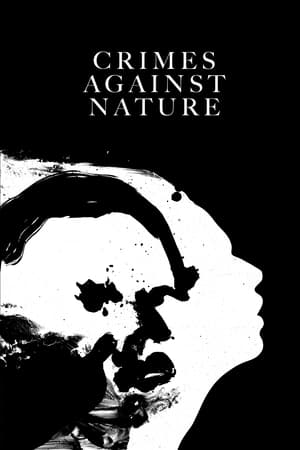
Described in the 70’s as "A Chorus Line for gay people," Crimes Against Nature remains vital today as a communal disclosure of roles that gay people adopt in order to survive in a world that devalues homosexual feelings. It features individual actors delivering revealing monologues, during which the other members of the collective play background roles (parents, schoolmates, etc.). One by one, the actors detail the ways in which they have buried their true selves in order to survive and be accepted in the world: repression, drug use, shyness, being agreeable, putting experiences into "little boxes," acting "butch," and so on.
Unpolished and ultra-pragmatic industrialist Jean-Jacques Castella reluctantly attends Racine's tragedy "Berenice" in order to see his niece play a bit part. He is taken with the play's strangely familiar-looking leading lady Clara Devaux. During the course of the show, Castella soon remembers that he once hired and then promptly fired the actress as an English language tutor. He immediately goes out and signs up for language lessons. Thinking that he is nothing but an ill-tempered philistine with bad taste, Clara rejects him until Castella charms her off her feet.
In 1415, in the midst of the Hundred Years' War, the young King Henry V of England embarks on the conquest of France.
Rock opera on the rise and fall of Estonian prog rock band "Ruja"
Each is dependent on the other. He breaks into the passport office to get a passport. He is surprised and ends up back in prison, where he is trained in military drill. After his release, he once again lodges with relatives, his sister and brother-in-law. Wearing a second-hand captain's uniform, he first takes over a guard unit and uses it to occupy Köpenick town hall, where all the employees of the town council submit to the supposed captain. The mayor is promoted to Berlin and Voigt presents himself to the authorities a few days later. At first, everyone present laughs at the prank, but then Voigt is made aware of the legal consequences. He is sent back to prison, but shortly afterwards he is pardoned by the Emperor.
The story of Oedipus' gradual discovery of his primal crime, killing his father and marrying his mother, filmed by the famed British theatrical director Sir Tyrone Guthrie. This elegant version of Sophocles' play adds a brilliant stroke: the actors wear masks just as the Greeks did in the playwright's day.
"Vanity of vanities, everything is vanity" says the bible. The word flows from the tongue naming the pleasure of earthly life and judging it as beautiful, but shallow and useless; vanity is a deadly sin. A female sin. The man painted the woman, put a mirror in his hands and called it vanity. The woman in representation admires herself, but the one who really admires her body is the artist. Whose vanity? In VANITAS, we re-divide the woman in our bodies, showing the depth of what is palpable. If the Father's temple hides after death, clean and perfect, we reject them. We welcome Mother Nature in us, life-death in a perpetual sacred cycle, also honoring her dark face. You may wish to reach heaven, but it is on earth that your knees fall.
In their songs, comedy and exuberant music, a travelling theatre company give a fiercely polemic account of Scottish history, from the aftermath of Culloden to the oil boom. Their production before a live audience is intercut with filmed reconstructions of the Highland Clearances and the Victorian obsession with hunting stags.
David Ireland's award-winning dark comedy about sectarian hatred in Northern Ireland. Eric Miller, a Belfast loyalist, mistakes his five-week-old granddaughter for Gerry Adams.
One of Shakespeare's greatest plays, The Winter's Tale, though written at the same period as The Tempest, smashes all the rules that The Tempest follows. Unity of time, place and action are hurled aside as we range across Europe, from court to country, from high tragedy to low comedy, across a time span of sixteen years. The Winter's Tale tells of a delusional and paranoid king who tears his family apart. But this is the new Shakespeare, after he completed his great tragedies, and the tough struggle for redemption yields flickers of hope. Initial darkness gives way to joy as Time leads the characters to a shattering conclusion...