An epic tale spanning forty years in the life of Celie, an African-American woman living in the South who survives incredible abuse and bigotry. After Celie's abusive father marries her off to the equally debasing 'Mister' Albert Johnson, things go from bad to worse, leaving Celie to find companionship anywhere she can. She perseveres, holding on to her dream of one day being reunited with her sister in Africa.
Two boys with different experiences and goals meet up in a sprawling African market. One is looking for a job, to get back what was stolen from him and return home. The other will do anything to avoid having to go back with his family. They become friends and together they reinvent the world.
The story is set at the beginning of the 20th century in Sicily. Salvatore, a very poor farmer, and a widower, decides to emigrate to the US with all his family, including his old mother. Before they embark, they meet Lucy. She is supposed to be a British lady and wants to come back to the States. Lucy, or Luce as Salvatore calls her, for unknown reasons wants to marry someone before to arrive to Ellis Island in New York. Salvatore accepts the proposal. Once they arrive in Ellis Island they spend the quarantine period trying to pass the examinations to be admitted to the States. Tests are not so simple for poor farmers coming from Sicily. Their destiny is in the hands of the custom officers.
At the start of the First World War, in the middle of Africa’s nowhere, a gin soaked riverboat captain is persuaded by a strong-willed missionary to go down river and face-off a German warship.
Detective John Shaft travels incognito to Ethiopia, then France, to bust a human trafficking ring.
It tells the story of a boy Kumasenu who moves to the city of Accra from a small fishing village, encouraged by his cousin Agboh's exaggerated tales of the wonders of city life. Hungry, he steals bread and is caught by police, but is rescued by a doctor and his wife who find him work. Agboh attempts to get Kumasenu to rob the doctor, but Kumasenu foils his cousin's plans.
An ex-mercenary turned smuggler. A Mende fisherman. Amid the explosive civil war overtaking 1999 Sierra Leone, these men join for two desperate missions: recovering a rare pink diamond of immense value and rescuing the fisherman's son, conscripted as a child soldier into the brutal rebel forces ripping a swath of torture and bloodshed countrywide.
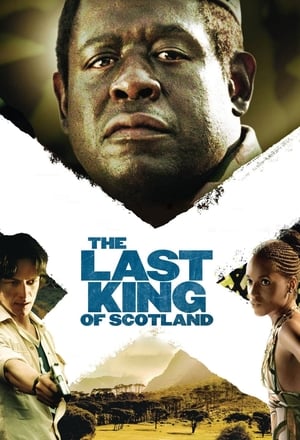
Young Scottish doctor, Nicholas Garrigan decides it's time for an adventure after he finishes his formal education, so he decides to try his luck in Uganda, and arrives during the downfall of President Obote. General Idi Amin comes to power and asks Garrigan to become his personal doctor.
In the present day, archaeologist Tapdig finds a strange egg during archaeological excavations and claims that this egg is a million years old. No matter how far-fetched it may sound, what he says is actually a reality in the parallel universe that existed millions of years ago. As Tapdig says, the tribal chief entrusts his son Dudu with the sacred eggs inherited from his grandfather, and instructs him to protect them, warning him that a great disaster will occur if these eggs break. However, by chance, one of the eggs falls from Dudu's hands and breaks, and Dudu is transported to the present day. Having fallen into the modern era, Dudu devotes all his energy to searching for the surviving egg (found by the archaeologist). In this, he is helped by the swindler Magsud, a journalist he has just befriended. However, the results are not at all as expected.
Elisabeth leaves her abusive and drunken husband Rolf, and goes to live with her brother, Göran. The year is 1975 and Göran lives in a commune called Together. Living in this leftist commune Elisabeth learns that the world can be viewed from different perspectives.
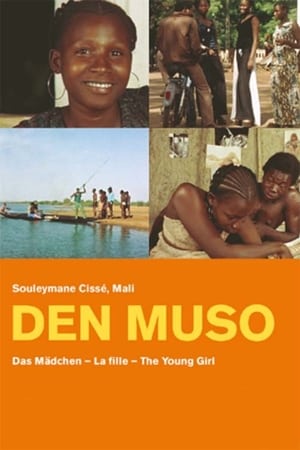
A young mute woman is raped and becomes pregnant, with disastrous consequences within her family. The film also sketches the social/economic situation in urban Mali in the 1970s, particularly in relation to the treatment of women.
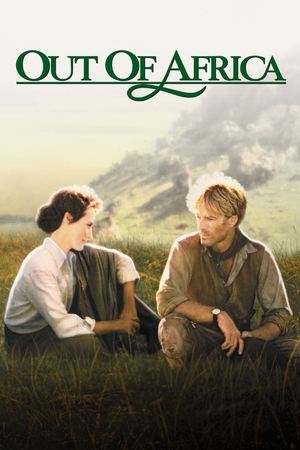
Tells the life story of Danish author Karen Blixen, who at the beginning of the 20th century moved to Africa to build a new life for herself. The film is based on her 1937 autobiographical novel.
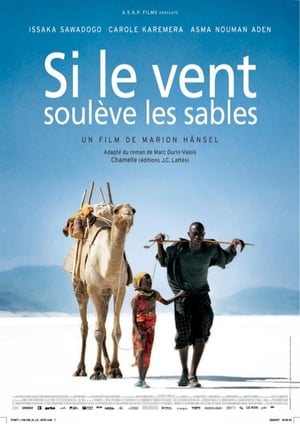
On the one hand, there’s the desert eating away at the land. The endless dry season, the lack of water. On the other there’s the threat of war. The village well has run dry. The livestock is dying. Trusting their instinct, most of the villagers leave and head south. Rahne, the only literate one, decides to head east with his three children and Mouna, his wife. A few sheep, some goats, and Chamelle, a dromedary, are their only riches. A tale of exodus, quest, hope and fatality.
A failed track coach finally finds someone who he believes has what it takes to win. The Comrades Marathon is a 90-k race in South Africa. An aging running coach, Barry, wants to field a winner; he's working with four men from a factory, but when he's fired to make way for a smooth, corporate type, he's at loose ends. Then he sees Christine, a Namibian immigrant who runs to forget her troubles. He offers to coach her and soon she's living at his house, following his diet and training regimen. But his single-mindedness gets to her: she wants a job and a place of her own. Plus, the man who replaced Barry likes her and wants her away from Barry. Can runner and coach (woman and man, African and European) sort out their complex relationship before the race? Written by
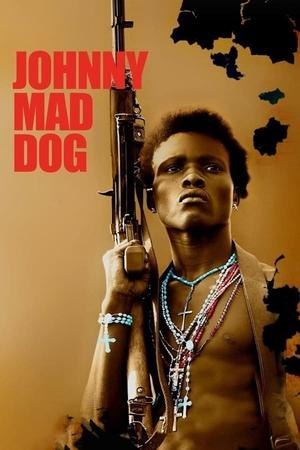
A cast of unknown performers are used in this drama about child soldiers fighting a war in an unnamed African country.
A film about the difficulty for even the most well-intentioned person to know and respect another culture. In this case, the problem is so acute that there is even heated debate over what to call that 'other.' The subtitles in the film use the familiar word 'pygmies,' a relatively pejorative European term; the Bantu or villagers' expression for the same group, Babingas, carries similar negative connotations. These highly specialized, tropical rainforest hunter-gatherers should perhaps be called by their own ethnonym, Aka, MoAka (sing.) and BaAka (pl.)
A gently humorous look at otherness and xenophobia in modern day German with this tale of a black Berlin teen named Leroy who rediscovers his roots after falling for a pretty white girl and meeting her racist family.
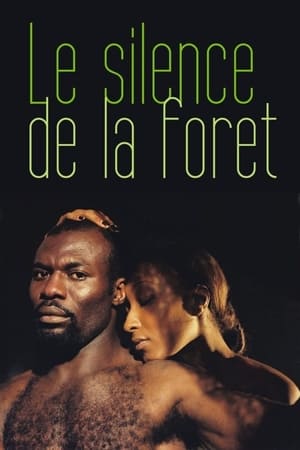
Life in the African country of Mali in the 1990s is vividly highlighted in this mild drama. In the story, a young forest ranger who sees that his work holds the key to the future of his country (through reforestation) is disgusted at the short-sighted, money-grubbing ways of his superiors. He has a much better relationship with local villagers than with his agency's bosses. As the movie opens, the villagers are preparing to hold a hunting ceremony but are not sure whether they will do it the old fashioned way, with a bonfire, or will obey a government decree that open fires are too dangerous. There is a lot of sexual teasing between the villagers, including some harmless horseplay. For instance, when a man whispers another woman's name in his sleep, his wife pours water into his ear in revenge.
The emotional conflict of Africans in Paris.
Young Africans in Paris face insecurity and vague future. Should they stay in France, or return to their homes?