Thomas Haemmerli is about to celebrate his fortieth birthday when he learns of his mother's death. A further shock follows when he and his brother Erik discover her apartment, which is filthy and full to bursting with junk. It takes the brothers an entire month to clean out the place. Among the chaos, they find films going back to the 1930s, photos and other memorabilia.
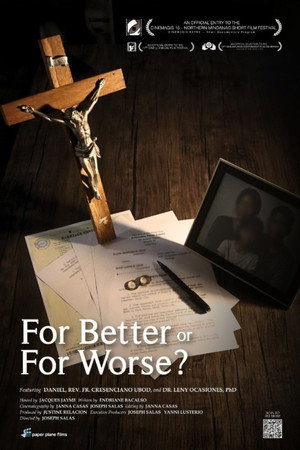
The Philippines remains the only nation without legalized divorce. Through the perspectives of a controversial priest, a women's rights advocate, and a child of a separated couple, this documentary explores whether the legalization of divorce in the country would be for better or worse.
Sirkka-Liisa died alone with no one left to miss her. Elina happened to buy her home after her death and ended up with all Sirkka-Liisa's possessions from books to photos. What would happen If Elina threw all her things away?
When Rasmus was 15, his mother and siblings moved from the island Bornholm and left Rasmus with his mentally ill father. Influenced by his father's insecurity, anger and failure, Rasmus chooses to move from Bornholm at the age of 18. Two years later, Rasmus is trying to see if a reunion is possible, but in order to forgive and create a new relationship, father and son must go on a common journey that requires extreme courage and determination to succeed.
Seven strangers are interviewed to talk about the relationship they have with their mother.
Leyla and her six-year-old daughter Nila live in the holy city of Mashhad in Iran. Nila is the result of a temporary marriage, which allows a man to marry a woman even if he is already married. Children born from such a relationship are legally non-existent. As long as the father does not recognize the child, no birth certificate can be issued and Nila cannot attend school. The documentary depicts Leyla's tireless efforts to clarify Nila's legal status in order to offer her a perspective for her future. In a never-ending bureaucratic battle, Leyla fights not only against the legal system, but also against a judgmental society.
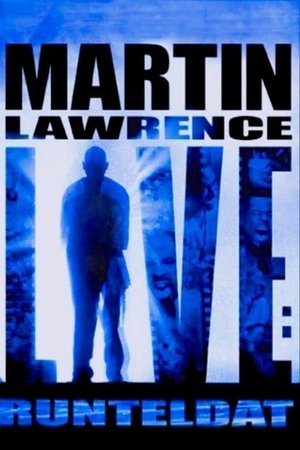
The controversial bad-boy of comedy delivers a piercing look at his life, lifting the metaphorical smokescreen that he feels has clouded the public view, commenting on everything from the dangers of smoking to the trials of relationships, and unleashing a nonstop litany of raucous anecdotes, stinging social commentary and very personal reflections about life.
Four young people on the cusp of adulthood prepare for one of the biggest nights of their lives – their Bar and Bat Mitzvah – balancing culture, religion and the chance to party.
Three boys are asked to call a friend they haven't seen or contacted in a long time. Their conversations reflect on childhood memories, feelings, and the meaning of friendship.
Pegah talks about Gholam, a man who’s not like her father, mother, uncles, or aunts, even though he’s always present at family gatherings. Gholam films these everyday scenes with his own camera. At the time, Pegah can’t imagine what the purpose of these films might be, but she’s happy to pose before the lens of this family friend, who she’s certainly very fond of.
Four 12-year-olds—Sharon, Tom, Moishy, and Sophie—prepare for their bar or bat mitzvot.
Before leaving for Rome with his mother, five year old Natan is taken by his father, Jorge, on an epic journey to the pristine Chinchorro reef off the coast of Mexico. As they fish, swim, and sail the turquoise waters of the open sea, Natan discovers the beauty of his Mayan heritage and learns to live in harmony with life above and below the surface, as the bond between father and son grows stronger before their inevitable farewell.
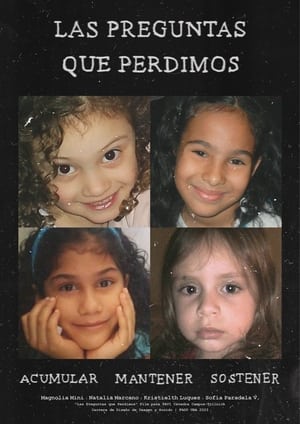
As one walks through the rooms of the grandparents' old house, a photo film reveals lives that withstand the passage of time — memories imprinted in objects, sounds, and habits; where absence is felt in what remains, and existence is traced by what is gone.
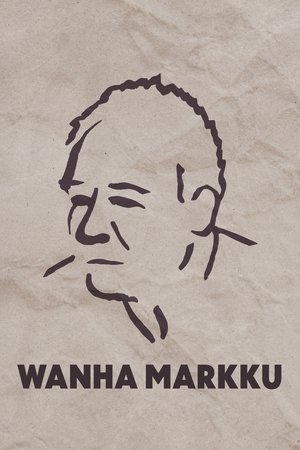
Markku built a house for his family with his own bare hands like a strong man is supposed to do. He worked hard from dawn to dusk, so that his seven children would have a roof above their heads. Unfortunately, the task ended up being too hard and Markku burnt out. One day, he left his family and disappeared abroad. The filmmaker travels to his childhood home to face his father, who he never got to know properly. Together they build a steel gate in front of the unfinished house, and try to create a relationship between each other.
This documentary is a moving look at 150 years of Canadian history through the iconic family photograph
The only thing colder than a Canadian winter is Canadian bureaucracy (probably). Based on five real life stories, Romy Boutin St-Pierre and Joe Nadeau pay homage to the nation-wide stress headache of phone calls with the government in this surprising short.
A Finnish documentary follows four young men who have one year to find new love in Helsinki.
Revisit photographs created by Kentucky school children in the 1970s and the place where their photos were made. Photographer and artist Wendy Ewald, who guided the students in making their visionary photographs, returns to Kentucky and learns how the lives and visions of her former students have changed.
Scott's a 40-year-old preacher's son and a raver, enamored by marijuana and the synthetic drug Ecstasy, who puts his children's future at risk through his lassez faire approach to child-rearing.
Miguel Gila (1919-2001) was a Spanish actor and stand-up comedian, famous for his surreal phone conversations with imaginary people, and a skillful cartoonist; an idolized star, a king of laughter.