On the tiny island of Martha's Vineyard, where presidents and celebrities vacation, trophy homes threaten to destroy the islands unique character. Twelve years in the making, One Big Home follows one carpenters journey to understand the trend toward giant houses. When he feels complicit in wrecking the place he calls home, he takes off his tool belt and picks up a camera.
A visual essay on contemporary Kiwi architecture.
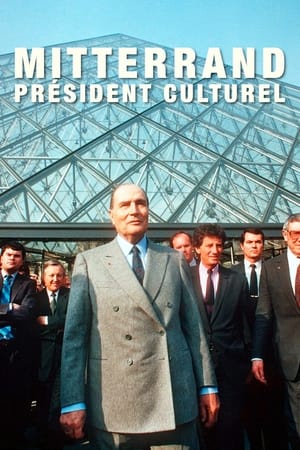
On the occasion of the fourty years anniversary of François Mitterand's election, a look back to the relationship between the President and artists, from admiration to manipulation.
A 1996 Dutch documentary film about the Western European architects who were invited by the Soviet Union to construct “Socialist cities” in Siberia during the late 1920s and early 30s. The film draws on interviews of some of the last survivors of this time, including Jan Rutgers (of the Kuzbass Autonomous Industrial Colony), Margarete Schütte-Lihotzky (of the Ernst May group), and Philipp Tolziner (of the “Bauhaus Brigade”), and on letters, articles, and lectures written by those who have already died, including Hans Schmidt, Mart Stam, Johannes van Loghem, and Ernst May. It also follows the daily lives of contemporary residents of Magnitogorsk, Orsk, Novokuznetsk, and Kemerovo.
A docu-art film about Kyiv and the contemporary problems of the capital. The film raises the issue of the dilapidated state of Kyiv's old buildings and the search for effective mechanisms to preserve the city's architectural heritage.
In 1959 Hiroshi Teshigahara shot the following 16 mm footage of he and his father’s first trip to Barcelona and the outlying Catalonian countryside, including a visit to the home of Salvador Dali in Port Lligat. The footage was recorded without sound.
A group of young architects, confined to a forest in Barcelona during the COVID crisis, explore the problems generated by the ambition of wanting to be completely self-sufficient.
Art historian and filmmaker Sundaram Tagore travels in the footsteps of Louis Kahn to discover how the famed American architect built a daringly modern and monumental parliamentary complex in war-torn Bangladesh.
A portrait of the Canadian architect Luc Durand (1929 – 2018), who, after studying with Eugène Beaudoin in Switzerland, began his career in India. This period would be decisive for his career and would influence many of the projects he designed in Quebec, including the Quebec Pavilion at Expo 67, Place Dupuis, and the Olympic Village for the 1976 Olympic Games. Durand then decided to return to his roots in 2012, traveling from Montreal to Geneva, from New Delhi to Chandigarh. A portrait of an eminent figure in Quebec architecture.
Documentary about Gert Wingårdh.
Kingdom of Granada, al-Andalus, 14th century. After recognizing that his land, always under siege, is hopelessly doomed to be conquered, Sultan Yusuf I undertakes the construction of a magnificent fortress with the purpose of turning it into the landmark of his civilization and his history, a glorious monument that will survive the oblivion of the coming centuries: the Alhambra.
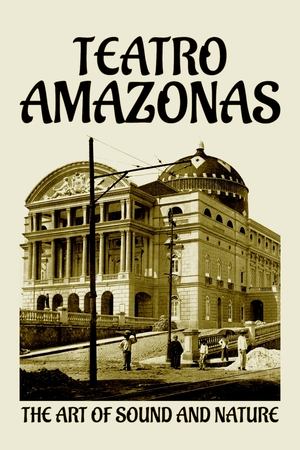
The history of the Teatro Amazonas in Manaus, an opera house located in the middle of the Amazon rainforest, whose construction, between 1884 and 1896, depended on the labor exploitation of the local indigenous populations, provides an insight into the cultural, social and political situation in Brazil.
Notre-Dame Résurrection
Big Time gets up close with Danish architectural prodigy Bjarke Ingels over a period of six years while he is struggling to complete his largest projects yet, the Manhattan skyscraper W57 and Two World Trade Center.
In 1959, a government employee named Richard Oyler, living in the tiny desert town of Lone Pine, California, asked world-famous modern architect Richard Neutra to design his modest family home. To Oyler's surprise, Neutra agreed. Thus began an unlikely friendship that led to the design and construction of an iconic mid-century modern masterpiece.
A core group of architects embraced the West Coast from Vancouver to LA with its particular geography and values and left behind a legacy of inspired dwellings. Today, architects celebrate the influence established by their predecessors.
Finding their place between the forest and the sea, the Japanese have always felt awe and gratitude toward Nature. Since ancient times, they have negotiated their own unique relationship with their natural surroundings. Acclaimed photographer Masa-aki Miyazawa discovered the essence of that ancient way of living in Ise Jingu, Japan’s holiest Shinto shrine. Inspired by the idea of sending a message to the future in the same way this ancient shrine keeps alive the traditions of the past, Miyazawa used an ultra-high resolution 4K camera to create a breathtaking visual journey linking the Ise forest with other forests throughout Japan.
In 1919 an art school opened in Germany that would change the world forever. It was called the Bauhaus. A century later, its radical thinking still shapes our lives today. Bauhaus 100 is the story of Walter Gropius, architect and founder of the Bauhaus, and the teachers and students he gathered to form this influential school. Traumatised by his experiences during the Great War, and determined that technology should never again be used for destruction, Gropius decided to reinvent the way art and design were taught. At the Bauhaus, all the disciplines would come together to create the buildings of the future, and define a new way of living in the modern world.
Frank Lloyd Wright’s Modern Masterpiece, Unity Temple is an homage to America’s most renowned architect. The film pulls back the curtain on Wright’s first public commission in the early 1900’s to the painstaking efforts to restore the 100 year old building back to its original beauty. The dedicated team of historians, craftspeople, members of the Unitarian congregation and Unity Temple Restoration Foundation reveal the history of one of Wright’s most innovative buildings that merged his love of architecture with his own spiritual values. The film intersperses the architect’s philosophies with quotes narrated by Brad Pitt.
Catalan architect Antonio Gaudí (1852-1926) designed some of the world's most astonishing buildings, interiors, and parks; Japanese director Hiroshi Teshigahara constructed some of the most aesthetically audacious films ever made. With camera work as bold and sensual as the curves of his subject's organic structures, Teshigahara immortalizes Gaudí on film.