In 150 years, twice marked by total destruction —a terrible earthquake in 1923 and incendiary bombings in 1945— followed by a spectacular rebirth, Tokyo, the old city of Edo, has become the largest and most futuristic capital in the world in a transformation process fueled by the exceptional resilience of its inhabitants, and nourished by a unique phenomenon of cultural hybridization.
Offers audiences a unique window into a bygone era when a thrilling new invention, the motion picture camera, first captures a nation on film.
Born in 1932, Keiko Kishi has been one of the first Japanese actresses known worldwide. Her decision to move to France and to marry director Yves Ciampi in 1957 – after he filmed her in Typhoon Over Nagasaki starring Jean Marais and Danielle Darrieux – caused a huge scandal in Japan. Despite this transgression, Keiko Kishi continued acting in her home country with Kon Ichikawa, Yasujiro Ozu, Masaki Kobayashi… building unique bridges between Japanese and European cultures. Free and rebellious, she emancipated herself from the many obstacles she encountered in the film industry, and created her own production company in her early twenties. Let’s look back at the story of a pioneer, an inspiration for many generations.
Charlotte Gainsbourg looks at her mother Jane Birkin in a way she never did, overcoming a sense of reserve. Using a camera lens, they expose themselves to each other, begin to step back, leaving space for a mother-daughter relationship.
Born a lower-caste girl in rural India's patriarchal society, "married" at 11, repeatedly raped and brutalized, Phoolan Devi finds freedom only as an avenging warrior, the eponymous Bandit Queen. Devi becomes a kind a bloody Robin Hood; this extraordinary biographical film offers both a vivid portrait of a driven woman and a savage critique of the society that made her.
Told through performances, TV interviews, home movies, family photographs, private letters and unpublished memoirs, the film reveals the essence of an extraordinary woman who rose from humble beginnings in New York City to become a glamorous international superstar and one of the greatest artists of all time.
From her precocious status as a sex symbol to her consecration as a filmmaker, Jodie Foster's story is about a feminist struggle, albeit atypical, fought on and off the screen. This film sets out to retrace her remarkable journey within the Hollywood industry.
It arises from the nostalgia for a place that witnessed the growth of two generations, but is now abandoned, awaiting its prompt demolition.
Documentary about the lost 1914 film "Sperduti nel buio". Film historian Denis Lotto journeys across Europe following the trail of the lost movie.
Benjamin and Awad run Sudan's national film archive. The two men, who have worked together for more than 40 years, are devoted to protecting their country's visual memories. Home to some 13,000 films, the archive preserves pivotal moments of Sudan's turbulent history and is one of the largest in Africa. But the archive is in a fragile state. Following years of neglect and poor storage, many film reels are turning to dust in Sudan's unforgiving tropical climate. The two friends are determined to turn it around and embark on a mission to save the old films. Will they succeed in preserving Sudan's visual history for future generations before it's too late?
Josephine has all her life been told that her Peruvian aunt Augusta died in an armed struggle for the rights of the poor. As an adult Josefin decides to find out the truth about the legendary Augusta.
Le temps du voyage
‘The Cyborgs’ is re-telling the recent history of Ukraine – the legendary fight for Donetsk Airport in 2014 during Russian invasion. The freedom fighters from various divisions of Ukrainian army and volunteer battalions took a 242-days stand against the Russian backed militants until the complete destruction of the airport’s terminal.
Why are we still able, today, to view images that were captured over 125 years ago? As we enter the digital age, audiovisual heritage seems to be a sure and obvious fact. However, much of cinema and our filmed history has been lost forever. Archivists, technicians and filmmakers from different parts of the world explain what audiovisual preservation is and why it is necessary. The documentary is a tribute to all these professionals and their important work.
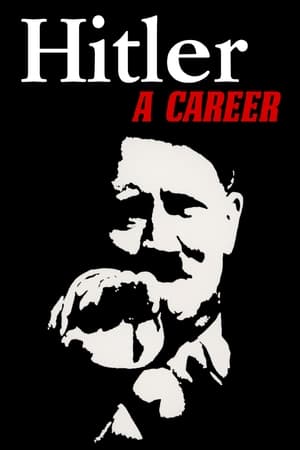
A keen chronicle of the unlikely rise to power of Adolf Hitler (1889-1945) and a dissection of the Third Reich (1933-1945), but also an analysis of mass psychology and how the desperate crowd can be deceived and shepherded to the slaughterhouse.
Learn about the trajectory of student leader Marcos Medeiros and learn more about his exile in France and Cuba. In 1968, he joined the counterculture when political activism became an audiovisual expression of intervention in social reality.
Negev Desert, Israel, 1987. Bashir Abu Rabi'a works as a pyrotechnics and special effects assistant on the film Rambo III, starring Sylvester Stallone, a shoot that will have far-reaching consequences for the local Bedouin population.
Summer of revolution
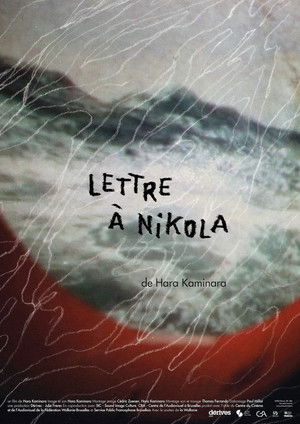
As a letter to her son, the filmmaker testifies her experience as a photographer aboard the Aquarius, a ship that rescued 29,523 people in the Mediterranean between 2016 and 2018.
For 70 years, the Red Army was one of the pillars of the USSR, an object of both fear and admiration, a symbol of both liberation and coercion. This documentary explores its history, combining epic storytelling with the deconstruction of myth. While everyone knows that Trotsky's name is attached to his creation, contrary to popular belief, the bulk of his story is made up of defeats and military failures. Thanks to an all-archival montage, this film is a veritable immersion in the heart of...