Babe Ruth set a record in 1927 by hitting 60 home runs in one season. 34 years later, Roger Maris broke that record. Another 37 years passed before that record was broken by Mark McGwire. Five days after McGwire's feat, Sammy Sosa broke the brand new record. And the race was on! Fans watched breathlessly as the record passed between the two men and time left in the season dwindled. Relive it all, from Ruth, to Maris, to the final days of the 1998 Sosa/McGwire slug-fest.
Yankee Stadium has seen a plethora of legends over the franchise's storied history, but few have left a legacy as unique as Jim Abbott's. On September 4, 1993, the pitcher, who was born without a right hand, threw a no-hitter in front of the Yankee faithful. This astonishing achievement is merely one in a lifetime of perseverance, as Abbott continues to advocate for people with disabilities.
An investigation into the downfall of the Montreal Expos, Canada's first Major League Baseball team — and who was ultimately responsible.
In 1961, Roger Maris and Mickey Mantle played for the New York Yankees. One, Mantle, was universally loved, while the other, Maris, was universally hated. Both men started off with a bang, and both were nearing Babe Ruth's 60 home run record. Which man would reach it?
100 Years of Wrigley Field celebrates a century of the greatest moments and best personalities of the ballpark on Chicago's North Side.
The 1995 World Series featured the two best teams in baseball. The Cleveland Indians won 100 games in a shortened season, and they made it to the World Series for the first time in 41 years. The Atlanta Braves had been here before, twice in the previous four years. With the best pitching staff in baseball, they were called the team of the '90's. Still they needed a World Series Title to claim that crown. This official documentary of the 1995 World Series includes all the dramatic moments of the six-game battle between the Indians and the Braves including: Eddie Murray's game-winning single at frenzied Jacobs Field. Orel Hershiser's gutsy performances against the incredible Greg Maddux. Dave Justice talking the talk...and then walking the walk. Tom Glavine, the series MVP, pitching one-hit baseball under phenomenal pressure.
"This film explores how freedom of speech — including dissent — is afforded to all Americans, and shows freedom of expression in art, music, dance, architecture, and science. The film also emphasizes the importance of the individual’s contribution to the whole of society and demonstrates how a productive and creative society is formed by the open and respectful exchange of ideas. The film was written, produced, and directed by William Greaves" (National Archives).
In a time when America was on the brink of modernization, Carson "Skeeter" Bigbee emerged from rural Oregon to become an embodiment of national transformation. Born to working parents in 1895, Bigbee’s life as a multi-sport athlete, a baseball star with the Pittsburgh Pirates, a World War I enlistee, and a World Series hero, intersected with America's Progressive Era, the electrification of society, the First World War, and the onset of the Great Depression. His story, from hitting the decisive run in the 1925 World Series to managing in the American Girls Professional Baseball League, is a poignant reflection of ambition, patriotism, and the resilient spirit of an ever-changing nation in the early 20th Century.
Born in 1918 in San Diego, Williams was a latchkey child from a broken home, raised by a mother more dedicated to the Salvation Army than to her two sons, and by a father who spent more time away from home than in it. Williams found salvation by doing the one thing he loved most: hitting baseballs. In his rookie season with the Red Sox, where he would spend his entire career as a player, Williams batted .327, socked 31 homers and led the league with 145 RBI. Over the next 21 years, despite losing five seasons of his prime to active service as a U.S. Marine Corps pilot, Williams hit 521 home runs, twice captured the Triple Crown, and became the oldest man ever to win a batting title. He finished his career with a .344 lifetime batting average, was the last man to hit over .400 in a full season, batting .406 in 1941, and was a first-ballot inductee into the Baseball Hall of Fame.
A Taiwanese high school baseball team travels to Japan in 1931 to compete in a national tournament.
Montreal Expos star catcher Gary Carter visits Japan to learn about the customs and traditions of baseball in the Far East. He also encounters other "foreign" baseball players he once played with in the MLB.
Charles Durning appears as the legendary baseball manager Charles Dillon "Casey" Stengel in this one-man show presented before a live studio audience.
"City of Baseball" is a documentary that explores both the past and the present of the Italian baseball league in the seaside resort of Nettuno near Rome. Through league pioneers, current players, fans, and local historians, "City of Baseball" captures the story of how the 1944 Allied invasion of Nettuno brought the American pastime to a town which embraced the sport with a passion that continues today.
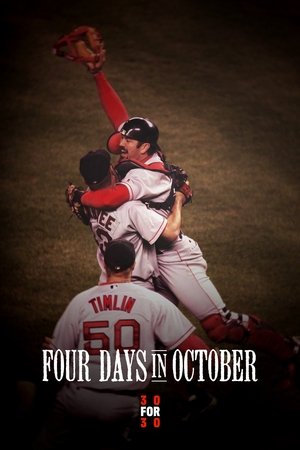
A documentary about the 2001 World Series.
The Indians and Yankees, both in a tight race with the White Sox, met at the Polo Grounds on August 16th, 1920. In the fifth inning, Carl Mays threw one of his "submarine" pitches that hit Ray Chapman in the head. Chapman collapsed at the plate. He was rushed to the hospital and died the next day, the only Major League Baseball player ever to be killed in a game. Grief tore through Cleveland and the pivotal moment led to an explosion on and off the field. The Indians, sparked by the addition of young shortstop Joe Sewell, recovered in time to win their first World Series Title. What resulted was a rivalry that would last 100 years.
In 2014, Chicago’s Jackie Robinson West Little League became the first all-Black team to win the Little League U.S. Baseball Championship. Along the way, 13 twelve-year-old athletes from the South Side turned into media superstars—their faces were splashed across magazine covers and major TV networks, garnering them millions of fans around the country. They were even invited to the White House to meet President and Mrs. Obama. But it all came crashing down after a rival coach accused the team of breaking residential boundary rules.
In this short film, two starstruck movie fans hire a tour guide and see a plethora of Hollywood stars.
Buck Weaver and Hap Felsch are young idealistic players on the Chicago White Sox, a pennant-winning team owned by Charles Comiskey - a penny-pinching, hands-on manager who underpays his players and treats them with disdain. And when gamblers and hustlers discover that Comiskey's demoralized players are ripe for a money-making scheme, one by one the team members agree to throw the World Series. But when the White Sox are defeated, a couple of sports writers smell a fix and a national scandal explodes, ripping the cover off America's favorite pastime.
Liu Bo-Jiun is the first female international baseball umpire. “First” seems to be an honor, but in a male-surrounded baseball field, the first female must experience an unprecedented review. As she fixes her eyes on every pitch coming forward, people fix their eyes on every judgment she made. If judgments on pitches were personal out of technical aspects, how about those judgments on people? The game begins at three balls, two strikes and two outs. What about her?
Celebrate the life of baseball’s most enduring legend; Satchel Paige was the single most important player in the old Negro Baseball Leagues