Shot on the island of Fårö, this documentary presents interviews with local inhabitants as they discuss work, family life, and the conditions of living in a sparsely populated rural community. Bergman documents generational differences and practical concerns surrounding farming, fishing, education, and migration as the island confronts social and economic change.
Documentary about the Swedish band Di sma undar jårdi mixed with recordings from one of their shows.
Tom Leimer arrives to the isle of Gotland, Sweden during the summer in order to find his old love Therese Sandström. She has, however, started a new life together with the upper-class-guy Karl von Silberhelm, and wishes no longer to know Tom because of his criminal past. A virus, turning people into living dead, breaks out on the isle. Tom makes his decision to try to rescue Therese - a choice that turns out to be more dangerous than he expected, since each who is infected hungers always for fresh human-flesh.
Lieutenants Johnny Waller and Ingvar Lund have been appointed captains of two torpedo boats.
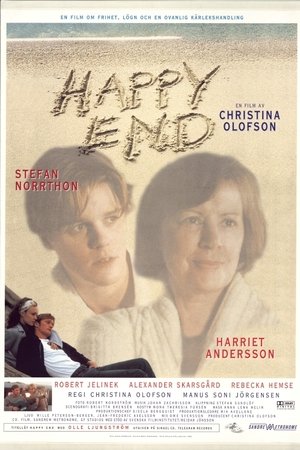
Happy End is a story about Lukas, a self-absorbed young man adrift who meets Marja, an experienced, older woman. Lukas dreams of becoming a rock star. He escapes the city to his father's holiday flat in Visby, a town on the Baltic island of Gotland. But the flat has been rented out to Marja, an eccentric 69-year-old writer determined to complete her memoirs. Nothing can hold her back, least of all a confused dreamer. Much against their will, a friendship slowly develops. But Marja harbors a secret, and when the truth emerges their friendship is put to the test. Their stay on Gotland takes an unexpected turn...
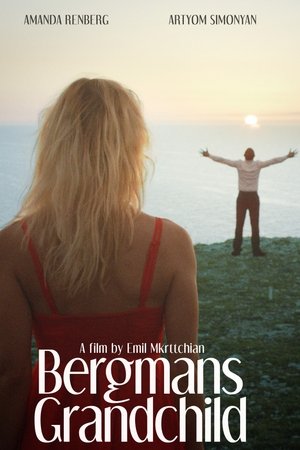
Set in beautiful Faro, a young woman named Ida, feels lonely and loses all hope, believing death is looking for her. She soon comes up with a creative way of trying to cheat death itself.
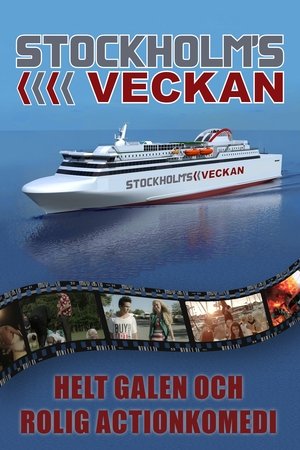
A bunch of young people travel to Gotland on their vacation - partying expected 24/7. But they get into trouble - with both the local population and a criminal gang.
Many people have negative opinions about their managers. A survey by the Geva Institute in Munich found that 88% of German workers have issues with their superiors, with 20% admitting to hating them. Consequently, nearly 70% find little pleasure in their work, 18% have withdrawn, and only 12% are motivated. The film explores these issues by critiquing neoliberalism, highlighting its flaws in promoting free market expansion and endless growth, even if harmful. It features interviews with scientists, psychologists, and CEOs like Paul Bulcke from Nestlé.
These are strange times indeed. While they continue to command so much attention in the mainstream media, the 'battles' between old and new modes of distribution, between the pirate and the institution of copyright, seem to many of us already lost and won. We know who the victors are. Why then say any more?
Steal This Film focuses on Pirate Bay founders Gottfrid Svartholm, Fredrik Neij and Peter Sunde, prominent members of the Swedish filesharing community. The makers claimed that 'Old Media' documentary crews couldn't understand the internet culture that filesharers took part in, and that they saw peer-to-peer organization as a threat to their livelihoods. Because of that, they were determined to accurately represent the filesharing community from within. Notably, Steal This Film was released and distributed, free of charge, through the same filesharing networks that the film documents.
A look at the first years of Pixar Animation Studios - from the success of "Toy Story" and Pixar's promotion of talented people, to the building of its East Bay campus, the company's relationship with Disney, and its remarkable initial string of eight hits. The contributions of John Lasseter, Ed Catmull and Steve Jobs are profiled. The decline of two-dimensional animation is chronicled as three-dimensional animation rises. Hard work and creativity seem to share the screen in equal proportions.
A pilot for a documentary film capturing life at the Chelsea Hotel in the early 1970s. The film was never finished due to budget issues. 'A regrettable folly of my youth,' said the director, Albert Scopin.
In the cobalt mining areas of Katanga in the Democratic Republic of the Congo (DRC), babies are being born with horrific birth defects. Scientists and doctors are finding increasing evidence of environmental pollution from industrial mining which, they believe, may be the cause of a range of malformations from cleft palate to some so serious the baby is stillborn. More than 60% of the world’s reserves of cobalt are in the DRC and this mineral is essential for the production of electric car batteries, which may be the key to reducing carbon emissions and to slowing climate change. In The Cost of Cobalt we meet the doctors treating the children affected and the scientists who are measuring the pollution. Cobalt may be part of the global solution to climate change, but is it right that Congo’s next generation pay the price with their health? Many are hoping that the more the world understands their plight, the more pressure will be put on the industry here to clean up its act.
Documentary about filmmaker Shirley Clarke which originally aired on the French television series “Cinéastes de notre temps”.
A “Cinéastes de notre temps” series episode directed by french film critic and filmmaker Alexandre Astruc, originally aired sometime around 1970.
ASMR: A feeling that disappears because it’s too subtle to notice, leaving a trace of a soft tingling sensation behind.
In January 1972, during General Lanusse's dictatorship in Argentina, a group of revolutionary activists occupied the National Development Bank, just meters from the Government House, expropriating 450 million pesos (approximately 10 million dollars today) for their cause. This was made possible by Oscar Serrano and Ángel Abus—activists and bank employees—who spent two years preparing what would become the biggest blow to the dictatorship's finances. Forty years later, Oscar and Ángel, along with a group of actors, recreate those events that changed their lives. In this dialogue between generations, the young people transform their perspective on activism and commitment during those years. Narrated through several cinematic layers, Seré Millones (I Will Be Millions) offers an innovative story that blends humor, rigorous historical research, and the epic spirit of the era.
Filmmaker Shauna Garr finds the founder of the once successful hip hop group, The Pharcyde, homeless and addicted to drugs.
Centering on the ABC Loan Co., a twenty-five year old pawnshop/checkcashing outlet, No Loans Today documents daily life in the African-American community of South Central Los Angeles in the aftermath of the 1992 riots.
Drawing on rare and classic performances, exclusive interviews, lengthy contributions from friends, colleagues, journalists and experts, and a host of other features, this is a unique insight into the music, career and life of a cultural icon.