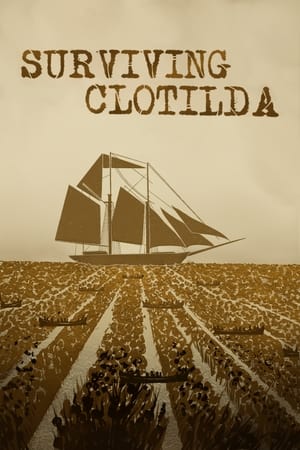
In July 1860, the schooner Clotilda slipped quietly into the dark waters of Mobile, Ala., holding 110 Africans stolen from their homes and families, smuggled across the sea, and illegally imported to be sold into slavery. Surviving Clotilda is the extraordinary story of the last slave ship ever to reach America's shores: the brash captain who built and sailed her, the wealthy white businessman whose bet set the cruel plan in motion, and the 110 men, women, and children whose resilience turned horror into hope.
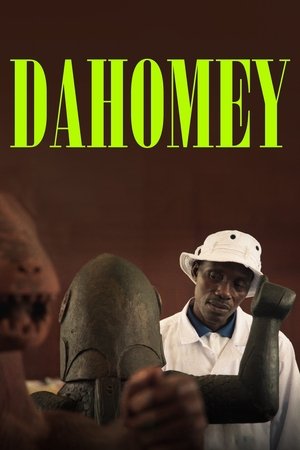
Thousands of royal artifacts of Dahomey, a West African kingdom, were taken by French colonists in the 19th century for collection and display in Paris. Centuries later, a fraction returned to their home in modern-day Benin. This dramatized documentary follows the journey of 26 of the treasures as told by cultural art historians, embattled university students, and one of the repatriated statues himself.
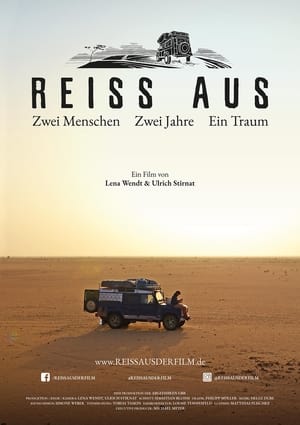
When Lena and Ulli start the engine of their old Land Rover, Lady Terés, they have a plan: to drive from Hamburg to South Africa in six months. What they don't know yet is that they won't ever get there. Two totally different characters, jammed together in two square meters of space for almost two years, they experience what it really means to travel: leaving your comfort zone for good.
Hazoumè's "NGO (Beninese Solidarity with Endangered Westerners)" reflects on issues of immigration, economic disparity, and perceptions of wealth. Taking a critical eye toward the vast numbers of local and international nongovernmental organizations (NGOs) operating in his country of Benin, the artist created his own NGO to aid poor Westerners, thereby reversing conventional assumptions concerning poverty and the distribution of capital from so-called developed nations. In an attempt to expose the often hidden realities of the income inequality that exists in global Northern countries, he asked Beninese celebrities to solicit donations from Africans, who commonly associate Westerners with affluence. For Hazoumè, the driving concept of the project is to uncover such illusions: "To all appearances, it’s a matter of reversing the help, from south to north. But in reality—it is about making the Africans cogitate differently."
What happens when a group of Finns travel to a tiny village in Benin to participate in a vaccination study? By participating, they can aid in the development of a diarrhea vaccine for children in developing countries – and, at the same time, have a different kind of vacation in West Africa. The complicated side of helping people and the clashes between two cultures rise to the forefront of Mia Halme’s delicious documentary film.
Hijos de África
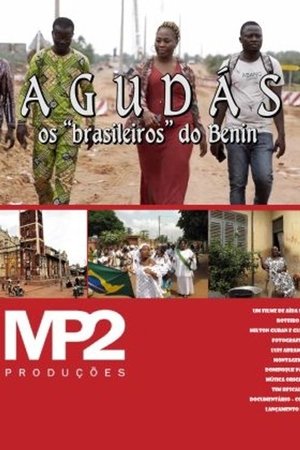
The film portrays the trajectory and life of the “Agudá” people today. This is a group of descendants of Africans enslaved in Brazil, who returned to their homeland with the end of slavery, and also descendants, Brazilian and Portuguese, of slave traffickers, who settled in that region of Africa in the 18th and XIX. Present in Benin and Togo, the “agudás” assimilated the surname and part of the culture of their masters.
Benín, infància robada
Esosa, Fatouma, and Giselle, three women trafficked as teenagers who reunite seventeen years later to dismantle the powerful men behind their pain. From the streets of Lagos to the shadows of Abidjan and Cotonou, they execute a cold, calculated mission, each move sharpened by trauma, sisterhood, and strategy.
In the oceanside village of Iyi, the revered Mama Efe acts as an intermediary between the people and the all-powerful water deity Mami Wata. But when a young boy is lost to a virus, Efe’s devoted but rebellious daughter Zinwe and skeptical protégé Prisca warn Efe about unrest among the villagers. With the sudden arrival of a mysterious rebel deserter named Jasper, a conflict erupts, leading to a violent clash of ideologies and a crisis of faith for the people of Iyi.
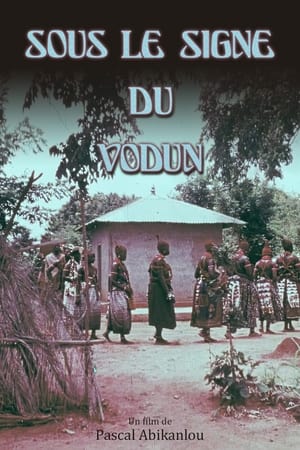
A young man having omitted to make the ritual offerings of voodoo, suffers the wrath of the spirits.
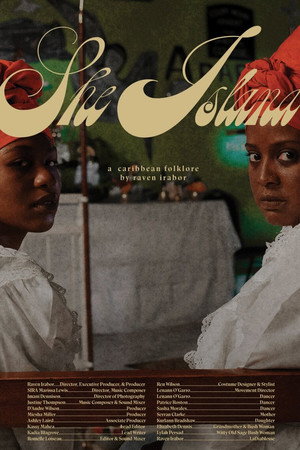
In the heart of the Caribbean, a mother and daughter confront a malevolent curse erasing identities of all the island's women, propelling them on a daring quest to reclaim their rich cultural heritage and triumph over the encroaching darkness.
David, a clueless and cocky Spanish video blogger traveling in Africa, arrives in Benin, where he accidentally finds the truth behind an ancient legend.
Cotonou Comedy Festival
M2M's first original long-form documentary, Battle at Versailles, follows an event in 1973 at Palace of Versailles where top French designers such as Yves Saint Laurent and Pierre Cardin faced of against American newcomers Oscar de la Renta, Bill Blass, Anne Klein and Halston. That pitted France’s best designers against the best America had to offer. It was the first time the fashion world's gaze was fixated on American design.
How can structures, which take up defined, rigid portions of space, make us feel transcendence? How can chapels turn into places of introspection? How can walls grant boundless freedom? Driven by intense childhood impressions, director Christoph Schaub visits extraordinary churches, both ancient and futuristic, and discovers works of art that take him up to the skies and all the way down to the bottom of the ocean. With the help of architects Peter Zumthor, Peter Märkli, and Álvaro Siza Vieira, artists James Turrell and Cristina Iglesias, and drummer Sergé “Jojo” Mayer, he tries to make sense of the world and decipher our spiritual experiences using the seemingly abstract concepts of light, time, rhythm, sound, and shape. The superb cinematography turns this contemplative search into a multi-sensory experience.
Hasse and Tage were best friends for over 30 years. Their films, shows, songs and books influenced an entire nation and were the glue that held people's home together. As a comedic duo, they united right-wing ghosts and anarchists in laughter. When Tage dies prematurely, his children lose a father, Hasse a father figure and all of Sweden a country father. And when Palme dies just months after Tage, the Swedish stable society begins to crumble. For the first time, the Alfredson and Danielsson families open up the archives and give us exclusive access to their stories, photographs and recordings.
In this documentary, Joachim Hellwig uses partly unpublished footage to shed light on a dark chapter of German history and shows the entanglements between the politicians' claims to power and the interests of industry and business in Germany from the beginning of the First World War to the end of the Second World War (1914 to 1945). The Nuremberg War Crimes and Industrial Trials served as the basis for this documentary.
An inspirational story about the power of hope in the face of seemingly insurmountable odds, and an object lesson in what it really means to be a winner in life.
1961 documentary about the history and seedy reality of the sex industry in London's Soho.