Follows the behind-the-scenes work of Studio Ghibli, focusing on the notable figures Hayao Miyazaki, Isao Takahata, and Toshio Suzuki.
Nebraska's Capitol is a national historic landmark ... a masterpiece of art and architecture, and the spirit of everything Nebraskan. Explore the enduring nature of Nebraska's statehouse and how its visionary design portrays Nebraska's people, its history, and democracy.
A worn-out floor, the hole underneath, a political activist, and the Ouled Sbita tribe are the protagonists in this political satire. For 23 years, the director’s chair at an international art institute scratched the wooden floor. This 102cm x 120cm floor section is cut out and sent to an expropriated piece of land in Morocco. In The Hole’s Journey, Ghita Skali uses sharp wit, personal stories and playful editing to touch on specific power dynamics and freedom of choice.
An inspiring 75min DIY documentary film on new art and the young artists behind it. It was all filmed on the heat of live action of the first NOVA Contemporary Culture Festival, July and August 2010 in São Paulo, Brazil.
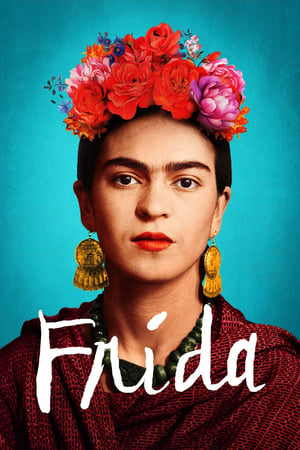
An unconventional portrait of painter Frida Kahlo and photographer Tina Modotti. Simple in style but complex in its analysis, it explores the divergent themes and styles of two contemporary and radical women artists working in the upheaval of the aftermath of the Mexican Revolution.
The 25-minute long documentary details the entirety of the artistic process from Ralph Ziman’s inspiration for the project and acquisition of the MiG-21, to the international collaboration to create the beadwork and assemble the art piece, leading up to the project’s unveiling at The Museum of Flight. Also covered in the film is background on the MiG-21, including details about the plane used (decommissioned tail number 8971) and how MiGs’ presence in the Angolan Civil War ultimately hastened the end of white rule in South Africa. See historical footage and personal interviews, including the Polish pilot who flew tail number 8971 in the 1980s, a South African Border War pilot and the team of artists and craftspeople in Southern Africa and the United States who took on the huge task of covering the aircraft in tens of millions of glass beads.
Seemayer Studios presents a new documentary about the American Hotel in downtown Los Angeles and the Arts District that surrounds it. Since 1979, the American Hotel has been the beating heart of a rich community of artists who began moving into the deserted factory buildings between Alameda and the Los Angeles River.
Pop Goes the Easel was Ken Russell’s first full-length documentary for the BBC’s arts series Monitor. It focused on 4 British Pop Artists - Peter Blake, Peter Philips, Pauline Boty and Derek Boshier.
Narrated by Sir Derek Jacobi - star of the landmark television series "I, Claudius" - this documentary explores art and culture around the Bay of Naples before Mount Vesuvius erupted in AD 79. The bay was then the most fashionable destination for vacationing Romans. Julius Caesar, emperors, and senators were among those who owned sumptuous villas along its shores. Artists flocked to the region to create frescoes, sculpture, and luxurious objects in gold, silver, and glass for villa owners as well as residents of Pompeii and other towns in the shadow of Vesuvius. The film concludes with the story of the discovery of Pompeii and Herculaneum from the 18th century onward.
400 years ago, in Japan, a revolutionary art was born and would influence the greatest Western artists of the late nineteenth century, the Ukiyo-E "floating images of the world." A wonderful trip in a world of beauty and discovery. The concept and objectives of this documentary are, on the one hand, to show, teach and discover Japanese art (Japanese stamps and prints) and, on the other hand, to demonstrate the influence of Japanese stamps on Western modern art, showing in comparison some of the Most famous paintings (impressionism or paintings by Van Gogh).
A portrait of the day-to-day operations of the National Gallery of London, that reveals the role of the employees and the experiences of the Gallery's visitors. The film portrays the role of the curators and conservators; the education, scientific, and conservation departments; and the audience of all kinds of people who come to experience it.
Through interviews and guerilla footage of graffiti writers in action on five continents, the documentary tells the story of graffiti from its origins in prehistoric cave paintings thru its notorious explosion in New York City during the 70’s and 80’s, then follows the flames as they paint the globe.
A Lake of the Isles homeowner and a Minneapolis chainsaw sculptor shape meaning (and a twenty foot tall pencil) from the twisted trunk of a fallen oak tree. But this pencil isn’t meant to last. Every year, thousands gather to sacrifice a part of the pencil in a sharpening ceremony, and in the process renew the collective promise to “do something.”
From award-winning director Phil Grabsky comes this fresh new look at arguably the world’s favourite artist – through his own words. Using letters and other private writings I, Claude Monet reveals new insight into the man who not only painted the picture that gave birth to impressionism but who was perhaps the most influential and successful painter of the 19th and early 20th centuries. Despite this, and perhaps because of it, Monet’s life is a gripping tale about a man who, behind his sun-dazzled canvases, suffered from feelings of depression, loneliness, even suicide. Then, as his art developed and his love of gardening led to the glories of his garden at Giverney, his humour, insight and love of life is revealed. Shot on location in Paris, London, Normandy and Venice I, Claude Monet is a cinematic immersion into some of the most loved and iconic scenes in Western Art.
"Meat Joy is an erotic rite — excessive, indulgent, a celebration of flesh as material: raw fish, chicken, sausages, wet paint, transparent plastic, ropes, brushes, paper scrap. Its propulsion is towards the ecstatic — shifting and turning among tenderness, wildness, precision, abandon; qualities that could at any moment be sensual, comic, joyous, repellent. Physical equivalences are enacted as a psychic imagistic stream, in which the layered elements mesh and gain intensity by the energy complement of the audience. The original performances became notorious and introduced a vision of the 'sacred erotic.' This video was converted from original film footage of three 1964 performances of Meat Joy at its first staged performance at the Festival de la Libre Expression, Paris, Dennison Hall, London, and Judson Church, New York City."
Hermitage: The Power of Art
A short documentary illustrating how art can influence public perception towards environmental issues. Green Patriot Posters is a highly acclaimed multimedia design campaign that challenges artists to deepen public understanding and ignite collective action in the fight against climate change. So far, it has reached five million people through print media, public space and digital culture. The film features interviews with key Green Patriot Posters contributors (Shepard Fairey, Michael Bierut, DJ Spooky, Mathilde Fallot) and its founders (The Canary Project, Dmitri Siegel).
Peter Engelhardt - aptly named “PENG” - has dedicated his entire life to good design: as a renowned designer as well as a collector of everything that makes up everyday life in the 50s, 60s and 70s ... The well-known and the nameless, the precious and the superfluous, the special and the everyday. The Engelhardt collection once comprised over 30,000 objects. But the more Peter collected, the more space he needed - and the less money he had. The last stop for the time being: a dilapidated industrial wasteland near Bingen, rainwater and theft the biggest enemies. The preservation of the collection - or rather the fight against its destruction - in the old mine in Waldalgesheim became the 78-year-old's life's work.
Gray Matters explores the long, fascinating life and complicated career of architect and designer Eileen Gray, whose uncompromising vision defined and defied the practice of modernism in decoration, design and architecture. Making a reputation with her traditional lacquer work in the first decade of the 20th century, she became a critically acclaimed and sought after designer and decorator in the next before reinventing herself as an architect, a field in which she laboured largely in obscurity. Apart from the accolades that greeted her first building –persistently and perversely credited to her mentor–her pioneering work was done quietly, privately and to her own specifications. But she lived long enough (98) to be re-discovered and acclaimed. Today, with her work commanding extraordinary prices and attention, her legacy, like its creator, remains elusive, contested and compelling.
Exhibition on Screen's latest release celebrates the life and masterpieces of Hieronymus Bosch brought together from around the world to his hometown in the Netherlands as a one-off exhibition. With exclusive access to the gallery and the show, this stunning film explores this mysterious, curious, medieval painter who continues to inspire today's creative geniuses. Over 420,000 people flocked to the exhibition to marvel at Bosch's bizarre creations but now, audiences can enjoy a front row seat at Bosch's extraordinary homecoming from the comfort of their own home anywhere in the world. Expert insights from curators and leading cultural critics explore the inspiration behind Bosch's strange and unsettling works. Close-up views of the curiosities allow viewers to appreciate the detail of his paintings like never before. Bosch's legendary altarpieces, which have long been divided among museums, were brought back together for the exhibition and feature in the film.