RROMANI SOUL traces the true origin of the Rroma people. Through rituals, song and dance we follow emblematic figure and "Queen of the Gypsies" Esma Redzepova to Macedonia, south of France and finally to India. The film reveals for the first time ever that the true and unique origin of the Rroma is Kannauj in Uttar Pradesh, India.
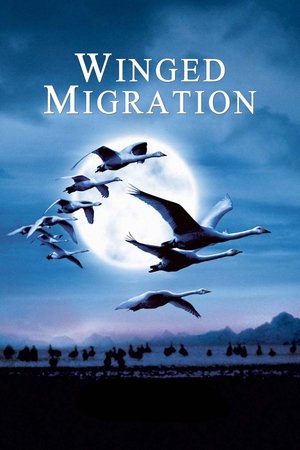
This documentary follows various migratory bird species on their long journeys from their summer homes to the equator and back, covering thousands of miles and navigating by the stars. These arduous treks are crucial for survival, seeking hospitable climates and food sources. Birds face numerous challenges, including crossing oceans and evading predators, illness, and injury. Although migrations are undertaken as a community, birds disperse into family units once they reach their destinations, and every continent is affected by these migrations, hosting migratory bird species at least part of the year.
Lake Patzcuaro, located 230 miles west of Mexico City, is one of the highest and most picturesque bodies of water in Mexico. The heritage of the indigenous peoples of the area, the Tarascans, still prevails, such as the production of lacquer-ware handicrafts, and the means of hunting and fishing, the latter which uses nets shaped like large butterfly wings. Although most current day Tarascans are Roman Catholic, they have not totally abandoned their indigenous pagan gods. On Janitzio, one of the many islands in the lake, stands a large statue commemorating José María Morelos, a prominent figure in Mexican liberation and a great benefactor to the Tarascans. Janitzio is also the inspiration for many famous paintings. The town of Tzintzuntzan just inland from the lake's shore acts as the regional center for the market and for festivals.
A memorial mourns as time passes
In the vast expanse of desert East of Atlas Mountains in Morocco, seasonal rain and snow once supported livestock, but now the drought seems to never end. Hardly a blade of grass can be seen, and families travel miles on foot to get water from a muddy hole in the ground. Yet the children willingly ride donkeys and bicycles or walk for miles across rocks to a "school of hope" built of clay. Following both the students and the teachers in the Oulad Boukais Tribe's community school for over three years, SCHOOL OF HOPE shows students Mohamed, Miloud, Fatima, and their classmates, responding with childish glee to the school's altruistic young teacher, Mohamed. Each child faces individual obstacles - supporting their aging parents; avoiding restrictions from relatives based on traditional gender roles - while their young teacher makes do in a house with no electricity or water.
Ecology - the eco system, a nature reserve in the south of the country - RS (between the Mirim lagoons) shows the harmony between nature and animals.
Cruel Famine Continent documents the Great Sahelian drought in West Africa and its effect on the people. The production was an attempt to pivot Toei's output from yakuza films and Toei Porn towards "global issues" and "whatever makes money", as stated by then-Toei president Shigeru Okada. Theatrical proceeds were to be shared as relief funds through the Japanese Red Cross, though the box office returns are unknown. Footage shot for the documentary by Yoshimitsu Banno would later be reused in the 1974 Toho production Prophecies of Nostradamus.
A reframing of the classic tale of Narcissus, the director draws on snippets of conversation with a trusted friend to muse on gender and identity. Just as shimmers are difficult to grasp as knowable entities, so does the concept of a gendered self feel unknowable except through reflection. Is it Narcissus that Echo truly longs for, or simply the Knowing he possesses when gazing upon himself?
A simple story, but larger than life portrayal of the universal human saga represented through Dionis, a retiring biology professor, his wife and his fantasy of turning his unusual car collection into a museum in a small uneventful town.
Everyone has a skeleton or two in his or her closet, but what about the director behind some of the most successful thrillers ever to hit the silver screen? Could M. Night Shyamalan be hiding a deep, dark secret that drives his macabre cinematic vision? Now viewers will be able to find out firsthand what fuels The Sixth Sense director's seemingly supernatural creativity as filmmakers interview Shyamalan as well as the cast and crew members who have worked most closely with him over the years. Discover the early events that shaped the mind of a future master of suspense in a documentary that is as fascinating as it is revealing.
The Colorado River is the foundation of the American Southwest. But the confluence of a once-in-a-millennium drought, a hundred-year-old mistake, and a generations-old conflict have put the river-–and the civilization built atop it––in crisis, and at a crossroads. As the southwest continues to grow, and the river continues to shrink, time is running out to solve the problem of the Colorado.
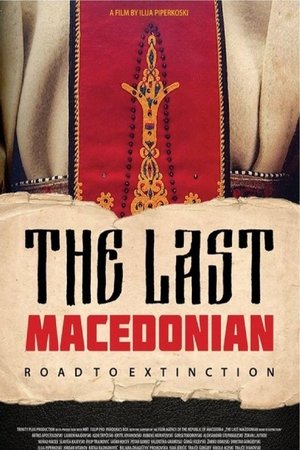
This is a documentary film about the land and people which will never restore their power of the past. A story about negations and many historical moments are enveloped in the veil of secret. Through the modern personalities and archives "The Last Macedonian from Macedonia" approaches to the truth revealing the never spoken moments and linking the past, present, but also the future. The film was shot on locations in Bitola and its surroundings.
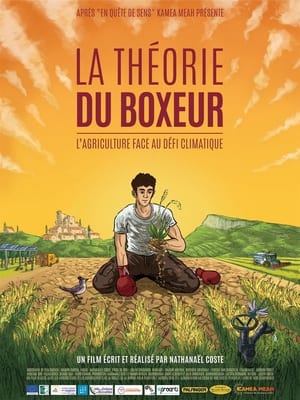
La Théorie du Boxeur
"Skoplje '63" is a 1964 Yugoslavian documentary film directed by Veljko Bulajić about the 1963 Skopje earthquake (Skoplje, per film title, is the Serbo-Croatian spelling of Skopje). The filming started three days after the earthquake and lasted for four months. After that, Bulajić spent 12 months editing the footage at Jadran Film studios.
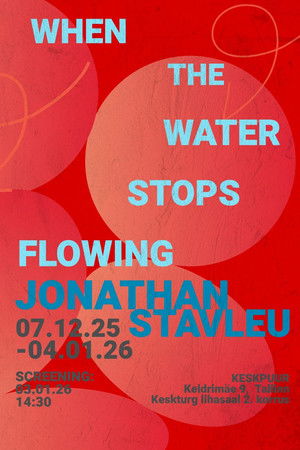
Jonathan Stavleu explores, in a stream-of-consciousness video essay, the relationship people have with water and what happens when access to it is taken away. For this work, he examines anecdotal histories he has heard from Estonians, as well as stories from his own family history in the Netherlands, weaving them together into a journal-like narrative.
Nel silenzio del parco
The ocean contains the history of all humanity. The sea holds all the voices of the earth and those that come from outer space. Water receives impetus from the stars and transmits it to living creatures. Water, the longest border in Chile, also holds the secret of two mysterious buttons which were found on its ocean floor. Chile, with its 2,670 miles of coastline and the largest archipelago in the world, presents a supernatural landscape. In it are volcanoes, mountains and glaciers. In it are the voices of the Patagonian Indigenous people, the first English sailors and also those of its political prisoners. Some say that water has memory. This film shows that it also has a voice.
Tale of a Lake is a film about the thousands of lakes that Finland is known for. It takes the viewers on an unprecedented adventure, ranging from the crystal clear springs all the way to the basins of the big lakes. It opens a whole new world of underwater nature for the viewers, and tells about the many old tales and beliefs in the land of thousands of lakes. The story of the film is told through tales that are based around the myths, legends and old beliefs that are part of the Finnish mythology.
Marko Röhr's film crew takes the viewer to Europe's last unexplored area: Iceland's unique underwater world. We explore the geysers of boiling waters and the crystal clear lakes off the coast of Iceland. We dive under the icebergs, into the tears between the continental plates and into the deep caves.
Back to the Titanic documents the first manned dives to Titanic in nearly 15 years. New footage reveals fresh decay and sheds light on the ship’s future.