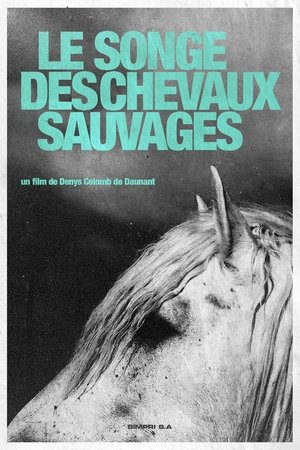
The horses in Denys Colomb Daunant’s dream poem are the white beasts of the marshlands of the Camargue in South West France. Daunant was haunted by these creatures. His obsession was first visualized when he wrote the autobiographical script for Albert Lamorisse’s award-winning 1953 film White Mane. In this short the beauty of the horses is captured with a variety of film techniques and by Jacques Lasry’s beautiful electronic score.
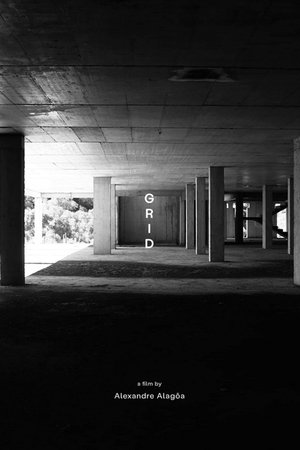
A ritual of grids, reflections and chasms; a complete state of entropy; a space that devours itself; a vertigo that destroys the gravity of the Earth; a trap that captures us inside the voids of the screen of light: «That blank arena wherein converge at once the hundred spaces» (Hollis Frampton).
Filmed during summer 2019, Jesus Is King brings Kanye West’s famed Sunday Service to life in the Roden Crater, visionary artist James Turrell’s never-before-seen installation in Arizona’s Painted Desert. This one-of-a-kind experience features songs arranged by West in the gospel tradition along with new music from his forthcoming album.
Piche, a bearded drag queen and rapper from a Gypsy community in Arles, rises from the rupture of her father cutting ties in adolescence to the 2024 Olympic opening ceremony. With her mother Nadia and twin brother Morgan by her side, she dares to defy norms and becomes a leading voice of the queer revolution.
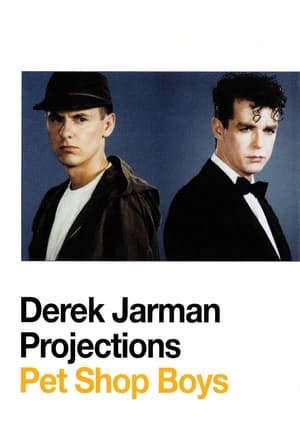
The innovative and influential British filmmaker Derek Jarman was invited to direct the Pet Shop Boys' 1989 tour. This film is a series of iconoclastic images he created for the background projections. Stunning, specially shot sequences (featuring actors, the Pet Shop Boys, and friends of Jarman) contrast with documentary montages of nature, all skillfully edited to music tracks.
Metamorfosi is a veritable dance ballet on the rocks, performed by a great climber, Patrick Berhault, set on the picturesque French Riviera and the Lingurian coast. Berhault's movements, in the sea, in caves, on rocks and precipices, are extremely difficult but are above all executed to give the movement an aesthetic value. Matemorfosi is the story of a cycle without words, told with gestures and music. Climber Monica Dalmasso also participates in the film.
Filmmaking icon Agnès Varda, the award-winning director regarded by many as the grandmother of the French new wave, turns the camera on herself with this unique autobiographical documentary. Composed of film excerpts and elaborate dramatic re-creations, Varda's self-portrait recounts the highs and lows of her professional career, the many friendships that affected her life and her longtime marriage to cinematic giant Jacques Demy.
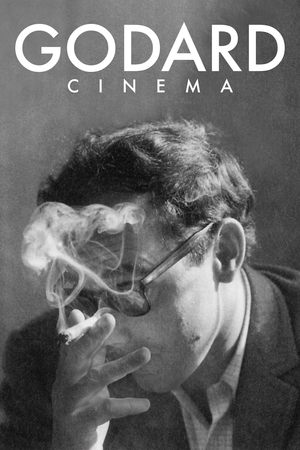
Jean-Luc Godard is synonymous with cinema. With the release of Breathless in 1960, he established himself overnight as a cinematic rebel and symbol for the era's progressive and anti-war youth. Sixty-two years and 140 films later, Godard is among the most renowned artists of all time, taught in every film school yet still shrouded in mystery. One of the founders of the French New Wave, political agitator, revolutionary misanthrope, film theorist and critic, the list of his descriptors goes on and on. Godard Cinema offers an opportunity for film lovers to look back at his career and the subjects and themes that obsessed him, while paying tribute to the ineffable essence of the most revered French director of all time.
Losing the Light reflects the artist's bitter battle to stay in this world as a long-term survivor of AIDS who has lost his vision to CMV retinitis. An experimental self-portrait, the video evokes the dissolution and fragmentation of the artists body, representing the impact of blindness, long-term HIV infection, and the cumulative effects of decades of antiretroviral medication.
Three images of a person running in the void through the movement of speed and abstract images
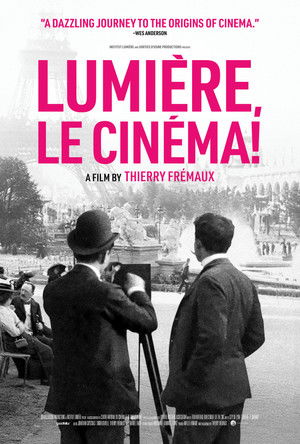
In one of those wonderful coincidences of history, lumière, the French word for “light,” was also the last name of brothers Auguste and Louis, whose brilliant invention, the cinematograph, helped to inaugurate the most beloved art form of the last 130 years. Institute Lumière director Thierry Frémaux uses Lumière, Le Cinema! to guide the viewer through over a hundred shorts—some famous, some forgotten, some never before seen—directed by Lumière and company. In the process, Frémaux illuminates how the brothers employed the camera as a creative instrument as they (and their operators) mastered framing, staging, and subject selection for quotidian and exotic microdocumentaries as well as the first ever fictional motion pictures. The result is not only a glorious re(telling) of the genesis of cinema but a profound meditation on the beautiful world captured—and the mysterious world imagined—by the Lumières.
A young adult's first-hand account of "accidentally becoming human again" after, and with, trauma induced depression. Lo-fi, vulnerable, and uniquely youthful, "The Afterlife" is a melancholic affirmation of life after death.
Something strange and unpredictable takes inthe mysteriously vacant rooms of Berlin’s infamous Techno club Berghain. A group of wild animals occupy the monumental spaces of the former power station. We explore the building together with the animals and experience its dimensions from a new, nonhuman perspective. The brutality of the industrial architecture is confronted with the beauty of these shy creatures.
Twenty-four images of a camera running in the woods, a moonlight and a cemetery through improvised gestures, mechanical abstraction and saturated colors
Made with virtually no budget during COVID-19 quarantine in 2020, IRANIAN LIVES MATTER abstractly recounts the true story of what occurred in Iran during the November 2019 protests, sparked by a surprise hike in gasoline prices, which quickly spread across the entire nation and was subsequently crushed by the dictator's iron fist, resulting in the death of approximately 1500 protesters, as reported by Reuters. IRANIAN LIVES MATTER is an experimental documentary, an audio-visual endurance test that audibly takes its audience through the chaos in the streets of Iran as the brutal regime cracks down on Iranian protesters, while visually showing the hands of the dictatorship as it crosses out 1500 lives one by one to further emphasize the scale of the massacre and show to a world desensitized to news of mass killings in the Middle East what the term "1500 dead" truly means.
In a remote area of northern Spain, the wind has a name: Tramuntana. Tramuntana takes what it wants—clothes, trees, boats, and the people of the landscape who live with the endless threat of being carried away by its force. This film is a lyrical portrait of this furious wind, woven from the stories passed down by local villagers.
Las Preguntas que Perdimos
Jo; or The Act of Riding a Bike is Zefier's third film.
Life is what we don't want it to be.
A walk through the life and work of the brilliant French filmmaker Georges Méliès (1861-1938), pioneer of special and visual effects.