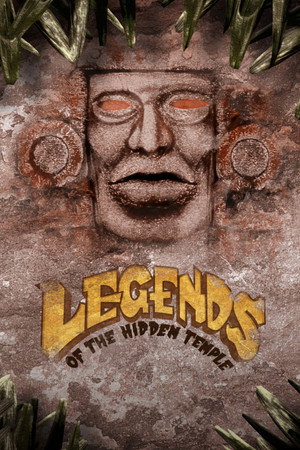
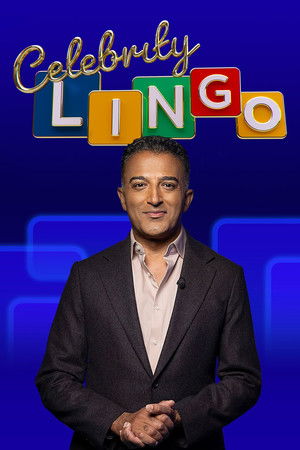
Maze Master Adam Conover takes families on an adventure of a lifetime across themed zones for physical and mental games that earn crystals in return for time in the exciting Crystal Dome and a chance to win the $25,000 grand prize!
America's favorite quiz show where contestants are presented with general knowledge clues in the form of answers, and must phrase their responses in question form.
The Generation Game was a British game show produced by the BBC in which four teams of two competed to win prizes. The programme was first broadcast in 1971 under the title Bruce Forsyth and the Generation Game and ran until 1982, and again from 1990 until 2002. The show was based on the Dutch TV show Een van de acht, "One of the Eight", the format devised in 1969 by Theo Uittenbogaard for VARA Television. Mrs. Mies Bouwman - a popular Dutch talk show host and presenter of the show - came up with the idea of the conveyor belt. She had seen it on a German programme and wanted to incorporate it into the show. Another antecedent for the gameshow was 'Sunday Night at the London Palladium' on ATV, which had a game called Beat the Clock, taken from an American gameshow. It featured married couples playing silly games within a certain time to win prize money. This was hosted by Bruce Forsyth from 1958, and he took the idea with him when he went over to the BBC.
Three teams of contestants go head-to-head in the daytime quiz show presented by Ranvir Singh. They answer questions to unlock a riddle set by the programme's Riddlemaster - Henry Lewis.
It's the ultimate showdown of wits, brains, strategy, and alliances for a chance to win 500 million won.
A game show set in a galaxy far, far away, which tests young contestants’ abilities in the core Jedi principles of strength, knowledge, and bravery as they face thrilling and fun obstacles in an attempt to achieve the rank of Jedi Knight
Alexander Armstrong and Richard Osman present a celebrity version of the general knowledge quiz in which contestants try to come up with the answers that nobody else could think of.
Bullseye was a popular British television programme. It was first made for the ITV network by ATV in 1981, then by Central from 1982 until 1995, and was hosted by Jim Bowen.
Based off of American game show Family Feud, hosted by Johnson Lee.
Quiz in which contestants try to score as few points as possible by plumbing the depths of their general knowledge to come up with the answers no-one else can think of.
Boys and Girls was a British television gameshow broadcast in 2003 by Channel 4. The series was produced by Chris Evans through his company UMTV, and was presented by Vernon Kay. Evans only occasionally appeared on screen, usually as the driver of the golf buggy used to ferry the winning contestants off-set at the end of the show. Thus the show was one of the first Evans-produced shows not to feature Evans himself in a presenting role. Kay's co-presenter was Irish presenter and model Orla O'Rourke.
Twelve celebrities are abandoned in the Australian jungle. In order to earn food, they must perform Bushtucker Trials which challenge them physically and mentally.
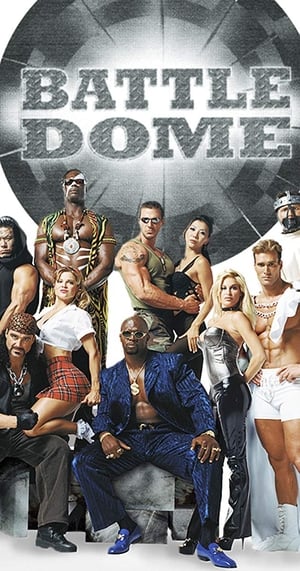
Battle Dome was a syndicated American television series that aired from September 1999 to April 2001. It combined elements of American Gladiators - inspired athletic competition with scripted antics more reminiscent of professional wrestling. Recurring character-athletes known as "Warriors" competed against weekly contestants in a variety of physically demanding events. The series was filmed at the Los Angeles Sports Arena and produced by Columbia TriStar Television. The entire first and second season of Battle Dome is available for purchase on iTunes and Amazon Instant Video.
25 jaar Canvas
Prepare for an all-new game show event where the smartest people in the country try to achieve the seemingly impossible task of answering 500 of the most difficult general knowledge questions ever devised. There’s only one simple rule: never get three wrong in a row—or you’re gone. No saves, no helps, no multiple choice, 500 Questions will keep you on the edge of your seat to see if any of these geniuses can do it.
Guy Fieri sends four talented chefs running through the aisles in a high stakes, high skills, grocery store cooking competition. The chefs are hit by real-world challenges like finding workarounds when all the essential ingredients are suddenly "out-of-stock" or having to create a masterpiece when you can only cook with "5 items or less" or on a $10 budget. In the end, the food does the talking, as the last chef standing has the chance to make some serious dough!
Gladiators is a British television entertainment series, produced by LWT for ITV, and broadcast between 10 October 1992 and 1 January 2000. It is an adaptation of the American format American Gladiators. The success of the British series spawned further adaptations in Australia and Sweden. The series was revived in 2008, before again being cancelled in 2009. The series was originally presented by John Fashanu and Ulrika Jonsson, however, Fashanu was replaced by Jeremy Guscott in 1997. Guscott left the series in 1998, and subsequently, Fashanu returned for the final series in 1999. The series was refereed by John Anderson and the timekeepers over the show's run were Andrew Norgate, Derek Redmond and Eugene Gilkes. John Sachs was the show's commentator, and the series was accompanied by its own group of cheerleaders, known as G-Force. Despite being made by London Weekend Television, all episodes of Gladiators, International Gladiators, the second series of The Ashes and the first series of The Springbok Challenge were recorded at the National Indoor Arena in Birmingham. The first series of The Ashes and the second series of the The Springbok Challenge, however, were filmed on the sets of the Australian and South African versions of the shows respectively. The series also spawned a version for children, entitled Gladiators: Train 2 Win, which was broadcast on CITV between 1995 and 1998.
Stars in Their Eyes was a British television talent show that ran on Saturday nights from 21 July 1990 until 23 December 2006 in which contestants impersonate showbiz stars. It was produced by Granada for ITV, based on Joop van den Ende's Dutch format, Soundmixshow. It remains one of Britain's most successful shows attracting around 13 million viewers for the live grand final at the end of each series. It has one of the most memorable catchphrases in TV history: 'Tonight, I'm going to be...' and was named most popular entertainment show at the National Television Awards in 1996, 1998, 1999 and 2000. The most impersonated stars are Elvis Presley, Cliff Richard, Cher, George Michael, Celine Dion, Kylie Minogue and Madonna.
You Bet! is a British game show based around the format of the German show Wetten, dass..? developed by Frank Elstner. You Bet! ran on ITV, mostly on Saturday nights but sometimes on Fridays, between 20 February 1988 and 12 April 1997, initially hosted by Bruce Forsyth from 1988 to 1990, then by Matthew Kelly from 1991 to 1995 and finally by Darren Day from 1996 to 1997. It was replaced the following year by Don't Try This At Home!, which emulated the challenges of You Bet!, but were considerably more risky and dangerous.
Two families go head to head as they try to name the post popular answer to survey-based questions posed to 100 people for a chance to win a jackpot prize.