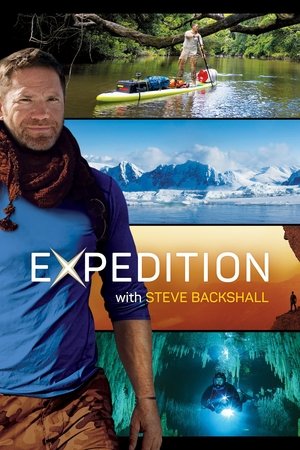
The naturalist visits uncharted territory in pursuit of new discoveries. Steve Backshall takes on physical challenges, encounters extraordinary wildlife and meets remarkable people.
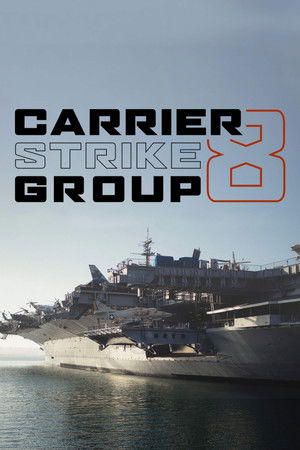
For two weeks, the aircraft carrier strike group Carrier Strike Group 8 is conducting one of the toughest exercises in the US Navy. The tactical cooperation of several crews from three different nations is paramount in this training exercise. The 7,000 sailors on board are repeatedly subjected to gunfire and attacks. Fires are extinguished and evacuations are practiced.
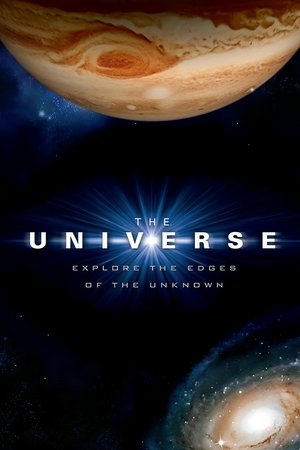
From the planets to the stars and out to the edge of the unknown, history and science collide in a wondrous yet deadly adventure through space and time.
In 2003, Space Shuttle Columbia breaks apart in the skies above America. The astronauts’ families and Nasa staff share personal stories of the launch, unfolding disaster and fallout.
Glittering facades, vibrant life, and people facing the daily struggle for survival. ZDF correspondents each profile a megacity within their reporting area. How do people celebrate, laugh, and love in such a city? How are problems like housing shortages, food supply, transportation, and climate change solved – in metropolises with over ten million inhabitants?
A users' guide to the cosmos, from the Big Bang to galaxies, stars, planets and moons: where did it all come from and how does it all fit together? A primer for anyone who has ever looked up at the night sky and wondered.
A six-part docuseries with fly on the wall access into the wider world of NASA, with cameras on Earth and in space. NASA astronaut Captain Chris Cassidy is on a quest to get back in his spacesuit for one last mission. This series follows Chris and the wider team who take on missions that risk life, limb and reputation for the greater good of humankind. Join them as their missions unfold.
A miniseries documenting American human spaceflight, spanning from the first Mercury flights through the Gemini program to the Apollo moon landings, the Space Shuttle, and the construction of the International Space Station. It was created in association with NASA to commemorate the agency's fiftieth anniversary in 2008.
The inside stories of how the unknown engineers of NASA created such superior machines as the Saturn V moon rocket, the Space Shuttle, and the Hubble Space Telescope, often against incredible odds.
On May 25, 1961, President John F. Kennedy made a historic speech where he pledged to send astronauts to the moon before the end of the decade. Eight years later, on July 20, 1969, Apollo commander Neil Armstrong stepped out of the lunar module and made a giant leap for mankind - a step that symbolized one of the most remarkable feats in human history. From that moment on, the exploration of our universe has achieved unimaginable feats with hundreds of missions stretching light years into the distant galaxy. This exciting documentary series takes viewers into the past, present and future of NASA.
To celebrate the Apollo moon landing's 50th anniversary, Professor Brian Cox and Dara O Briain travel to where the historic Apollo 11 mission began – Cape Canaveral in Florida. They hear first hand from astronaut general Charlie Duke what it was like to guide Neil Armstrong and Buzz Aldrin to the surface of the Moon in the Lunar Lander and how he followed in their footsteps three years later. They also look at the most exciting new developments and, with privileged access, they broadcast from the top of launch tower that is being prepared for crewed missions and from the assembly line of a spacecraft factory. They are joined by astrophysicist and medic Dr Kevin Fong and mathematician Dr Hannah Fry, who explore the latest developments in human space flight - from cutting-edge spacewalk technology to a future Mars buggy.
Lewis & Clark: The Journey of the Corps of Discovery tells the remarkable story of the entire Corps of Discovery – not just of the two Captains, but the young army men, French-Canadian boatmen, Clark’s African-American slave, and the Shoshone woman named Sacajawea, who brought along her infant son. As important to the story as these many characters, however, was the spectacular land itself, and the promises it held.
Engineers, officials and the crew members' families provide their perspective on the 1986 Space Shuttle Challenger disaster and its aftermath.
The series documents Mandela’s journey from activist to revolutionary, from prisoner to negotiator and how he led South Africa to democracy from a prison cell. The image of Mandela walking free from prison after 27 years is one of the most iconic in history. It took a fierce political struggle and cultural battle to bring about his freedom, producing a global people-powered movement and an explosion of musical activism.
Host Emily Calandrelli, Harvard scholar and former Nasa employee, takes viewers on incredible journeys through space. She visits various NASA facilities as we search for answers about our universe. Xploration Outer Space is part of the Xploration Station two hour syndicated block airing on Fox stations throughout the country.
National Geographic explorers have the best jobs ever! Find out what it's like to explore black holes, climb mountains, and go deep-sea diving for a living.
Spacetime
What role will the moon play in man's next attempts to conquer space?
Unspun World provides an unvarnished version of the week's major global news stories - reliable, honest and essential viewing with the BBC's world affairs editor John Simpson.
A series of short stories about human space exploration.