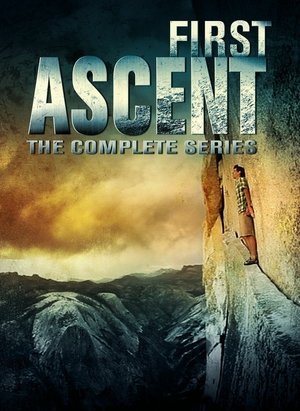
From the grit of South Memphis, a group of young climbers set out to scale a 16,000-ft rock tower on Mt. Kenya—defying the limits of their world and themselves, and confronting thin air, raw fear, and the climb toward self-discovery.
Yellowstone challenges every animal that lives in this Rocky Mountain wilderness; in summer it pitches them into battle against one another for food, territories and mates, in winter it forces them into a struggle for survival.
The Great Global Warming Swindle is a polemical documentary film that suggests that the scientific opinion on climate change is influenced by funding and political factors, and questions whether scientific consensus on anthropogenic global warming exists. The program was formally criticised by Ofcom, the UK broadcasting regulatory agency, which upheld complaints of misrepresentation made by David King. The film, made by British television producer Martin Durkin, presents scientists, economists, politicians, writers, and others who dispute the scientific consensus regarding anthropogenic global warming. The programme's publicity materials assert that man-made global warming is "a lie" and "the biggest scam of modern times." Its original working title was "Apocalypse my arse", but the title The Great Global Warming Swindle was later adopted as an allusion to the 1980 mockumentary The Great Rock 'n' Roll Swindle about British punk band the Sex Pistols. The UK's Channel 4 premiered the documentary on 8 March 2007. The channel described the film as "a polemic that drew together the well-documented views of a number of respected scientists to reach the same conclusions. This is a controversial film but we feel that it is important that all sides of the debate are aired." According to Hamish Mykura, Channel 4's head of documentaries, the film was commissioned "to present the viewpoint of the small minority of scientists who do not believe global warming is caused by anthropogenic production of carbon dioxide."
A three-part documentary series that journeys to the heart of Ireland's coast, revealing its fascinating origins, rich biodiversity and magnetic charm.
Take a trip inside the mind of Bill Gates as the billionaire opens up about those who influenced him and the audacious goals he's still pursuing.
Man on Earth is a four-part British documentary television series presented by Tony Robinson. The programme documents the effects of climate change across 200,000 years of human history. The series premiered 7 December 2009 on Channel 4 with 1.4 million viewers. Accompanying Robinson to help explain the science are archaeologist Dr. Jago Cooper and climate modeller Dr. Joy Singarayer.
El Tema
Since the dawn of time, geography has shaped the fate of nations. This three-part documentary explores how mountains, rivers, seas, and deserts have influenced the decisions of governments, as well as the rise of civilisations. Geography remains a constant force in history, from determining a nation’s location on the world map to its access to natural resources. While the USA’s ascent as a global power was driven by its unique position between two oceans, Russia’s history has been defined by its relentless search for warm-water ports. China’s geopolitical importance stems from its historical position as the hub of Eurasian trade, from the ancient Silk Road to its current maritime dominance in the Pacific. Today’s global powers owe their status and significance to natural forces. Geography is the ultimate creator of nations.
David Attenborough celebrates the amazing variety of the natural world in this epic documentary series, filmed over four years across 64 different countries.
The story of the coverup of the century: of the boss atop a trillion dollar industry who discovered a shocking truth 40 years ago, created a black ops campaign to hide the evidence, and stopped at nothing to keep the money flowing, as the world burned.
This revealing series follows environmental activist Greta Thunberg as she seeks to raise awareness of the accelerating climate change and spread her message, that we must act to drastically reduce our carbon emissions.
Australia's biodiversity thrives in the diverse terrestrial and marine habitats that span the country. Lush rainforests offer a refuge for countless plants and animals, while the vast dry eucalyptus woodland is home to numerous specially adapted species. Kangaroos, wallabies and platypuses are just a few of the iconic animals that call Australia home, showcasing the country's evolutionary distinctiveness. Meanwhile, the waters surrounding the country support some of the most spectacular marine biodiversity on the planet. Vibrant coral reefs, seagrass meadows and rocky shorelines contribute to the country's rich marine tapestry. This is a unique world filled with stunning natural beauty, inhabited by some of the most extraordinary and deadly animals on the planet.
Traveling to the far corners of the world, we discover the extraordinary ways animals are adapting to our rapidly changing planet. We witness nature’s remarkable resilience, as our perception of evolution and its potential is forever transformed.
In a defining moment for the natural world, Gordon Buchanan makes an epic journey round the equator - taking to the skies with experts racing to protect both wildlife and people.
Die Arktis - 66,5 Grad Nord
The most important story of our time. 2022 is set to be a year of unprecedented climate chaos across the planet. As the world’s leading climate scientists issue new warnings about climate change and the soaring cost of fuel highlights the world’s ongoing dependence on fossil fuels – how did we get here?
In this limited series Simon Reeve begins his most ambitious journey yet, travelling the entire length of the Americas
To coincide with COP28, the two-part arte documentary (originally from PBS Frontline/BBC under the title "Big Oil vs. The World" / "The Power of Big Oil") shows how oil companies and politicians have, for decades, sowed doubt about the causes of climate change and obstructed necessary countermeasures. In light of the growing threat of natural disasters, heat waves, and floods, the film examines the precise reasons for this long-standing obstruction and questions the responsibility of powerful oil companies like ExxonMobil.
Following his visit to the Great Barrier Reef in 1957, naturalist and broadcaster David Attenborough returns and uses the latest filming techniques to unlock the secrets of the natural wonder.
An excellent narration of oil industry since early days to 20th century and up to today. How oil changed the world and shaped our modern world today.