Go deep beneath the waves – on a spy mission to the depths of the ocean. Amazing hidden cameras give incredible perspectives on the ingenious creatures that call it home.
Les sentinelles de la Grande Barrière de Corail
Live coverage as our wildlife faces up to the most challenging time of year.
Chris Packham takes us to the scene of some of the weirdest natural phenomena on the planet, telling the real story of the events behind the headlines. Nature can be cute, scary and stunning, but as Chris Packham discovers in these two packed programs, it can also provide the most awesome, amazing and astonishing sights you’ll ever see – including a car cocooned by caterpillars in Holland; exploding toads in Germany; fish falling from the sky and a storm that turned Sydney crimson. Watching original footage and consulting eyewitnesses and scientists, Chris unravels the facts behind some of the most bizarre and mysterious natural wonders to ever appear on the planet – and explains what on earth was going on.
See It Now is an American newsmagazine and documentary series broadcast by CBS from 1951 to 1958. It was created by Edward R. Murrow and Fred W. Friendly, Murrow being the host of the show. From 1952 to 1957, See It Now won four Emmy Awards and was nominated three other times. It also won a 1952 Peabody Award, which cited its
Discover the remarkable ways animals of all shapes and sizes are adapting to make the most of opportunities in the newest and fastest changing habitat on the planet - our cities.
Australian host Steve Irwin and his wife Terri run a wildlife refuge. Their shared passion is educating the world about wildlife, including the much feared crocodile and numerous venomous snakes. Steve's specialty is the capture and relocation of crocodiles. No animal appears too threatening to Steve, his true respect for animals is the foundation for everything he does.
Follow Judy and Roger Stearns, two regular people with a little bit of land and a lot of heart, as they care for traumatised black bear cubs.
An ambitious seven-year natural history series documenting six of the planet's most threatened ecosystems and meeting the people fighting to restore the Earth’s delicate balance.
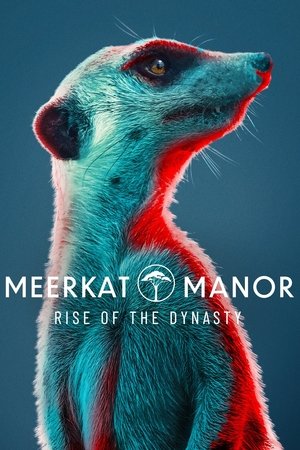
Meerkat Manor is a British television programme produced by Oxford Scientific Films for Animal Planet International that premiered in September 2005 and ran for four series until its cancellation in August 2008. Blending more traditional animal documentary style footage with dramatic narration, the series told the story of the Whiskers, one of more than a dozen families of meerkats in the Kalahari Desert being studied as part of the Kalahari Meerkat Project, a long-term field study into the ecological causes and evolutionary consequences of the cooperative nature of meerkats. The original programme was narrated by Bill Nighy, with the narration redubbed by Mike Goldman for the Australian airings and Sean Astin for the American broadcasts. The fourth series, subtitled The Next Generation, saw Stockard Channing replacing Astin as the narrator in the American dubbing.
Traveling aboard the OceanXplorer, OceanX's state-of-the-art scientific research and exploration vessel, to investigate the farthest frontiers of the world's oceans, 80% of which are entirely unknown. Armed with advanced technology, a hand-picked team of intrepid explorers and scientists, National Geographic Explorers and other ocean experts embark on a global odyssey to solve some of the ocean's greatest mysteries through the lives of its animals and their ecosystems.
Celebrating marine life from all corners of the UK as we dive deep to explore the health of our oceans.
All the incredible diversity of animal life sprang from a single organism. Every animal, no matter how weird, is related to every other. And behind each species is an incredible story of the millions of generations that gave rise to it - every animal we know and love today sprang from creatures that looked nothing like it.
From Pete, David and Leila - the creators of History Time, Voices of the Past and Something Incredible. From dust to dinosaurs; come with us as we explore the entire history of our planet. History of the Earth tells the entire story of the Earth, from its formation 4.5 billion years ago to today – covering eye-watering geology and bizarre biology along the way.
Revealing the extraordinary animals, astonishing landscapes and remarkable people who live alongside the Zambezi, Danube and Yukon.
Méditerranée: L'odyssée pour la vie
Martin Clunes travels down to the Indian Ocean to witness what many fear is the lemur's last stand.
Each episode tells the dramatic story of an individual dinosaur whose remains are currently being unearthed by world-leading dinosaur hunters. As the dinosaurs' bones emerge from the ground, their prehistoric stories are brought to life with state-of-the-art visual effects - making each episode a gripping dinosaur drama based on the very latest evidence.
A blue chip, continent-wide series ranging from Australia's highest snow peaks to the depths of the frigid and wild southern seas; from its last populations of wild numbats to its largest diorama of giant cuttlefish. It's a land of diverse beauty, that delights and surprises. The series both entertains and deepens our understanding of how the natural world is made up of not just unique species, but distinct individuals, whose lives are far from predictable.
This six part documentary draws attention to the most extraordinary — almost supernatural — accounts of animals that have adapted to the cruelest evolutionary curveballs.