WCW Saturday Night is the place to see the top WCW Superstars of the 1990s competing in the ring and giving unforgettable interviews.
WCW WorldWide was a syndicated TV show produced by World Championship Wrestling.
Andy dreams of becoming the greatest pro wrestler of all time. Assuming the wrestler alias: "Fight Girl", Andy sets out into the bizarre and colorful Wrestling World, determined to make a name for herself.
After severing ties with his gang, a former gangster returns to uncover the truth behind his brother's death — embarking on a relentless path of revenge.
Xu Qi’an, a recent police academy graduate, awakens in a strange world filled with Confucians, Taoists, Buddhists, demons, and warlocks. Facing imminent exile to a remote frontier town, he seizes the chance to change his fate by joining a powerful organization of guardians.
Ten thousand years before the ascension of Paul Atreides, sisters Valya and Tula Harkonnen establish the fabled sect and female order that would become known as the Bene Gesserit to control the future of humankind.
The Superstars of ECW show off their hardcore skills and in-ring technical wizardry in this one-hour television series.
Showcasing incredible in-ring action and unforgettable interviews, this weekly television series features a who's who of WWE Hall of Famers.
In a close-knit Georgia community, a family-owned wrestling promotion finds two brothers and rivals war over their late father’s legacy. In the ring, somebody must play the good guy and somebody must play their nemesis, the heel. But in the real world, those characters can be hard to live up to (and just as hard to leave behind).
Sendai Girls' Pro Wrestling was founded in 2005 by Meiko Satomura, a female professional wrestler who achieved success in the 2000s with the women's promotion GAEA Japan, and Jinsei Shinzaki, a male professional wrestler who is also the president of Michinoku Pro Wrestling. On July 9, 2006, the new promotion held its first show in front of 2,498 fans at Sendai's Sun Plaza, and has been running consistently ever since.
ECW was a professional wrestling television program for WWE, based on the independent Extreme Championship Wrestling promotion that lasted from 1992 to 2001. The show's name also referred to the ECW brand, in which WWE employees were assigned to work and perform, complementary to WWE's other brands, Raw and SmackDown. It debuted on June 13, 2006 on Sci Fi in the United States and ran for close to four years until it aired its final episode on February 16, 2010 on the rebranded Syfy. It was replaced the following week with WWE NXT.
Wrestlers will portray heroes or villains as they follow a series of events that build tension and culminate in a wrestling match or series of matches.
Miyawaki Yohei was a professional wrestler, who opened his own tofu shop after his retirement. He always tried to get his daughter Sakura interested in Pro Wrestling, but she never cared for it. Then the day came when he unexpectedly died, and Sakura inherited his dojo and tofu shop. Yasagi Eiichirou claims Sakura's father died without having paid his debt to her and the only way Sakura can repay this debt is if she wins the WIP "World Idol Pro Wrestling" championship. Together with his father's assistant, Yokoyama Yui, she opens the dojo again and trains together with her friends and girls from school.
WCW's flagship show led to the famous Monday Night War. Featuring the nWo, Lex Luger, Ric Flair, Sting, and the Cruiserweights.
Presented by Mid-South Wrestling and hosted by Jim Ross, this series features the earliest matches of numerous WWE Hall of Famers, including Jake "The Snake" Roberts, Ultimate Warrior & Sting, The Road Warriors, "Hacksaw" Jim Duggan, and others.
Mid-South Wrestling was one of the most successful wrestling territories.
Mid-South Wrestling was one of the most successful wrestling territories in the 1981s; featuring future WWE Hall of Famers.
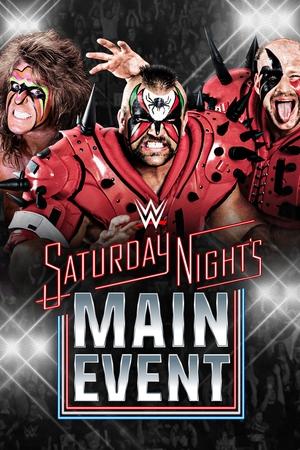
A professional wrestling television program produced by the World Wrestling Federation banner on NBC airing in place of Saturday Night Live. The series was made up entirely of star vs. star bouts in a time when weekly programming consisted primarily of established stars dominating enhancement talent.
WWE Velocity was a professional wrestling television program produced by World Wrestling Entertainment. It replaced two syndicated WWE shows, Jakked/Metal. Once a weekly Saturday night show on Spike TV and on Sky Sports 2 in the UK on Sunday mornings, Velocity became a webcast from 2005 to 2006. The newest episode would be uploaded to WWE.com on Saturdays and be available for the next week. Older webcast episodes were also archived. It was the counterpart show to WWE SmackDown and WWE Raw and was recorded before the television taping of SmackDown. Get up to speed on the week's high-octane events from the SmackDown brand and see exclusive matches only on WWE Velocity.
The biggest WWE Superstars of the late 1980s and early '90s settle their differences in the ring on "Wrestling Challenge"; featuring exciting matches and memorable interviews, this weekly television series captures an important era of WWE history.