Fanciful series about an aspiring writer who imagines alternative life scenarios while working for a big company.
Sharp knives and even sharper tongues! Meet Britain's finest, most short-fused chef, Gareth Balckstock.
The coffee machine of a small company is the scene of discussions between employees. Private life, professional life, gossip, mockery, ... everything goes!
Set in 1960-1970 New York, this sexy, stylized and provocative drama follows the lives of the ruthlessly competitive men and women of Madison Avenue advertising.
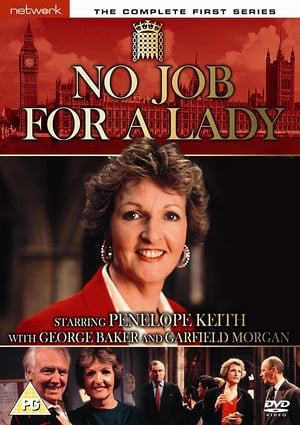
Executive Stress is a British sitcom that aired on ITV from 1986 to 1988. Produced by Thames Television, it first aired on 20 October 1986. After three series, the last episode aired on 27 December 1988. Written by George Layton, Executive Stress stars Penelope Keith as Caroline Fairchild, a middle-aged woman who decides to go back to work. Her husband, Donald, is played by Geoffrey Palmer in the first series. However, Palmer was unable to return for the second series, so Peter Bowles played Donald in the last two series. Keith and Bowles had previously appeared in together in To the Manor Born.
Chicago Party Aunt Diane is an idolized troublemaker with a talent for avoiding adulthood — and a soft spot for her soul-searching nephew.
Nothing in Common was a 1987 television series on NBC starred Todd Waring in the role of David Basner and Bill Macy in the role of Max Basner. Seven episodes were broadcast immediately after the highly-rated series Cheers but didn't pick enough audiences. The short-lived series was cancelled because of low turnout. The series was inspired by the 1986 film by Garry Marshall starring Tom Hanks and Jackie Gleason also entitled Nothing in Common in which Hanks played David Basner and Gleason protrayed Max Basner. Todd Waring later reprised another Tom Hanks role in a TV sequel to Splash for The Wonderful World of Disney called Splash, Too.
Father Dowling is a sleuthing parish priest from Chicago who investigates baffling crimes
Yumi is a 30-year old, ordinary woman who struggles with expressing her feelings. Told from the perspective of the many brain cells in her head, she experiences growth in both her love life, her career, and finds happiness in the small joys of everyday life.
Finding himself back in time 10 years ago, though technically an almost parallel world in 2009, Pei Qian got a system where he gets money to run his business. The funds for business and personal use are separated. After a set period, he can earn his personal funds according to how much his business funds he has left. The catch? Pei Qian earns more when he makes a loss in his business funds. Happily thinking how easy it would be, with many failed start-ups proving a point, Pei Qian founded his company Tengda and achieved financial freedom through the losses. Unfortunately, fate has other plans for him.
Allen Braddock and Marcus Jackson are two attorneys with very different views on the law. After getting fired from his father's prestigious firm for employing questionable tactics, Allen is forced to team up with Marcus, a self-made man always willing to fight for the people of his neighborhood, even if it doesn't mean collecting a check. When the two partner up, they take on cases that challenge their moral, personal, and ethical boundaries, but always manage to find common ground.
Mark leads a team of office workers whose memories have been surgically divided between their work and personal lives. When a mysterious colleague appears outside of work, it begins a journey to discover the truth about their jobs.
Jean Price is the newly elected, somewhat rebellious Labour MP for an inner-city constituency, and her life in the House of Commons. She's married to Geoff Price, a public defender and carer of many household chores so that Jean can pursue her new career. Jean balances her personal life with parliamentary duties, including 'women's issues', which Jean alternately fights for and is frustrated by, as other MPs think she cares about nothing else due to her gender. She often is surprised by others' duplicity and hypocrisy, holding them to a significantly higher standard.
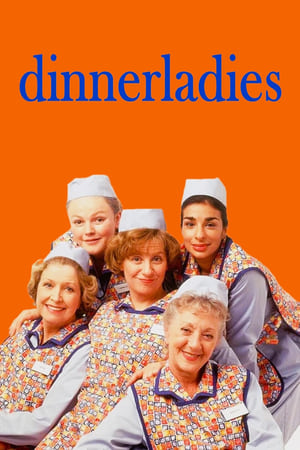
Dinnerladies is a BBC sitcom written by and starring Victoria Wood that chronicles the antics of a group of workers in a canteen in the north of England. Bren tries to maintain a semblance of order in amongst the chaos, while dealing with the canteen supervisor, slightly sex-obsessed cancer sufferer Tony. Dolly and Jean are the bickering menopausal older women, always at odds but best friends beneath it all. Then there's thick-as-two-short-planks Anita, and the terminally uninterested Twinkle, more concerned with having a good time than anything else. Making up the motley crew are military man handyman Stan, all rules and regulations, and ditzy Philippa, who never seems to get anything right.
Joanie Loves Chachi is an American television spin-off of the American sitcom Happy Days that was originally broadcast on ABC from March 23, 1982 to May 24, 1983. It stars Erin Moran and Scott Baio as the titular Joanie Cunningham and Chachi Arcola, respectively.
The Office PL
Five aspiring lawyers are aiming for the top - but behind the scenes they're a mess of love, drugs and excess.
Good Times is an American sitcom that originally aired from February 8, 1974, until August 1, 1979, on the CBS television network. It was created by Eric Monte and Mike Evans, and developed by Norman Lear, the series' primary executive producer. Good Times is a spin-off of Maude, which is itself a spin-off of All in the Family along with The Jeffersons. The series is set in Chicago. The first two seasons were taped at CBS Television City in Hollywood. In the fall of 1975, the show moved to Metromedia Square, where Norman Lear's own production company was housed.
A comedy that follows three Chicago EMTs who despite their narcissistic and self-destructive personalities are uniquely qualified to save lives.
After 18 years of marriage, high school sweethearts Bill and Judy Miller still make each other laugh and try to keep their marriage intact, even when their family pulls them in different directions. Since Bill has a far more immature approach to marriage and raising their three children than Judy does, they work at striking a balance and remembering why they love each other, quirks and all.