Britain's iconic and 'secretive' engineering companies reveal how they build the world's most amazing machines. The first part of the series "How to build a nuclear submarine" a documentary following the construction of the Astute nuclear submarine. The second part of the series "How to build a jumbo jet engine", the story of the thousands of people who design, build and test engines at Rolls-Royce’s manufacturing plants in Derby and across the UK, making Rolls-Royce a central part of life for the people of places like Derby. The third and final part of the series "How to build Britain's secret engineers" when the documentary team follows workers at a leading British company on a global journey, as they reveal a handful of their secretive projects including getting Chinook helicopters ready for front line service.
Legend has it that there is a treasure of immense value buried in the Philippine jungle - now a team of American experts, with the help of the only surviving witness, try to uncover the clues to solve the greatest mystery of WW2.
Submarines today are highly complex machines crammed with technology and weapons. As impressive as their construction is, as terrifying is their destructive power. Hardly any other weapon triggers as many emotions as the submarine. It strikes from ambush and can use nuclear missiles to drag the whole world into the abyss. Submarines originated from a completely non-military idea, namely to be able to view the world under water. But the interest in the military use of submarines soon prevailed.
Experience firsthand "the war to end all wars." World War I was the first war in history to affect most of the globe, with battles fought on land, at sea and, for the first time, in the sky. This five-disc DVD set captures the experience almost a century after it happened, with rare footage, much of it never before released on DVD.
Want to learn something new and have a little fun along the way? Join curator Matthew Burchette as he goes behind the scenes to explore some of history’s most iconic aerospace treasures.
AFP: American Fighter Pilot is a reality series broadcast briefly on CBS in 2002. It followed three Air Force officers as they trained to become pilots of F-15 fighter jets at Tyndall Air Force Base outside of Panama City, Florida. The series included footage of their experiences in the air, as well as interactions with their families and instructors. Directors Tony Scott and Ridley Scott were co-executive producers. Unsuccessful in the ratings, the series was cancelled after two episodes.
Machine Gun: History Down the Barrel of a Gun
The dramatized World War II adventures of US Major Gregory "Pappy" Boyington and his Marine Attack Squadron 214, AKA The Black Sheep Squadron.
アニメンタリ・ 決断
Series charting the history of the warship.
Myths die hard, and the history of the 20th century is no exception to this rule. Even today, we hold popular beliefs that we take for Evangelical truths. Thus, we believe that Hiroshima caused Japan to surrender, that the Marshall Plan saved Europe, that Adolf Hitler was a military genius, or that Mao Zedong was a necessary evil for China’s modernization. Of course, these judgements contain some truth; but, too broad-stroked to be accurate, they contradict the historical reality by denying its complexity. What if the truth was slightly different? Through an exploration of great national or international myths, this full archive documentary collection revisits the key moments of the 20th century with a new perspective in order to provide a new, smarter and more subtle interpretation, bringing elements to light that have been forgotten or sometimes overshadowed.
The story of the people building the AVRO Arrow, an advanced jet fighter-interceptor designed to defend Canada's vast territory during the Cold War. Though the jet was an engineering marvel, cost over-runs, U.S. government pressure from the military industrial complex, and the election of the Progressive Conservative Diefenbaker government, stopped the jet just as it was getting off the ground.
The story of flying boats is one of ingenuity and enterprise; of style during the dying days of Britain's imperial grandeur; of Coastal Command's war against the U-boats and of post-war skepticism that hastened their end. For all those who flew in them the flying boats were unique and unforgettable.
The only major fleet engagement of World War I, the Battle of Jutland has been surrounded by controversy ever since. The British public felt Admiral Jellicoe had failed – a reaction rooted in a hundred years of the 'Nelson cult', a conviction that anything short of a Trafalgar-style annihilation was letting the side down. On the 31st of May 1916 – 251 British and German battleships set out to annihilate one another in the North Sea. In a vicious engagement that lasted over 12 hours – 25 ships were sunk and 8,600 lives were lost. The German Fleet had sunk more ships and suffered fewer casualties, but the British had forced them to disengage and run for port. This two-hour special tells the true story of the battle. An international team of marine divers and historians set out to explore the wrecks of the great Dreadnoughts that lie 100 miles from shore and up to 60 metres deep. The dives will at last reveal why the British navy failed to score a decisive victory.
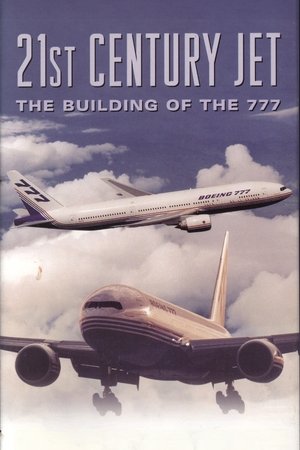
This new series features the fascinating stories of three of the most important commercial aircraft ever to take to the skies.
Australia's aviation history is a saga of daring feats, can-do attitude, pig-headed visionaries, iron-fisted politicians and warring pilots; of humble beginnings and mega deals.
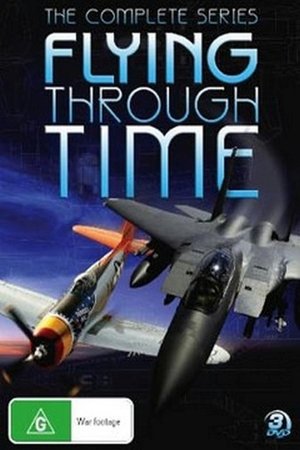
NASA Apollo astronaut Neil Armstrong adds to his long list of space flight & aviation accomplishments as he takes the controls of a variety of flying machines. Each episode blends historic footage, interviews, and flying. Armstrong takes you on an exhilarating adventure through time.
A century ago, the world experienced a revolution in mobility. Cities like Berlin grew rapidly, with the Graf Zeppelin soaring over the city in 1928, sparking excitement for airship travel. These majestic airships made ocean crossings faster and more luxurious, and even enabled polar expeditions. At the same time, automobiles and motorcycles became staples for many, although streets became congested. Women like Amelia Earhart and Elly Beinhorn broke barriers in aviation, inspiring new possibilities for both genders in the field of technology. While air travel grew in popularity, trains remained the main long-distance transport. The era also saw an explosion of new mobility options, with faster, cheaper ways to travel across the globe, making the world seem smaller and more connected. However, this golden age of mobility would be cut short by the outbreak of World War II.
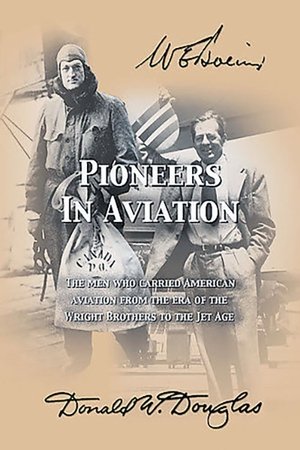
EMMY-nominated PBS documentary covering the history of American aviation, from the Wright Brothers to the very frontiers of space.
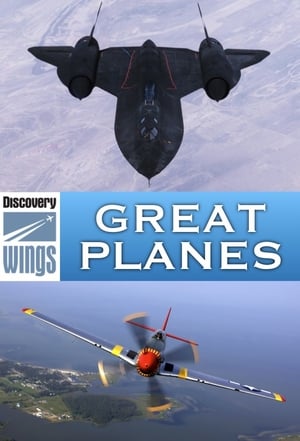
Great Planes