Born in 1937 in Osaka as the eldest daughter, Kawahara Kimiko moves to Shigaraki with her family at the age of 9. She works to support her family from a young age. Eventually, she jumps into the male world of pottery and becomes a pioneer of female ceramic arts. After marrying her husband who is also involved in ceramics and owning her own kiln, she raises her two children while struggling to create unique ware.
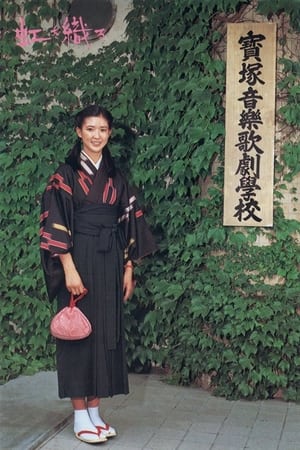
In the early Showa era, Japan’s first women’s law school opens, and the protagonist, Inotsume Tomoko (Ito Sairi), gains nationwide attention as one of the first female lawyers in the country. However, after facing wartime Japan’s harsh realities and losing everything, she becomes a judge with her legal knowledge and dedicates herself to establishing the family court. She stands passionately for the hardships that politics and economics cannot solve.
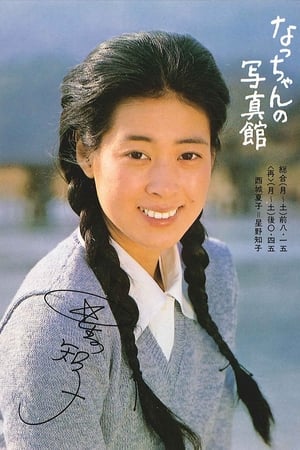
In 1930 and as a young child, Tsuneko Kohashi lives at Enshu in Shizuoka Prefecture. She has a happy life with her parents and two younger sisters. Things change after her father dies from tuberculosis. Her father asked Tsuneko Kohashi to take care of the family in his place. Due to financial difficulties, her mother Kimiko decides to move the family to Tokyo where Tsuneko's grandmother lives.
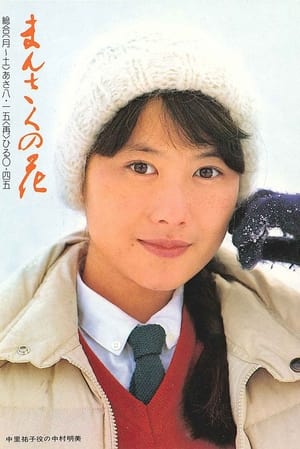
The story of Makino Mantaro (Kamiki Ryunosuke), a botanist who ran through the Meiji era (1868-1912) in full bloom, begins. Born the heir to the Tosa sake brewery Mineya, Mantaro (Yurito Mori) is a boy who loves plants and flowers and led a straightforward life. His life was colored by the many vivid encounters he had with many people. People whom Mantaro met in his hometown of Kochi, and whose way of life and words gave him a guideline for his life. "Ranman," is a drama in which charming characters bloom freely around the main character, Mantaro, just like flowers.
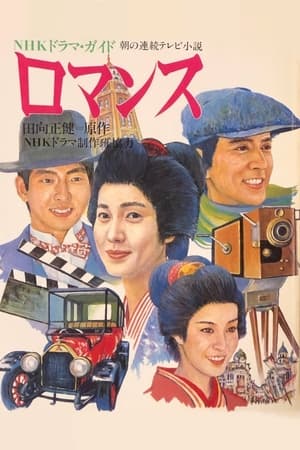
Uno Meiko is the daughter of parents who run a western style restaurant in Tokyo. She marries and moves to Osaka with her husband. Meiko experiences cultural differences between Tokyo and Osaka, as she lives as a mother and wife in Osaka.
ほんまもん
Come Come Everybody is a Japanese television drama series and the 105th NHK Asadora series, following Okaeri Mone.. It depicts the lives of three generations of women who have close links to the English lessons on radio which began in 1925.
The 69th NHK Asadora Drama, based on Rei Nakanishi's novel, is about the Iwata family living in Ikeda, Osaka City between 1950s and 1960s. The story is told through the eyes of the youngest daughter, Fuyuko. The family runs a bakery. The mother, Teruko, is a very energetic woman who is determined to make her dreams come true. Responding to Teruko's expectations, the eldest daughter becomes a figure skater and the second daughter becomes a very famous professional singer. In contrast, Fuyuko finds her joy in bread making.
Oshin is a Japanese serialized morning television drama, which aired on broadcaster NHK from April 4, 1983 to March 31, 1984. The series follows the life of Shin Tanokura during the Meiji period up to the early 1980s. Shin was called "Oshin", which is an archaic Japanese cognomen.
The year is 1947, August. Ono Junko's family is being evacuated to Wakayama and the father is going to war. A few years later, the father has returned from Manchuria but he also brought a boy that had been abandoned by his mother. The boy is Yuta and the family will adopt him.
A serialized television series, aired in 1979, based on Hasegawa Machiko's "Sazae-san Uchiakebanashi" (Sazae-san Confessions), which depicts the true vibrant energy and strength of the common people, through their laughter and tears, from the pre-war to the post-war period in Japan.
まんてん
The story is about a young woman who becomes a landscape gardener following her father's wishes. Wakaba, born and brought up in Kobe, Hyogo Prefecture, lived happily with her parents and younger brother until the Great Hanshin Earthquake shook and destroyed the city in 1995. In the disaster, Wakaba loses her father, who was an architect and moves with her mother and brother to Obi, old castle town in Nichinan, Miyazaki Prefecture, where her grandmother lives with her uncle and aunt. Living in Obi's rich natural environment, Wakaba learns that plants can heal people's hearts. She makes a resolution to return to Kobe and reconstruct the city abundant in greenery.
Suenaga Kokoro, an international flight attendant, lives with her mother and grandmother who operate a traditional restaurant in a lively downtown district of Tokyo where customs and traditions run deep and neighbors know each other like a big family.
The 97th NHK asadora is about Ten who becomes the first female comedian.
Born over a tofu shop in Osaka, twin sisters Reiko and Kyoko have very different characters. Reiko is diligent, and longs for a secure, middle class lifestyle. Kyoko is a free spirit, who seeks thrills and adventure.
Teppan is a Japanese television drama that aired on NHK in 2010–2011. It was the 83rd Asadora. It starred a new actress, Miori Takimoto, in the role of a young woman raised by an adopted family in Onomichi who learns of her real grandmother and decides to move to Osaka to start an okonomiyaki restaurant. The title word "teppan" refers to the metal surface on which okonomiyaki are cooked. The series, while interrupted by the Tohoku Earthquake, averaged a 17.2% rating, making it the fourth most popular of the Asadora dramas in the previous five years.
Jun to Ai is a Japanese television drama series. It debuted on October 1, 2012 and was broadcast until March 30, 2013. It is about a girl named Jun Kanō, raised in Miyakojima, Okinawa, who moves to Osaka to work in a hotel. There she meets a man named Itoshi Machida, with whom she falls in love. It is the 87th NHK Asadora.
Umechan Sensei is a Japanese television drama series. It debuted on April 2, 2012. It is about a girl named Umeko Shimomura who, despite being overshadowed by her talented older brother and sister, and despite being thought of as a clumsy child, decides to follow in her father's footsteps and become a doctor. It is the 86th NHK Asadora.
The 82nd NHK Asadora is Gegege no Nyobo. The story is based on a 2008 autobiography by Mura Nunoe, the wife of Gegege no Kitaro mangaka Mizuki Shigeru. The story revolves around the life of the married couple, told from the perspective of Mura. --Tokyograph