Live coverage as our wildlife faces up to the most challenging time of year.
See It Now is an American newsmagazine and documentary series broadcast by CBS from 1951 to 1958. It was created by Edward R. Murrow and Fred W. Friendly, Murrow being the host of the show. From 1952 to 1957, See It Now won four Emmy Awards and was nominated three other times. It also won a 1952 Peabody Award, which cited its
A blue chip, continent-wide series ranging from Australia's highest snow peaks to the depths of the frigid and wild southern seas; from its last populations of wild numbats to its largest diorama of giant cuttlefish. It's a land of diverse beauty, that delights and surprises. The series both entertains and deepens our understanding of how the natural world is made up of not just unique species, but distinct individuals, whose lives are far from predictable.
This six part documentary draws attention to the most extraordinary — almost supernatural — accounts of animals that have adapted to the cruelest evolutionary curveballs.
Die Kanarischen Inseln
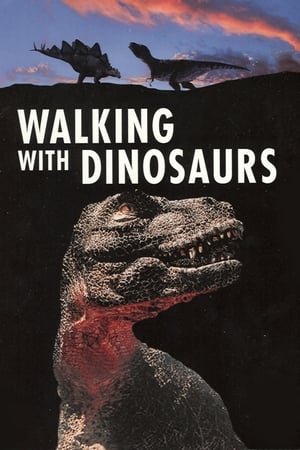
Each episode tells the dramatic story of an individual dinosaur whose remains are currently being unearthed by world-leading dinosaur hunters. As the dinosaurs' bones emerge from the ground, their prehistoric stories are brought to life with state-of-the-art visual effects - making each episode a gripping dinosaur drama based on the very latest evidence.
Angler and biologist Jeremy Wade uncovers the bizarre, the weird and the mysterious as he investigates baffling, unsolved mysteries beneath the surface of dark waters.
For several thousand years the moose have walked the same path to get to the rich pastures of summer. Follow the walk live from Kullberg in the north of Sweden.
View Canada’s extraordinary wildlife through the lens of its four distinct seasons.
Professor Robert Winston meets Lucy, the first upright ape, and follows her ancestors on the three-million-year journey to civilisation.
Merveilles d'Europe
Dr. Evan Antin travels around the world to chase after his wildlife bucket list. From swimming with whales in Tahiti to wrestling crocs in the Yucatan, he brings his passion for wildlife to each adventure and lends a helping hand to animals in need.
Martin Clunes travels down to the Indian Ocean to witness what many fear is the lemur's last stand.
Traveling aboard the OceanXplorer, OceanX's state-of-the-art scientific research and exploration vessel, to investigate the farthest frontiers of the world's oceans, 80% of which are entirely unknown. Armed with advanced technology, a hand-picked team of intrepid explorers and scientists, National Geographic Explorers and other ocean experts embark on a global odyssey to solve some of the ocean's greatest mysteries through the lives of its animals and their ecosystems.
Adventurous naturalist and all round snake lover Nigel Marven takes a look at some of the world's most lethal snakes.
BIWAK shows exciting adventure reports. Presenter Thorsten Kutschke takes you along on his adventure trips. Those who like to be active in nature will get the best suggestions.
Survivalist Hazen Audel fights his way through 500 miles of unexplored Amazon using only traditional survival methods; he faces extreme environments, and he must reach the Atlantic coast before he's trapped by floods during the rainy season.
We examine how animals have evolved over the course of time and analyze how we can benefit from their evolution.
A look at the world of animal shelters and all the emotion-filled work that goes on there to save the lives of thousands of pets every year.
India - unique in its diversity and breathtakingly beautiful. The subcontinent is characterized by scenic, cultural and ethnic diversity. Despite growing space needs, there are efforts to preserve the wilderness through nature reserves and protected areas. So India still provides habitat for rare species such as the Bengal tiger or the Indian elephant. The 5-part series "India's wild beauty" leads to the most spectacular and beautiful regions and their inhabitants.