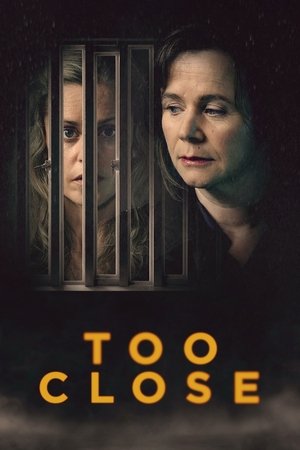
A bond between a troubled 25-year-old Aaron Simmons and Julie Ranmore a 44-year-old mother of two, whose marriage has lost all passion, has profound implications for both.
Two 19th-century footballers on opposite sides of a class divide navigate professional and personal turmoil to change the game — and England — forever.
The lives of two eccentric metal detectorists, who spend their days plodding along ploughed tracks and open fields, hoping to disturb the tedium by unearthing the fortune of a lifetime.
"The Game" is a 1970s Cold War spy thriller set in the world of espionage. It tells the story of the invisible war fought by MI5 as it battles to protect the nation from the threats of the Cold War.
The citizens of the small British town of Pagford fight for the spot on the parish council after Barry Fairbrother dies.
Disillusioned after a long career at Sunshine Desserts, Perrin goes through a mid-life crisis and fakes his own death. Returning in disguise after various attempts at finding a 'new life', he gets his old job back and finds nothing has changed. He is eventually found out, and in the second series has success with a chain of shops selling useless junk. That becomes so successful that he feels he has created a monster and decides to destroy it. In the third and final series he has a dream of forming a commune which his long suffering colleagues help bring to reality. Unfortunately that also fails and he finds himself back in a job not unlike the one he originally had at Sunshine Desserts.
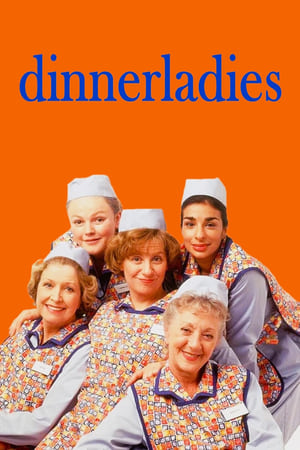
Dinnerladies is a BBC sitcom written by and starring Victoria Wood that chronicles the antics of a group of workers in a canteen in the north of England. Bren tries to maintain a semblance of order in amongst the chaos, while dealing with the canteen supervisor, slightly sex-obsessed cancer sufferer Tony. Dolly and Jean are the bickering menopausal older women, always at odds but best friends beneath it all. Then there's thick-as-two-short-planks Anita, and the terminally uninterested Twinkle, more concerned with having a good time than anything else. Making up the motley crew are military man handyman Stan, all rules and regulations, and ditzy Philippa, who never seems to get anything right.
Spaced: the anti-Friends, in that it examines the lives of common 20 somethings, but in a way that is more down to earth and realistic. Here we have Daisy and Tim; two 'young' adults with big dreams just trying to get by in this crazy world. They are thrown together in a common pursuit of tenancy, which they find by posing as a couple. The house has a landlady and an oddball artist living there. The series explores the ins and outs of London living.
The peacefulness of the Midsomer community is shattered by violent crimes, suspects are placed under suspicion, and it is up to a veteran DCI and his young sergeant to calmly and diligently eliminate the innocent and ruthlessly pursue the guilty.
On the Buses is a British comedy series created by Ronald Wolfe and Ronald Chesney, broadcast in the United Kingdom from 1969 to 1973. The writers' previous successes with The Rag Trade and Meet the Wife were for the BBC, but the corporation rejected On the Buses, not seeing much comedy potential in a bus depot as a setting. The comedy partnership turned to a friend, Frank Muir, Head of Entertainment at London Weekend Television, who loved the idea; the show was accepted and despite a poor critical reception became a hit with viewers.
Wycliffe is a British television series, based on W. J. Burley's novels about Detective Superintendent Charles Wycliffe. It was produced by HTV and broadcast on the ITV Network, following a pilot episode on 7 August 1993, between 24 July 1994 and 5 July 1998. The series was filmed in Cornwall, with a production office in Truro. Music for the series was composed by Nigel Hess and was awarded the Royal Television Society award for the best television theme. Wycliffe is played by Jack Shepherd, assisted by DI Doug Kersey and DI Lucy Lane. Each episode deals with a murder investigation. In the early series, the stories are adapted from Burley's books and are in classic whodunit style, often with quirky characters and plot elements. In later seasons, the tone becomes more naturalistic and there is more emphasis on internal politics within the police.
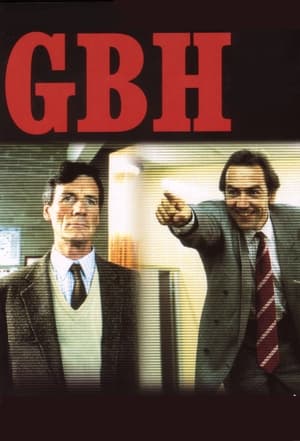
Ian George, the head of an exclusive school, is asked to take a look at Hope Park Comprehensive School, which is in special measures, and asked to confirm its closure. The outgoing head breaks down during his farewell speech and delivers an emotional rant against the students, telling them how worthless they are. After meeting staff and pupils, George believes there is some hope for the school. The show was inspired by a real head teacher named William Atkinson.
Valerie Tyler is a 28-year-old organization freak who loves her 16-year-old sister Holly. Even if Holly is rambunctious. Spontaneous. Impulsive. Disconcerting. And definitely disorganized. Then Holly moves in with Val, and the sisters discover they may make better siblings than roomies.
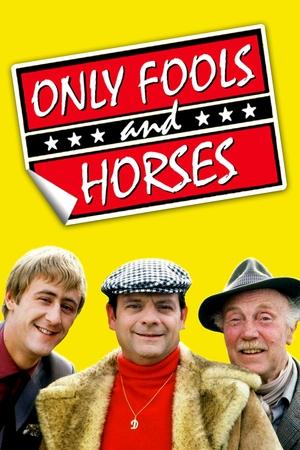
Only Fools and Horses.... Is a British sitcom created and written by John Sullivan. Seven series were originally transmitted on BBC One from 1981 to 1991, with sixteen sporadic Christmas specials aired until 2003. In working-class Peckham in south-east London, ambitious market trader Derek 'Del Boy' Trotter and his younger half-brother Rodney, explore their highs and lows in life, in particular their attempts to get rich. Initially not an immediate hit and receiving little promotion early on, it later achieved consistently high ratings, and the 1996 episode "Time on Our Hands" (originally billed as the series finale) holds the record for the biggest UK audience for a sitcom episode, attracting 24.3 million viewers. The series bears a significant influence on British culture, contributing several words and phrases to the English language.
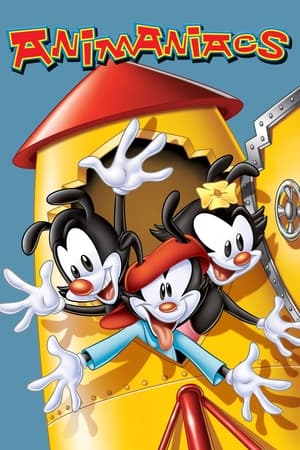
The two Warner Brothers Yakko and Wakko and their Warner sister Dot had been (supposedly) created in the 1930's, but their cartoons were too screwy for the general public to handle. The three Warners were locked up in the studio water tower until they escaped in the 90's. There, they run wild, causing chaos everywhere!
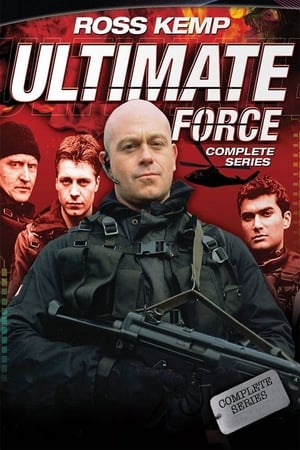
This covert combat series focuses on the Red Troop, an elite group of soldiers from the British military's Special Air Service group.
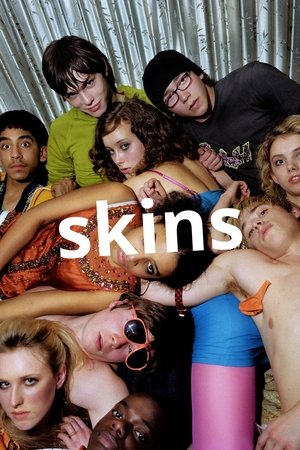
Sugar Rush is an Emmy Award–winning British television comedy drama series developed by Shine Limited and broadcast by Channel 4, based on the Julie Burchill novel of the same name. It follows the trials and tribulations of teenager Kim Daniels, who is dealing with all the usual adolescent issues, plus one - she thinks she might be gay. Her family has recently moved to Brighton from London, and she finds herself with a huge crush on her new best friend, Maria `Sugar' Sweet. Sugar has a bit of a wild side, and frequently gets Kim into trouble, though Kim can find trouble on her own as well. Despite attractions to other girls, and a few attempts at being interested in guys, Kim continues to long for Sugar.
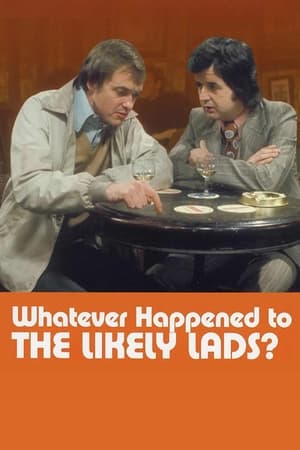
Whatever Happened to the Likely Lads? is a British sitcom which was broadcast between 9 January 1973 and 9 April 1974 on BBC1. It was the colour sequel to the mid-1960s hit The Likely Lads. It was created and written, as was its predecessor, by Dick Clement and Ian La Frenais. There were 26 television episodes over two series; and a subsequent 45-minute Christmas special was aired on 24 December 1974. The cast were reunited in 1975 for a BBC radio adaptation of series 1, transmitted on Radio 4 from July to October that year. In 1976, a feature film spin-off was made. Around the time of its release, however, Rodney Bewes and James Bolam fell out over a misunderstanding involving the press and have not spoken since. This long-suspected situation was finally confirmed by Bewes while promoting his autobiography in 2005. Unlike Bewes, Bolam is consistently reluctant to talk about the show, and has vetoed any attempt to revive his character.
My Sister Eileen is an American situation comedy based on a series of autobiographical short stories by Ruth McKenney originally published in The New Yorker, as well as the 1940 play and 1942 and 1955 film adaptations they inspired. The series premiered at 9:00pm ET/PT on CBS on October 15, 1960 and ran for one season of 26 episodes, the last of which was telecast on April 12, 1961. It aired opposite Hawaiian Eye on ABC and Perry Como's Kraft Music Hall on NBC.
In London, the life of Jean, a troubled crime scene cleaner, is turned upside down when his outlaw brother Martin crash lands into his world, entangling them in the deadly dynamics of organized crime.