Life Beyond explores humanity's future, the evolution of technology, and the mysteries of the universe. From AI and space exploration to philosophical reflections on existence, each chapter combines stunning visuals with emotional music, creating an immersive experience.
Race to the Red Planet
In this two-part series, we take a look at the monumental discoveries underway, specifically surrounding black holes and meteorites. Black holes have been revealed as one of the foundations for the basic conditions of life. Through black holes, life is possible in an infinite number of places in space. We also follow how meteorites brought the basic substances of life to our planet, allowing for its creation. The films describe the latest findings concerning cosmic events in relation to the origin of life, providing a grandiose perspective of what makes life possible.
Traveling aboard the OceanXplorer, OceanX's state-of-the-art scientific research and exploration vessel, to investigate the farthest frontiers of the world's oceans, 80% of which are entirely unknown. Armed with advanced technology, a hand-picked team of intrepid explorers and scientists, National Geographic Explorers and other ocean experts embark on a global odyssey to solve some of the ocean's greatest mysteries through the lives of its animals and their ecosystems.
On May 25, 1961, President John F. Kennedy made a historic speech where he pledged to send astronauts to the moon before the end of the decade. Eight years later, on July 20, 1969, Apollo commander Neil Armstrong stepped out of the lunar module and made a giant leap for mankind - a step that symbolized one of the most remarkable feats in human history. From that moment on, the exploration of our universe has achieved unimaginable feats with hundreds of missions stretching light years into the distant galaxy. This exciting documentary series takes viewers into the past, present and future of NASA.
Ozone Univerzum - Nemzetközi űrhírek
An unprecedented look at the decade-long odyssey to land a man on the moon. This documentary pulls back the curtain on the familiar narrative of the moonshot, revealing a fascinating stew of scientific innovation, political calculation, media spectacle, visionary impulses and personal drama.
A series of short stories about human space exploration.
Search for Second Earth brings to life, in breathtaking CGI, an epic future journey that our species has already begun: the voyage of an autonomous spacecraft to a planet beyond our Solar System in search of life. Join NASA planetary explorers Gentry Lee and Steve Squyres; and exo-planet hunters Sara Seager, Francois Forget and Natalie Batalha on their quest to find life beyond Earth.
The series covers the life and work of leading science fiction authors of the last couple of centuries. It depicts how they predicted and, accordingly, influenced the development of scientific advancements by inspiring many readers to assist in transforming those futuristic visions into everyday reality.
Dive into the mysteries of some of NASA’s most curious missions and explore stories of engineering achievement and human endurance. Each episode offers first hand testimony from astronauts, NASA mission footage, plus beautifully rendered CGI to bring to life these voyages that reveal unexplained sightings that have dogged many of NASA’s most famous missions.
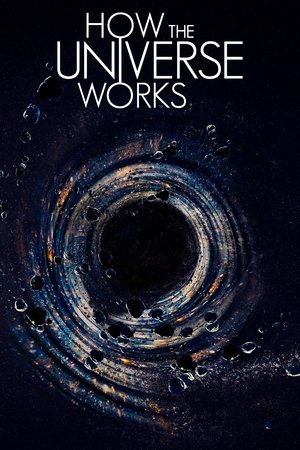
A users' guide to the cosmos, from the Big Bang to galaxies, stars, planets and moons: where did it all come from and how does it all fit together? A primer for anyone who has ever looked up at the night sky and wondered.
Aurora
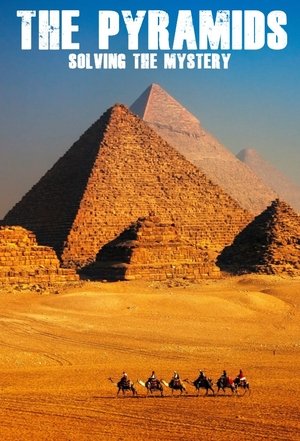
The construction of the Egyptian pyramids remains an enigma, an unsolved mystery. But today, Egyptologists and archaeologists have developed a new tool which uses aerial and satellite images to provide valuable fresh clues about the position, construction, and evolution of these edifices. This series sets out to decode the mysteries of the pyramids' construction, and to recreate Egypt as it was more than 5000 years ago.
Explore the impact of A.I. and how it is transforming the way we live and work -- both now and in the future, featuring some of the brightest minds in science, philosophy, technology, engineering, medicine, futurism, entertainment and the arts to tell the dynamic story of A.I.
July 20, 1969. Nearly six hundred million people have their eyes glued to their televisions: Neil Armstrong is just about to make one of mankind’s oldest dreams come true. After more than twenty years of intense struggle between the Americans and the Soviets, the biggest adventure for humanity in the 20th century has just been achieved. As a climax of the Cold War, the conquest of the moon was a true saga, passionate, epic and filled with twists and turns. It wasn’t just a scientific competition between East and West; It was also a fabulous adventure combining political history, technological exploits, acts of bravery and personal dramas.
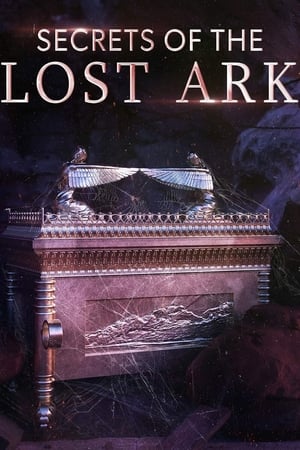
For centuries, explorers have searched for the Bible’s most sacred religious artefacts. One of the most mysterious of these objects is the famed Ark of the Covenant. The gold-plated wooden chest – one of the most instrumental symbols of faith and God's presence – was believed to house the two tablets bearing the Ten Commandments. The Ark’s exact whereabouts has long puzzled scholars. Where did it go? And why has it remained such a mystery?
For the 50th anniversary of the Apollo 11 mission, two immersive documentaries gave viewers the chance to re-live this awe-inspiring event as it unfolds in real time, with incredible cinematic NASA footage and global news archive. Episode One relives the drama of the launch, while Episode Two focuses on the landing, as the world followed the nail-biting moments leading up to the first ever boot print of Man on the Moon.
How does it work?
Professor Brian Cox goes on a grand tour of the planet to explain how the Earth's beauty is created by just a handful of forces.