Hollywood Squares is an American panel game show, in which two contestants play tic-tac-toe to win cash and prizes. The "board" for the game is a 3 × 3 vertical stack of open-faced cubes, each occupied by a celebrity seated at a desk and facing the contestants. The stars are asked questions by the host, or "Square-Master", and the contestants judge the veracity of their answers in order to win the game. Although Hollywood Squares was a legitimate game show, the game largely acted as the background for the show's comedy in the form of joke answers, often given by the stars prior to their "real" answer. The show's writers usually supplied the jokes. In addition, the stars were given question subjects and plausible incorrect answers prior to the show. The show was scripted in this sense, but the gameplay was not. In any case, as host Peter Marshall, the best-known "Square-Master" and the man in whose honor the show's first announcer, Kenny Williams, actually "coined" the term, would explain at the beginning of the Secret Square game, the celebrities were briefed prior to show to help them with bluff answers, but they otherwise heard the actual questions for the first time as they were asked on air.
The Waverly Wonders is a short-lived TV sitcom, starring retired pro football star Joe Namath, that lasted less than a month on NBC in 1978.
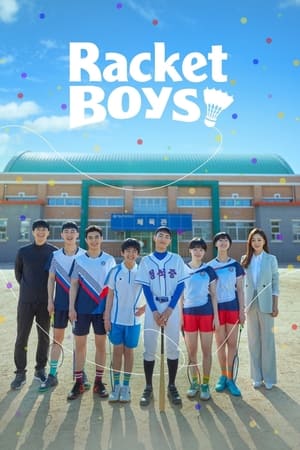
Star pitcher Haruka Kiyomine and skilled catcher Kei Kaname were an unstoppable duo—until Kei was hit with a curveball: amnesia. Now they have a second chance to play at a no-name high school with a team of past rivals. Can they overcome Kei’s memory loss and rekindle their baseball dreams? With hilarious hijinks and fierce competition, get ready for a strikeout.
Remote Control is a TV game show that ran on MTV for five seasons from 1987 until 1990. It was MTV's first original non-musical program. New episodes were made for first-run syndication from 1989 until 1990 which were distributed by Viacom. Three contestants answered trivia questions on movies, music, and television, many of which were presented in skit format. The series was developed by producers Joe Davola and Michael Duggan, and directed by Dana Calderwood.
Tennis prodigiy Ryoma Echizen enters the tennis powerhouse Seishun Academy. Once he fights his way onto the team, the game will never be the same.
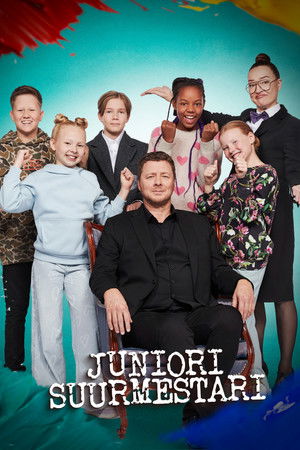
The Good and the Bad News is a Finnish comedy panel game television show airing on channel Nelonen on Wednesday evenings.
Scully was a British television drama with some comedy elements set in the city of Liverpool, England, that originated from a BBC Play For Today episode "Scully's New Years Eve". Originally broadcast on Channel Four in 1984, the single series was spread over six half-hour episodes plus a one-hour final episode. It was written by playwright Alan Bleasdale. The drama is notable for featuring many of the Liverpool football club first-team squad of that era. Francis Scully is a teenage boy who has his heart set on gaining a trial match for Liverpool to hopefully fulfil his ambition of playing for the club. Francis, in everyday situations during his waking hours, occasionally "sees" famous Liverpool players such as Kenny Dalglish when they are not really there. These dream-like sequences recur throughout the episodes. The main plotline is the efforts of Scully's school teachers to persuade Scully to appear in the school pantomime which they attempt by promising him a trial with his beloved Liverpool if he will cooperate. When Scully and his friends are not in school making trouble for the teachers and the school caretaker, they are seen roaming the local streets upsetting the neighbours and getting into trouble with the police. Scully sometimes has visions of the school caretaker appearing as a vampire due to the caretaker's nickname being Dracula. These frequent waking dream sequences give the show a somewhat surreal atmosphere.
Jiro Kanzaki is an F3000 test driver blessed with acute sensitivity and breathtaking driving techniques. He's a daredevil who feels no fear driving at speeds that even top racers dare not attempt. But unexpected trouble forces this world-famous racer to leave his team and return to Japan for the first time in years. Until he finds a new job as a racer, Jiro decides to stay with his parents. What awaits Jiro there is his hardheaded father, his nagging sister, the 12 children of the foster home his father runs, a snobbish male nurse, and a stubborn female nurse who likes to daydream about her life.
Ball Four is a 1976 American situation comedy that aired on CBS in 1976. The series is inspired by the 1970 book of the same name by Jim Bouton. Bouton co-created the show with humorist and television critic Marvin Kitman and sportswriter Vic Ziegel. Bouton also starred in the series. Ball Four followed the Washington Americans, a fictitious minor league baseball team, dealing with the fallout from a series of Sports Illustrated articles written by Americans player Jim Barton. Like the book, the series covered controversial subjects including womanizing players, drug use, homosexuality in sports and religion. The series included a gay rookie ballplayer, one of the earliest regular gay characters on television. The trio began developing the series in 1975, looking to other series like M*A*S*H and All in the Family as models. CBS expressed interest and the creative team developed a script. CBS shot the pilot episode and ultimately bought the series. Ball Four aired at 8:30 PM Eastern time, which was during the Family Viewing Hour, an FCC-mandated hour of early evening "family-friendly" broadcasting. Consequently the writers had some trouble with the network's Standards and Practices in their attempt to portray realistic locker room scenes, especially the language used by the players. Pseudo-profanity such as "bullpimp" was disallowed, while "horse-crock" and "bullhorse" were approved.
Eight pairs of Brick heads are pitted against each other in a quest to impress with their creativity, design and flair, driven by their unparalleled passion for the possibilities that will start with a single LEGO brick.
Higashigaoka High School’s male swimming club presently has only three second-year members – leader Sakaki Shuhei, Shinozuka Daiki and Koganei Haruyoshi. They welcome the new school year with the aim of getting members.
Jedeme dál
Kazamatsuri Shou's dream has always been to become a professional soccer player, but he has one problem: he's not very good at the game. He was accepted to the prestigious Musashi no Mori Junior High, known for its top rate soccer team, but he was never able to rise beyond the rank of third stringer. After transferring to Sakura Jousui Junior High, he can finally play soccer. And, with the support of his new friends and teammates, his strong determination, and lots of hard work, his soccer skills are developing rapidly and setting Shou well on his way to achieving his dream.
Comedy quiz show full of quirky facts, in which contestants are rewarded more if their answers are 'quite interesting'.
Adam Hills, one of Australia's favourite comedians and winner of Edinburgh's Best of the Fest award, is joined by two team captains, comedian and actor Alan Brough and radio breakfast announcer Myf Warhurst, as well as brave personalities who enjoy having long forgotten embarrassing stories laughed about on national television. Two teams go head to head as they sing, shout and delve deep into the recesses of their collective minds to help earn their team an extremely inglorious victory.
The Generation Game was a British game show produced by the BBC in which four teams of two competed to win prizes. The programme was first broadcast in 1971 under the title Bruce Forsyth and the Generation Game and ran until 1982, and again from 1990 until 2002. The show was based on the Dutch TV show Een van de acht, "One of the Eight", the format devised in 1969 by Theo Uittenbogaard for VARA Television. Mrs. Mies Bouwman - a popular Dutch talk show host and presenter of the show - came up with the idea of the conveyor belt. She had seen it on a German programme and wanted to incorporate it into the show. Another antecedent for the gameshow was 'Sunday Night at the London Palladium' on ATV, which had a game called Beat the Clock, taken from an American gameshow. It featured married couples playing silly games within a certain time to win prize money. This was hosted by Bruce Forsyth from 1958, and he took the idea with him when he went over to the BBC.
Footage from the popular game show, Takeshi's Castle has been re-edited, re-written and re-voiced into a hilarious, intentionally over-produced, modern "action/X-treme" sports show.
Four warriors who gathered to catch the moon rabbit who fled to Earth! A new concept hybrid multiverse action adventure variety that unfolds across time and space begins!
New Century Zero takes place a long time after the events of Zoids: Chaotic Century. Zoids are no longer used for warfare; instead, the combative natures of both Zoids and humans are focused and contained by a series of battle-competitions and tournaments, run by the Zoid Battle Commission. The series focuses on the Blitz Team, in particular the actions of the Liger Zero and Bit Cloud. The series charts the rise of the Blitz Team through various competitions of the Zoid Battle Commission, and the team's efforts to avoid conflict with the criminal organization known as the Backdraft Group.
Tu cara me suena