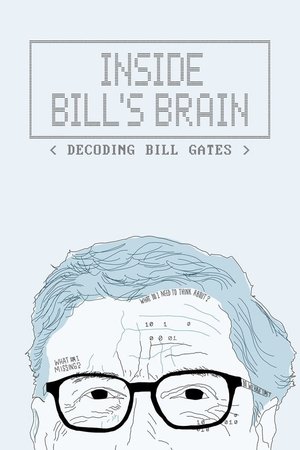
Take a trip inside the mind of Bill Gates as the billionaire opens up about those who influenced him and the audacious goals he's still pursuing.
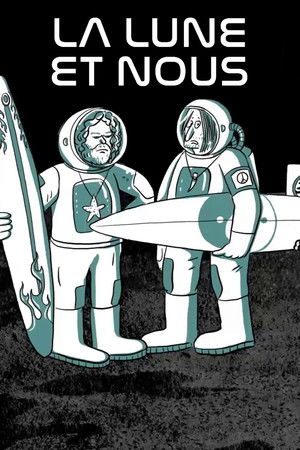
Science, superstition, culture: This animated documentary series delves into various aspects of man's relationship with the Earth's satellite.
The European Space Agency (ESA) has selected a new team of trained astronauts to go not only to the International Space Station, but also to the Moon with the Artemis mission. With the discoveries made by James Webb and new-generation launchers such as Ariane 6, there are many new developments in European space exploration.
This documentary follows the second-year students of Set 36 at Norland College, a quintessentially British 120-year-old childcare training college in Bath which turns its students into elite 21st century Mary Poppins-style nannies. The programme gives an insight into how contemporary Norland students follow the college's traditions, though the students are also taught more modern disciplines, such as advanced driving skills, how to escape the paparazzi, taking corners at speed in the rain, lifesaving and self-defence. If they successfully finish the 14,000 pounds per year course, a lifetime of employment and travel prospects could be theirs for the taking. Norland Nannies have been sought after by the rich and famous for over a century. Most recently the Duke and Duchess of Cambridge hired a Norlander as nanny to Prince George. Founded in 1892 by Emily Ward, the college is renowned for its rigorous rules, traditional uniform, perfect hair and clean white gloves.
They climb up mountainous paths, swim across rivers or fight their way through icy wastelands with -50 degrees Celsius. Their path takes them through amazing natural landscapes, producing spectacular scenery for a very ordinary task. The participants, at times without shoes and for days at end, are mere students on their way to school.
As Rose sets out to prove, it’s never too late to learn. Her ambitious plan to transform the lives of a group of old-timers is full of laughter and tears.
College Girls is a Channel 4 documentary series, first transmitted in the United Kingdom from 8 September 2002. The documentary followed the lives of six students who studied at St Hilda's College, Oxford, the last remaining single-sex college at the University of Oxford, between 1998 and 2001.
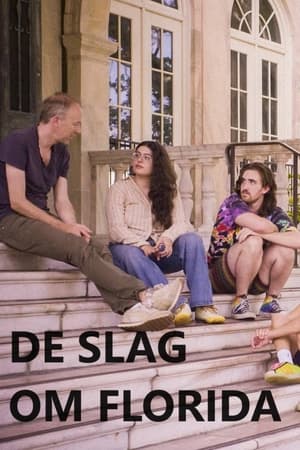
In the year of the presidential elections in the US, journalist Eelco Bosch van Rosenthal and director Hans Pool sketch a portrait of the most activist generation since the 1970s: Generation Z. However, the freedom they demand collides with other freedoms, and nowhere does that collision occur as on the surface as in Florida, a state where 'freedom' is rotten in everyone's mouth.
Headteacher Stephen Drew, from Educating Essex, welcomes boys and their parents to a residential summer school like no other in a bid to unlock their true potential before it's too late.
In a unique experiment, five teachers from China take over the education of fifty teenagers in a Hampshire school to see whether the high-ranking Chinese education system can teach us a lesson.
From Covid to lockdowns to exam chaos, lately schoolkids have had the toughest of times. Pupils at a Midlands school film their year of turning 16 and taking GCSEs in the middle of a pandemic.
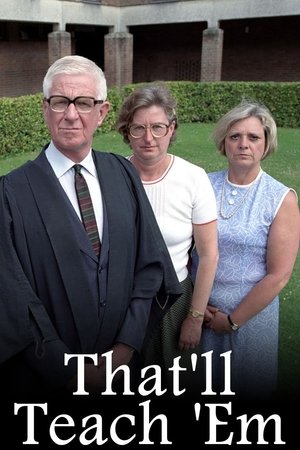
That'll Teach 'Em is a British reality television documentary series produced by Twenty Twenty Television for the Channel 4 network in the United Kingdom. Each series follows around 30 teenage students as they are taken back to a 1950s/1960s style British boarding school. The show sets out to analyse whether the standards that were integral to the school life of the time helped to produce better exam results, to the current GCSE results and to compare certain contemporary educational methods with modern ones. As part of the experience, the participants are expected to board at a traditional school house, abiding by strict discipline, adopting to 1950s diet and following a strict uniform dress code. After four weeks, the students then take their final exams, produced to the same standard as contemporary GCE O Levels. There were three series of the show, the first airing in 2003, the second in 2004 and the third and final series in 2006.
Crash Course World History is a video course hosted by John Green that teaches world history from growing the first crops in the First Agricultural Revolution to global textile production in the 2010s. Across the series, it builds skills in identifying and explaining historical developments, analyzing events in broader context, and tracing patterns and connections across time and place—aiming to help viewers become more informed citizens of the world. Season 1 follows the 2012 AP World History curriculum in a 42-episode chronological survey, while Season 2 continues in 30 episodes with a more thematic approach that focuses on systems and encourages viewers to question how “history” is written and what biases shape it.
Classe à part
Explore the magic and science of cinema. In each episode, Vsauce3’s Jake Roper takes you on an immersive journey into the world of a different movie; blending unscripted scientific exploration with narrative storytelling.
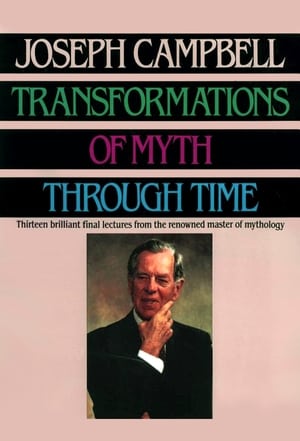
Legendary raconteur Joseph Campbell explores the myth and symbols that have shaped our world and given us what he has called "the experience of being alive."
Jak se dělá dobrá škola
Explores what it's like to live with a disability in the UK today.
Over six episodes, Maisonneuve looks at the repercussions flowing from the arrest of 11 students at Montreal’s Collège de Maisonneuve as they prepared to join the ranks of the Islamic State in Syria. From the initial shock to a gradual opening for dialogue, the series follows the paths of six exceptional young people who share their points of view. Through their eyes, Maisonneuve highlights both the importance and the fragility of living together in harmony in Quebec.
Destinos: An Introduction to Spanish, also known simply as Destinos, is an educational television program created by Bill VanPatten, who was, at the time, Professor of Spanish and Second Language Acquisition at the University of Illinois at Urbana Champaign. The show, designed to introduce viewers to the basics of Spanish, had two seasons, beginning in 1992. Its 52 episodes are often used for educational purposes in schools and are still broadcast regularly on many PBS stations, as well as many local channels. Destinos was produced by WGBH Boston and funded by the Annenberg/CPB Project, with additional funding by the Geraldine R. Dodge Foundation.