David Attenborough embarks on a remarkable 500 million-year journey revealing the extraordinary group of animals that dominate our world, and how their evolution defines our human bodies.
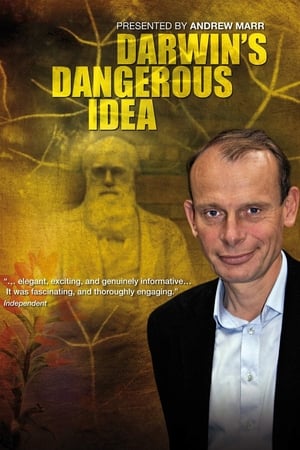
Andrew Marr explores how Darwin's theory of evolution by natural selection has taken on a life of its own far beyond the world of science.
Around the World in 80 Days is an animated television series that lasted one season of sixteen episodes, broadcast during the 1972-1973 season by NBC. It was the first Australian-produced cartoon to be shown on American network television. Leif Gram directed all sixteen episodes, and the stories were loosely adapted by Chester "Chet" Stover from the novel by Jules Verne.
Life is a fragile thing. It changes and adapts so specifically to survive in the environment it's placed in. This ability to adapt is called evolution, and it's the reason that life has endured for the past few billion years. But evolution takes a long time, so when environments change too quickly for the inhabitants to keep up, the result is a drop in population or at the worst… extinction. And sometimes these changes can be so big that they affect the entire globe. Leading to some of the most catastrophic events in our planet’s history… mass extinctions. Content creator Angel of Death explores the five mass extinctions and the effects they had on life on earth in this five part miniseries.
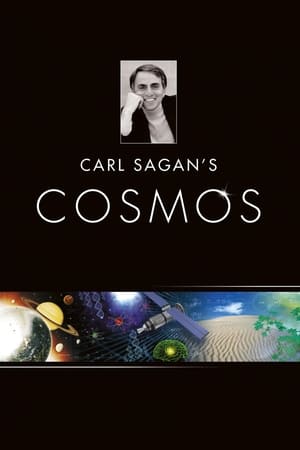
Carl Sagan covers a wide range of scientific subjects, including the origin of life and a perspective of our place in the universe.
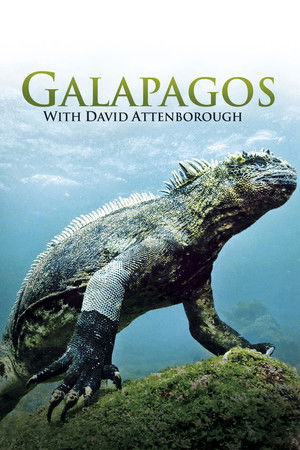
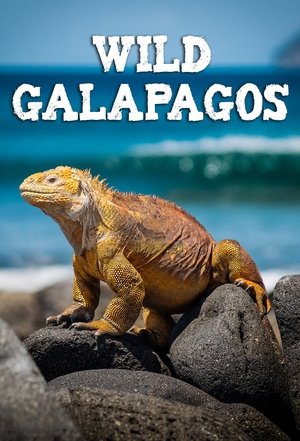
David Attenborough uses pioneering 3D-techniques and technology to explore the unique environments and species of the Galapagos.
Des trains pas comme les autres
Invitation au voyage
The history of decolonization from the point of view of colonized peoples, an epic story that still resonates and reverberates to this day.
A five-part series that features the latest research exploring how early humans evolved. See how the mixing of prehistoric human genes led the way for our species to survive and thrive around the globe. Archaeology, genetics and anthropology cast new light on 200,000 years of history, detailing how early humans became dominant.
Karin och Carl Larsson
Dickens is a 2002 three-part docudrama presented by Peter Ackroyd, on whose biography of Dickens it was based. An unorthodox style is taken: actors play various individuals in Dickens' life (as well as Dickens himself), interviewed as if appearing in a contemporary documentary. Their words are from actual letters and journals of the individuals involved, and serve to illuminate the hardships and successes in Dickens' life, and the way his experiences found their way into his works.
Series exploring the origins of human life, from African beginnings to Ice Age artists.
Échappées Belles is a French weekly discovery magazine, broadcast on Saturdays in the first part of the evening on France 5 since September 30, 2006. It is presented in turn by Sophie Jovillard, Jérôme Pitorin, Ismaël Khelifa, Tiga, Sabine Quindou, Théo Curin and Anto Cocagne.
This extraordinary series is a sweeping account of the rise of Earth’s continents. They are the product of a grand waltz of plate tectonics and the continual evolution of Earth’s crust. As landmasses assemble and separate, they fuel volcanoes and spark earthquakes, building mountains and tearing valleys. We see the Earth, eons in the making, through the eyes of geologists and other scientists.
Notre part animale
Hosted by Jason Silva, Origins: The Journey of Humankind rewinds all the way back to the beginning and traces the innovations that made us modern.
Les 100 Lieux qu'il faut voir
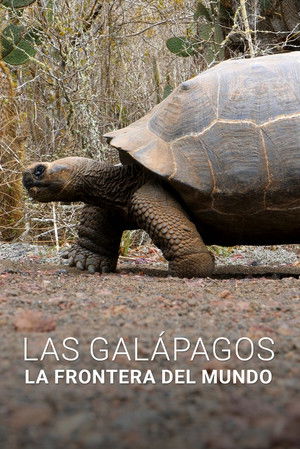
The history of these beautiful Islands from their creation as uprising lava to their being studied by Darwin to their modern day inhabitants.