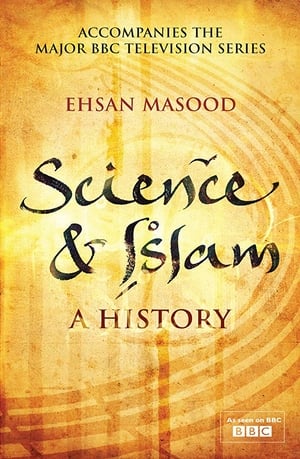
TV's most-watched history series brings to life the compelling stories from our past that inform our understanding of the world today.
Pandora's Box is a six-part 1992 BBC documentary television series which examines the consequences of political and technocratic rationalism. The episodes deal, in order, with communism in The Soviet Union, systems analysis and game theory during the Cold War, economy in the United Kingdom during the 1970s, the insecticide DDT, Kwame Nkrumah's leadership in Ghana during the 1950s and 1960s and the history of nuclear power.
Providing a thought-provoking and imaginative perspective on scientific discovery as it unfolds, each episode follows scientific explorers working on cutting-edge projects with breakthrough potential, revealing the world of tomorrow... today.
A nine part television series, produced by J.C. Crimmins for PBS. Music composed, arranged and performed by Pat Metheny and Lyle Mays. The stated purpose of “The Search for Solutions” is to stimulate interest in science and technology, primarily among the young. The film comprises nine 18-minute sections touching on various aspects of scientific inquiry that its makers say can be shown as a whole, as it is in this engagement, or in any combination of its parts.
Notre part animale
Professor Brian Cox goes on a grand tour of the planet to explain how the Earth's beauty is created by just a handful of forces.
The Human Body is a seven-part documentary series that looks at the mechanics and emotions of the human body from birth to death.
Alberto Angela leads the dissemination program dedicated to history, art and culture. A historical, archaeological, informative story, with the presence of some protagonists of the Italian cultural or artistic scene.
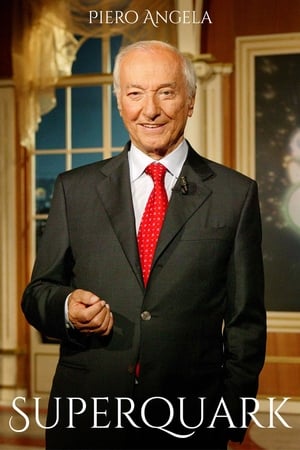
Television program of cultural diffusion, born in September 1995, designed and conducted by Piero Angela, development of transmission appreciated Quark.
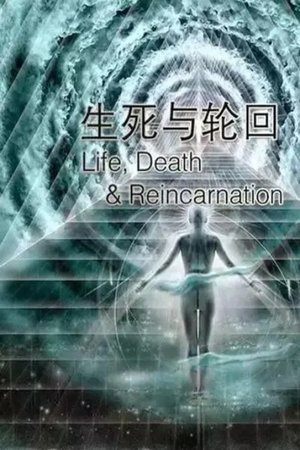
An epic adventure that aims to unravel the mystery at the heart of our existence: the questions of our identity and our destiny. The series features some of the world’s most baffling real life stories and exciting findings in the fields of consciousness studies, near-death experiences and past-life memories. Adventurous researchers following the evidence where it leads them have discovered that the lines of evidence converge to a conclusion that is refreshingly new – yet perennially known.
Thrill Factor explores the exciting world of thrill rides, waterslides and other heart-pumping experiences through a scientific lens. Hosts Kari Byron and Tory Belleci dive into the engineering and physics that explain why these rides excite adrenaline junkies.
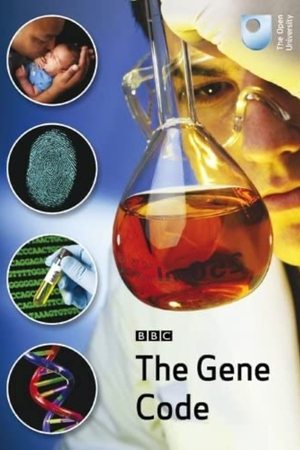
Dr Adam Rutherford explores the consequences of one of the biggest scientific projects of all time - the decoding of the entire human genome.
Capturing the latest breakthroughs in science, technology and innovation. With anchor Hari Sreenivasan, we check out the hottest gadgets, meet the innovators creating the startups of tomorrow and map out the mysteries of the scientific world.
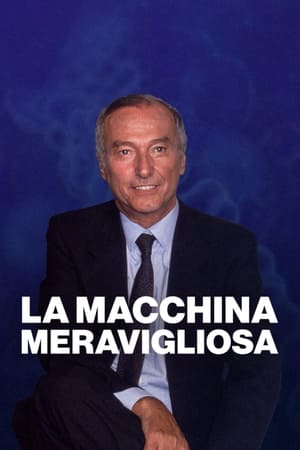
A long journey in 8 episodes to discover the human body, with Piero Angela who closely observes our organism, focusing each time on a theme: the eye, the ear, taste and smell, the stomach and the intestine, liver, bones, lungs and heart. How does our "wonder machine" work? To make each explanation direct and clear, the program uses films, animations and photographs developed with the scanning electron microscope.
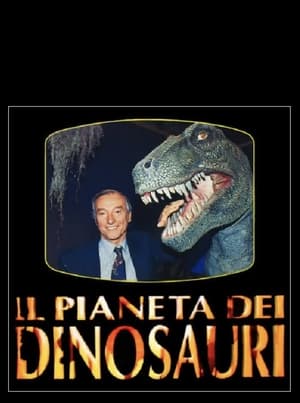
Il Pianeta dei Dinosauri was a television documentary series, hosted by Piero and Alberto Angela in 1993, dedicated to the life of the Dinosaurs studied by the reconstructions, thanks to the co-production with Agip and the advice of Professor Dale Russell
A television documentary series, hosted by Piero Angela and Alberto Angela in 1998, dedicated to the exploration of the Universe
NOVA scienceNOW is a News magazine version of the long-running and venerable PBS science program Nova. Premiering on January 25, 2005, the series was originally hosted by Robert Krulwich, who described it as an experiment in coverage of "breaking science, science that's right out of the lab, science that sometimes bumps up against politics, art, culture". At the beginning of season two, Neil deGrasse Tyson replaced Krulwich as the show's host. Tyson announced he would leave the show and was replaced by David Pogue beginning season 6.
Using state-of-the-art technologies, Richard Hammond goes beyond the limits of the naked eye and explores the hidden secrets of the invisible world around us.
Humains 3.0
The series investigates Paolo Macchiarini’s claims to have invented a ground-breaking method to create new organs. His method using plastic tracheas sown with stemcells has been operated on patients in the US, Russia, Sweden and the UK. So far, unfortunately, the track record of his plastic organs is not very good. Almost all patients are dead. And several of his former surgeon colleagues in Sweden claim that not only does the method not work, but that his scientific claim to fame is based on falsified and misrepresented data. Some even claim that his patients have been used as human guinea-pigs.