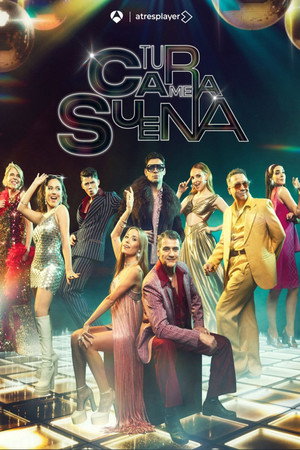
Tu cara me suena
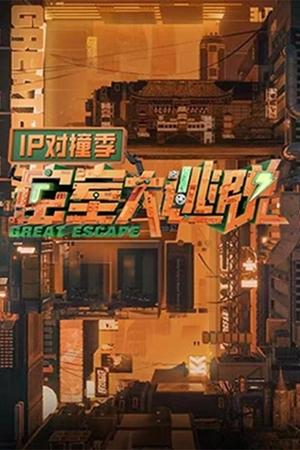
Great Escape: IP Encounter is a puzzle-type real-life decryption interactive variety show derived from Great Escape Season 5. The program invites three major IP players to experience multiple confrontations and decryptions from a new perspective, and ultimately overcome difficulties, showing the fighting spirit of unity, collaboration, and mutual help.
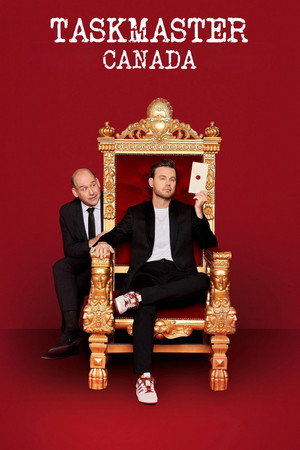
In this French-Canadian adaptation, Taskmaster Louis Morissette and his assistant Antoine Vézina test the wits of five comedians through a series of absurd tasks.
A musical improv show where players craft an original musical out of thin air and silly prompts.
Sporting quiz show, with regular captains leading teams of celebrities.
Physicists Leonard and Sheldon find their nerd-centric social circle with pals Howard and Raj expanding when aspiring actress Penny moves in next door.
In a world dominated by fake news and outright lies, Question Everything dissects the news to sort the real from the rumours, separate fact from fiction and flatten conspiracy theories back down to Earth.
Is er een dokter in de zaal?
Presenter Jimmy Carr oversees a panel of top-name celebrities in this year end quiz show where they compete to see who can answer the most questions correctly.
Five artists show their wild side by performing zany challenges. There are no points, no stakes, and no keeping score between guests, just a fun and unique combination of crazy games and improvisation.
Forty celebrities compete against each other in crazy competitions. There's only one rule - don't come last. In the end, only one man remains on the throne.
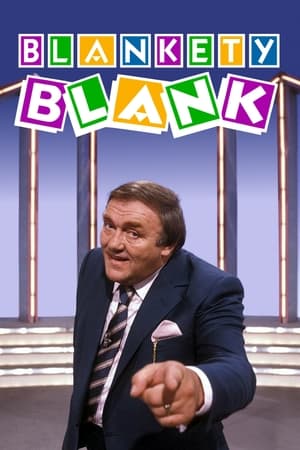
Blankety Blank is a British comedy game show based on the 1977–1979 Australian game show Blankety Blanks. The British version ran from 18 January 1979 to 12 March 1990 on BBC One, hosted first by Terry Wogan and later by Les Dawson. Regular members of the celebrity panel on this version included Kenny Everett, Lorraine Chase, Gareth Hunt, Gary Davies, and Cheryl Baker. A revival fronted by Lily Savage was produced by the BBC from 26 December 1997 to 28 December 1999, followed by ITV from 7 January 2001 to 10 August 2002. This version was produced by Grundy, then Thames.
Amigo is a game show for kids in Norway. The host is Stian Barsnes Simonsen, who is also the host for Melodi Grand Prix Junior with Nadia Hasouni. Amigo has an individual named The Soundeffect-man. The format consists of three teams, with two children each. The children make their own version of the Amigo theme song, which they then sing. The show is recorded in the NRK studio in Oslo, Norway.
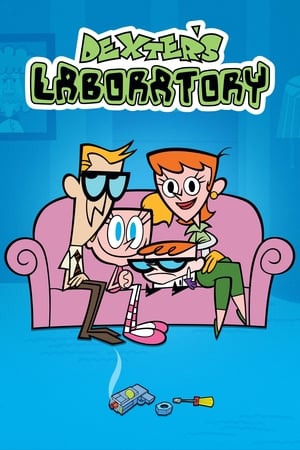
Dexter, a boy-genius with a secret laboratory, constantly battles his sister Dee Dee, who always gains access despite his best efforts to keep her out, as well as his arch-rival and neighbor, Mandark.
Happy Camp is a Chinese variety show produced by Hunan Broadcasting System. The series debuted in 1997, and has remained in production since then due to its popularity. The show was hosted by the Happy Family: He Jiong, Li Weijia, Xie Na, Du Haitao, and Wu Xin. Happy Camp is one of China's most popular shows, with a viewership of tens of millions.
The Game Show where we answer some of the world's silliest questions.
Big Break is a British game show based around the game of snooker, mixed with traditional game show elements. It was broadcast on BBC1 between 30 April 1991 and 9 October 2002. It influenced a later game show for the network called Full Swing, but based around golf, and itself was in part influenced by ITV's long-running darts quiz Bullseye.
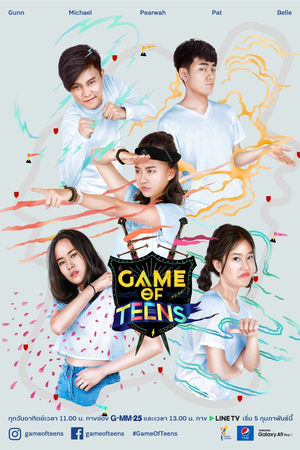
Game of Teens is a game reality show. Thai teen stars, actors and singers participate in games and win prize's.
You Bet Your Life is an American quiz show that aired on both radio and television. The original and best-known version was hosted by Groucho Marx of the Marx Brothers, with announcer and assistant George Fenneman. The show debuted on ABC Radio in October 1947, then moved to CBS Radio in September 1949 before making the transition to NBC-TV in October 1950. Because of its simple format, it was possible to broadcast the show simultaneously on the radio and on television. In 1960, the show was renamed The Groucho Show and ran a further year. Most episodes are in the public domain. The play of the game, however, was secondary to the interplay between Groucho, the contestants, and occasionally Fenneman. The program was rerun into the 1970s, and later in syndication as The Best of Groucho. As such, it was the first game show to have its reruns syndicated.
Hosted by Josh Widdicombe and James Acaster, top comedians are posed absurd hypothetical situations and scored on how well they would deal with them. Over three rounds, two teams of comedians must think fast as they are faced with a series of completely made-up scenarios and interrogated on their approach to each one. Host Josh Widdicombe poses the questions and interrogates the guests' methods, whilst James Acaster, as arbiter of the Hypotheticals, deals with the guests quibbles and queries and doles out the points.