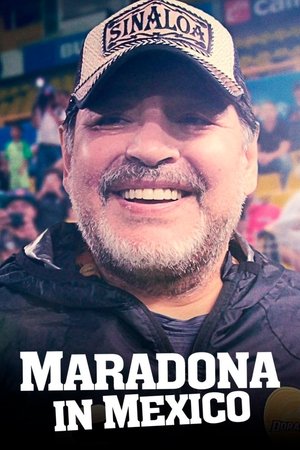
Archival video and new interviews examine Mexican politics in 1994, a year marked by the rise of the EZLN and the assassination of Luis Donaldo Colosio.
His art changed the way we see the world - now change the way you see the artist. An unflinching look at Picasso's legacy, and the horror and brilliance of what he left behind. Family, friends and experts reassess the tumultuous artistic and personal life of Pablo Picasso, one of the greatest and most provocative artists of all time.
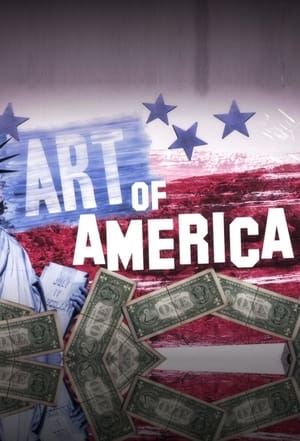
A history of American art with Waldemar Januszczak
Art historian Waldemar Januszczak uncovers the secret meanings hidden within some of the greatest paintings by Van Gogh, Gauguin, Cezanne and Seurat .
Rococo art is often dismissed as frivolous. But Waldemar Januszczak disagrees and in this three-part series he tries to bring Rococo art closer to us, and argues that the Rococo was the age in which the modern world was born.
Channel 4 documentary series covering all branches of the arts.
In this three-part documentary series Waldemar Januszczak discovers paintings, sculptures and architecture of the Baroque period. Starting from the square of Saint Peter's Basilica in Italy to St Paul's Cathedral in England.
流动的盛宴
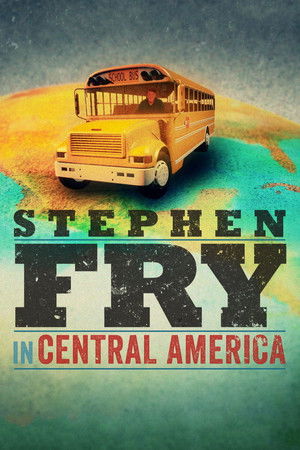
The author, actor and comedian embarks on a journey through the entire Central American isthmus to the Panamanian border with South America, beginning in Mexico.
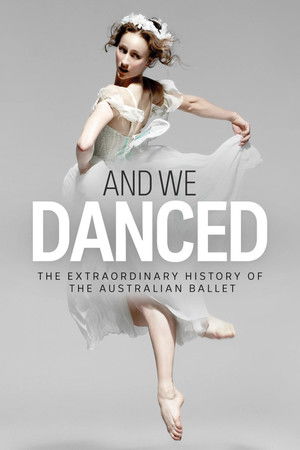
The Australian Ballet has evolved to become our nation's most treasured performing arts company and an icon of dance. 'And We Danced' looks back to reveal what has shaped this world-class institution and made it uniquely ours.
Seven Ages of Britain is a BBC television documentary series which is written and presented by David Dimbleby. The seven part series was first aired on Sunday nights at 9:00pm on BBC One starting on 31 January 2010. The series covers the history of Britain's greatest art and artefacts over the past 2000 years. Each episode covers a different period in British history. In Australia, all seven episodes aired on ABC1 each Tuesday at 8:30pm from 7 September 2010.
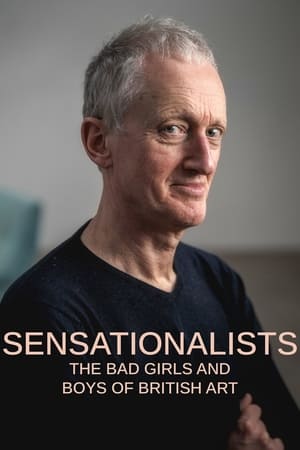
Rebellious, provocative and unapologetic. The Young British Artists crashed the 90s art scene, making Tracey Emin, Damien Hirst and others household names. This is their story.
Andrew Graham-Dixon explores the history of Scandinavia through its art.
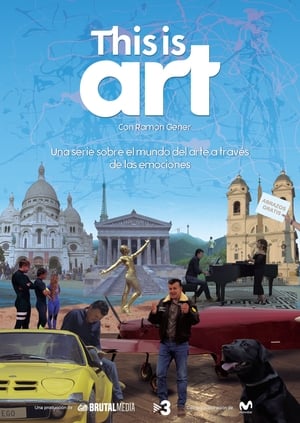
Through the beauty of artistic forms, Ramon Gener goes inside the inner workings of human nature. All artists use art to explain their emotions.
The cemetery, for all its creepiness and mystery, is actually a fascinating place to uncover incredible art, surprising architectural finds, and a rich and varied history. In this provocative and edgy series, we travel from Paris to New Orleans, New York to London, Hollywood and beyond exploring some of the world’s most interesting and visually compelling cemeteries. We uncover fascinating, often scandalous, tales of the graveyard’s residents, plus curious angles, quirky traits, and, first and foremost- artistic appeal.
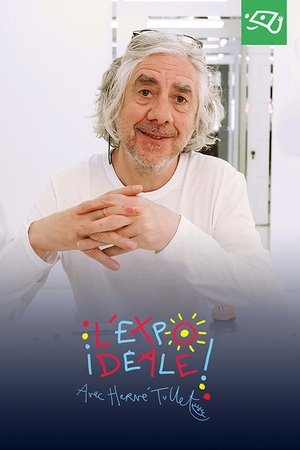
Hervé Tullet, an artist of playful and uninhibited creations, invites young and old to unleash their creativity. He offers a series of creation, recreation and inspiration workshops, so that anyone can put together their own Ideal Exhibition.
« For over twenty years we have filmed at night in the most important museums in the world. It's the only possible time to film the empty halls or the precious artifacts out of the windows because there are no visitors. But at night the Museum changes face. Just you in front of the masterpieces in the silence. The Museum seems to show and offer you its treasures in an atmosphere of intimacy. I always wanted to transmit and give this atmosphere that I breathed to viewers. » (Alberto Angela)
How did an Indian Buddhist shrine influence a Japanese pagoda? How are Italian pigs and cowry shells related to porcelain? Why did the ferocious warriors of Mongolia wear silk underwear? And how did wood block printing bring about a revolution in Japan and in European culture? These intriguing questions are investigated in Artifacts, a series that explores the origins and hidden connections among the art and artifacts of the great cultures and belief systems across Asia - on a journey through time and across continents from India to Thailand, China and Japan - to understand the impact of calligraphy, porcelain, architecture, metallurgy, wood block printing and silk on Asian history and on the history of the world in general.
Our citizen space accommodates a large number of artistic manifestations that account for the way in which their authors interpret the context in which they are immersed. Living Art is a series of 10 chapters that seeks to be the reflection of the views of those who through art pay new ways of interpreting the world but above all to share their interests, their passions as well as their likes and dislikes which are a fundamental part of his inspiration, thus focusing on his human side.
Fotografi